

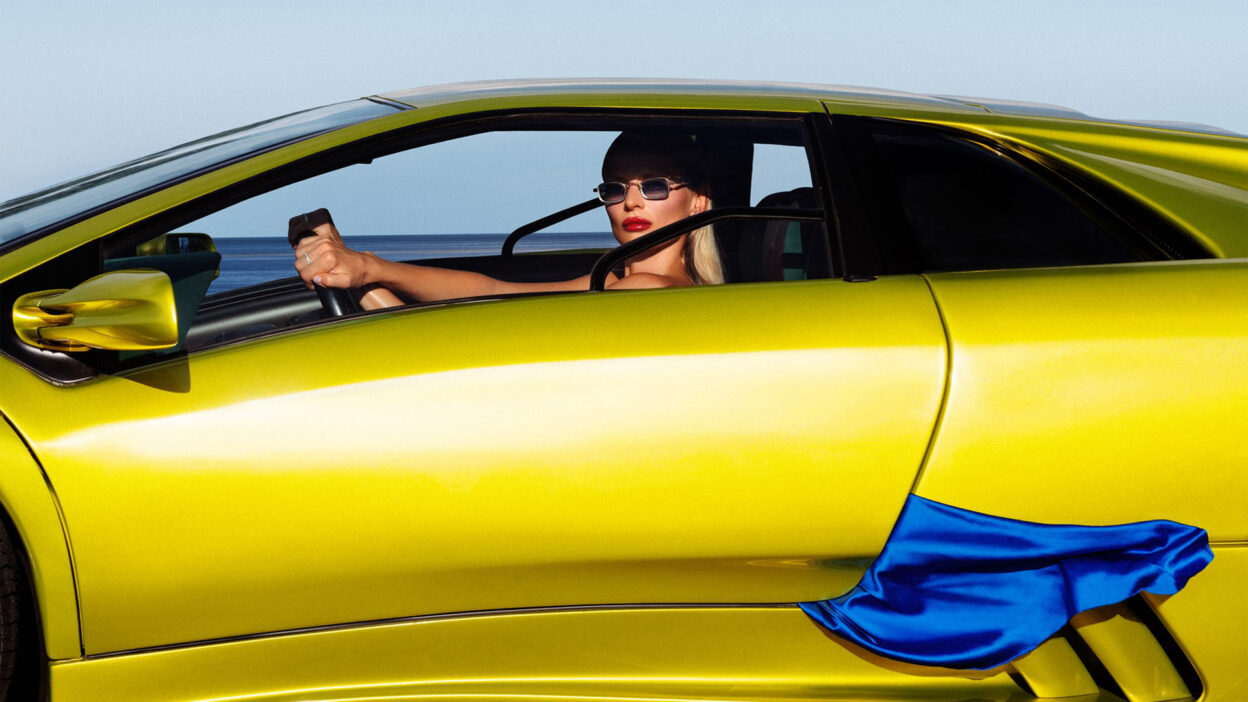
Campaigns from Sato and Jacques Marie Mage are competing for cultural attention. Independent opticians are asking whether the product, and the customer, have become secondary.
For a category built around objects worn directly on the face, luxury eyewear is becoming remarkably comfortable with making the frame disappear.
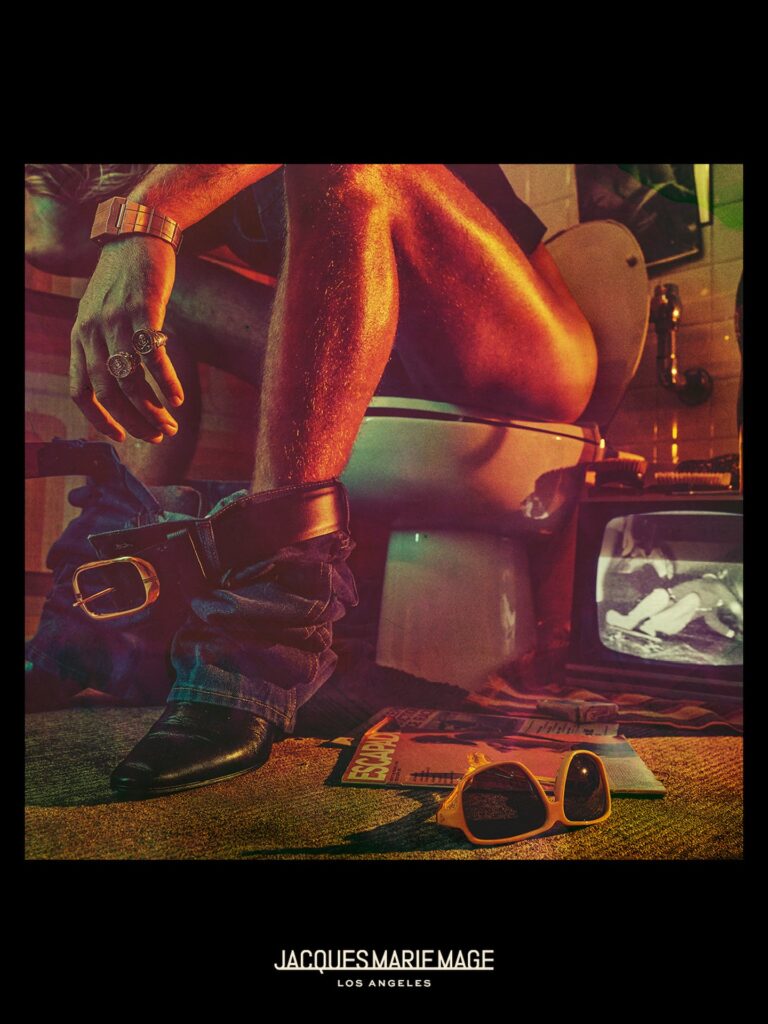
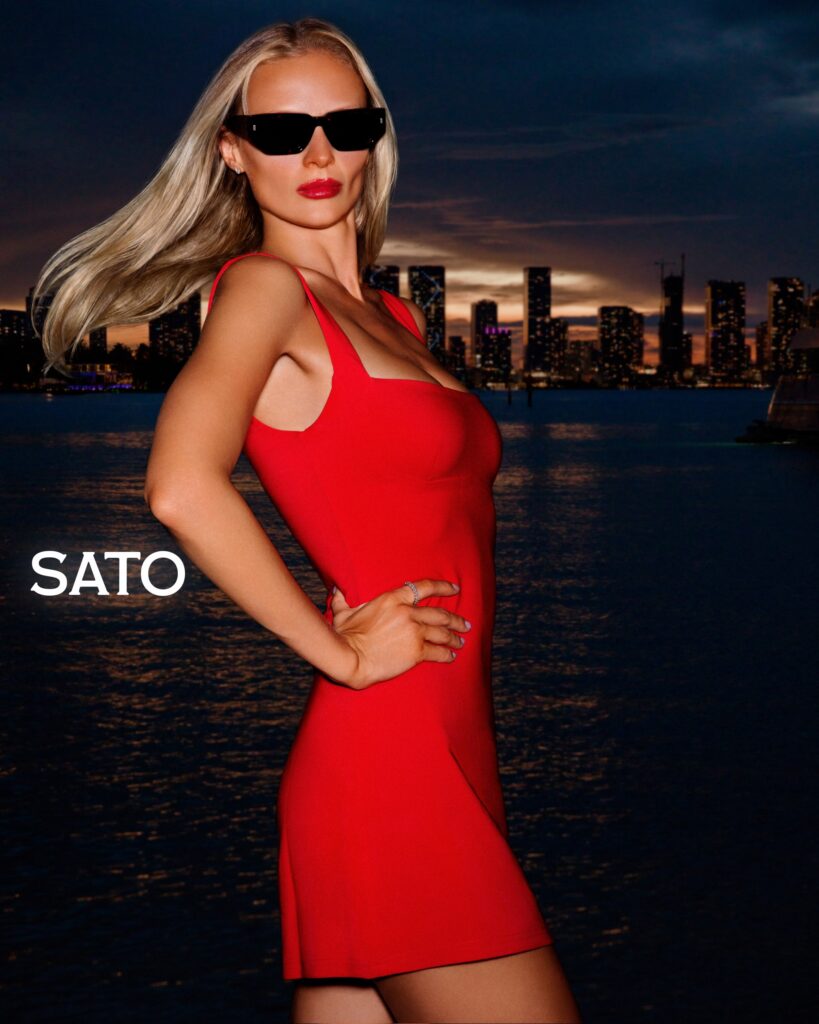
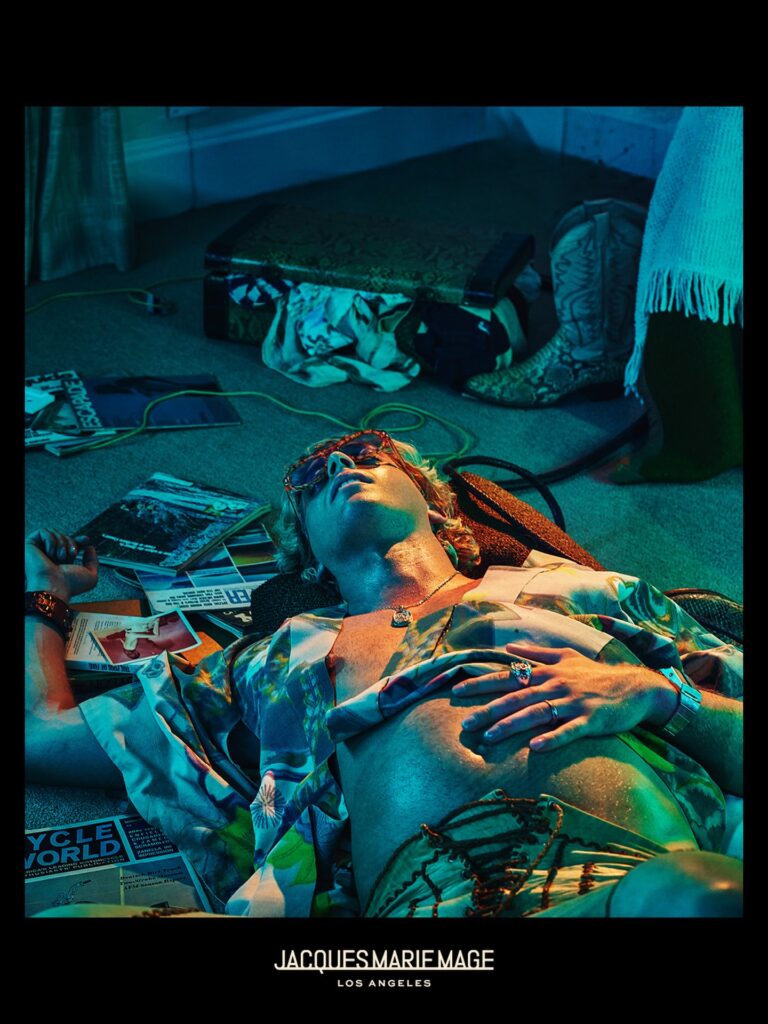
On September 27, Sato introduced its SS27 Sador in Noir through the sun-drenched and sexually charged lens of Tony Kelly. Three weeks later, Jacques Marie Mage presented Bunker77, photographed by Steven Klein, a darker campaign shaped by privilege, danger and self-destruction.
Both are visually accomplished. Both employ photographers with instantly recognisable creative worlds. Yet dozens of messages received by Curated Optics from independent opticians reveal a growing concern.
Who are these campaigns intended to persuade?
The reaction is not simply about provocation. Luxury advertising has always used sex, fantasy and danger. The real question is whether, in the pursuit of cultural impact, high-end eyewear brands are losing sight of the people expected to wear, recommend and pay for the product.
Sato Enters Tony Kelly’s World
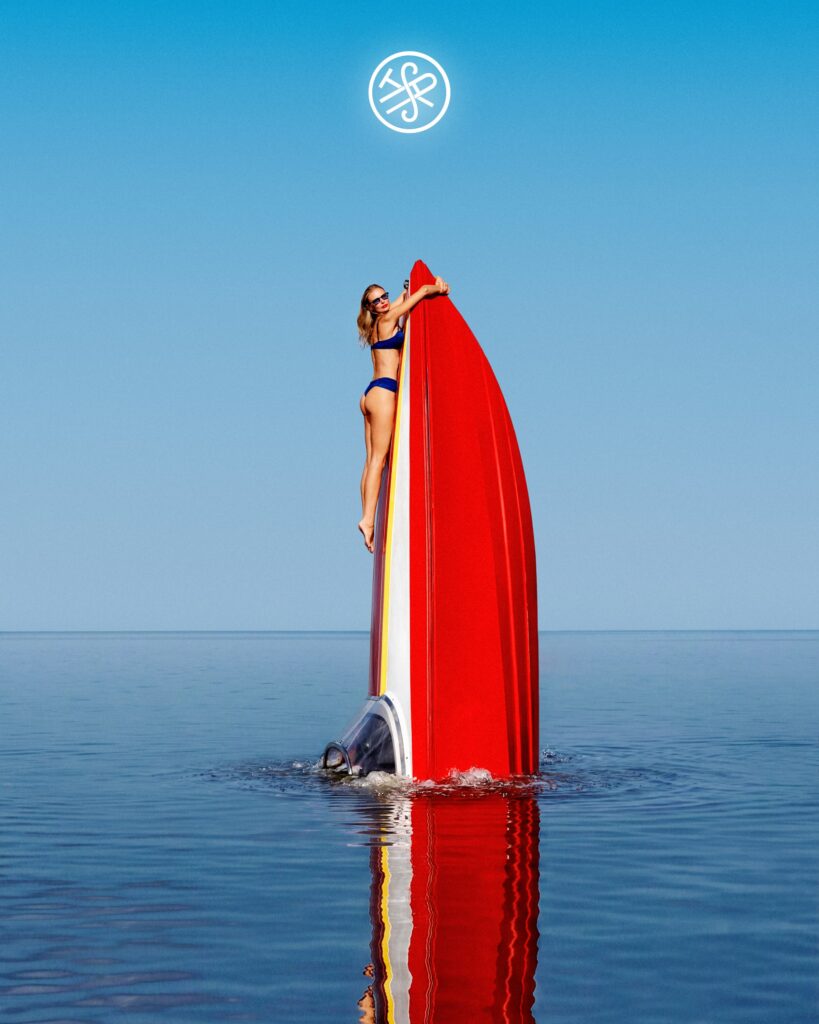
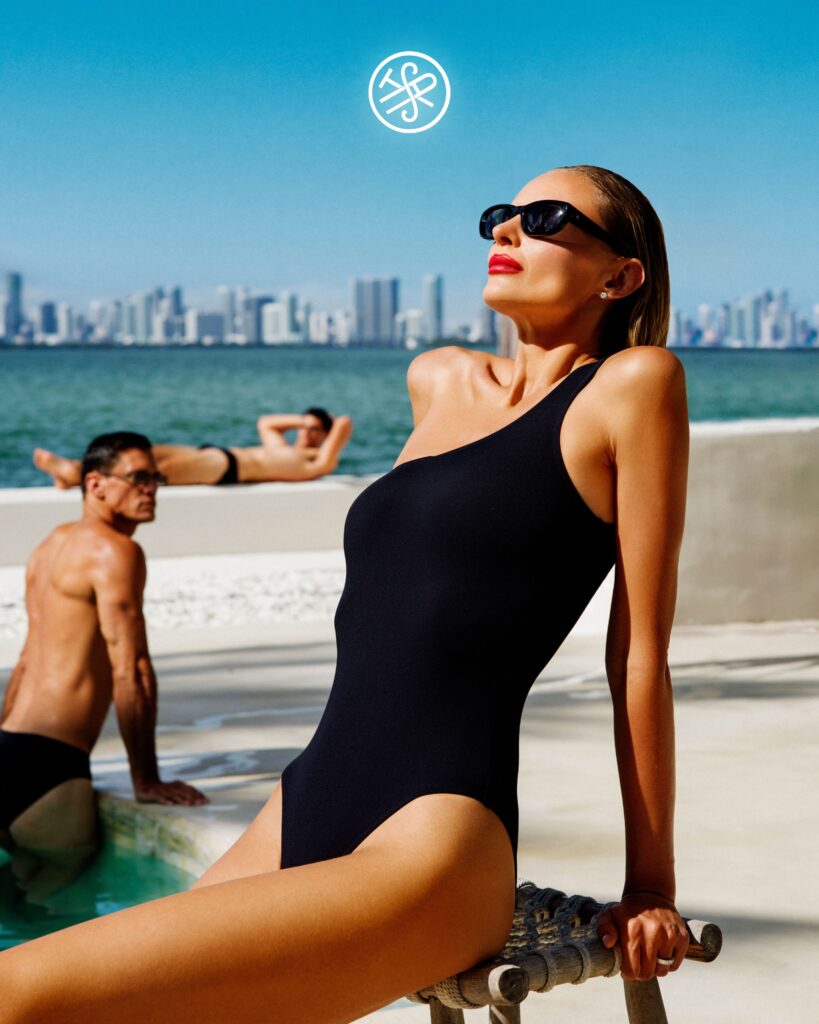
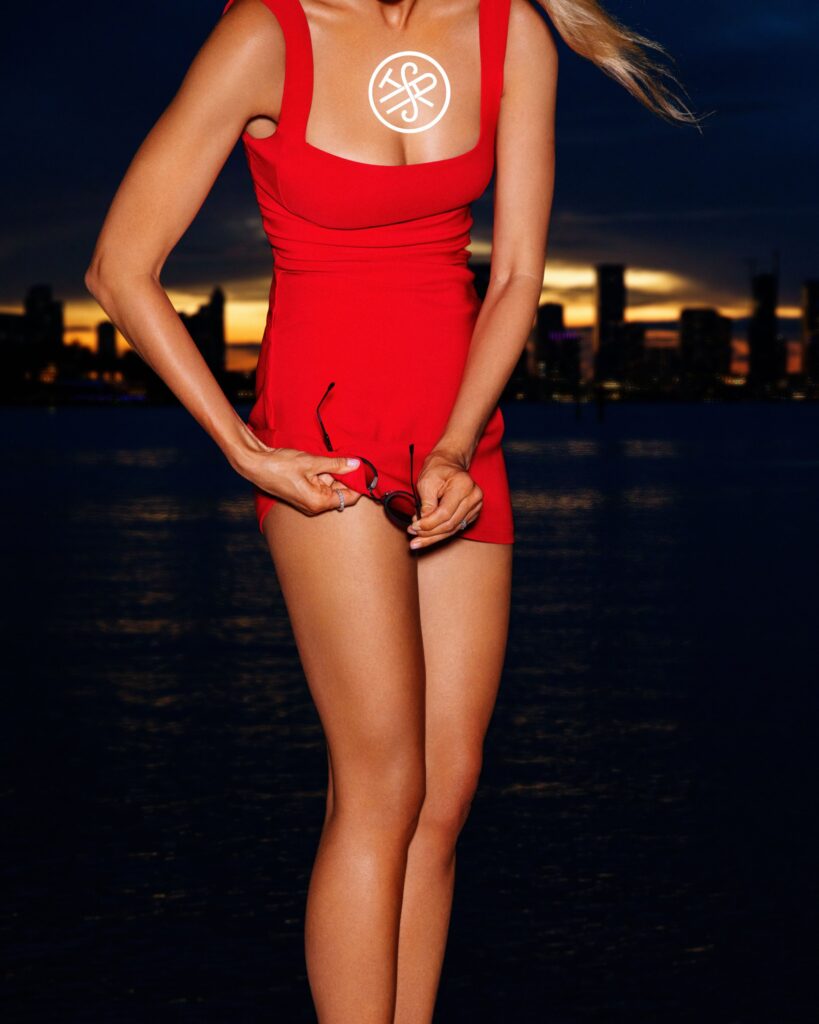
Sato’s campaign presents a familiar fantasy of contemporary excess: blue water, a yacht, sculpted bodies and a woman in a black swimsuit. Two nearly naked men appear behind her, functioning as both characters and scenery.
The saturated colour, ironic glamour and jet-set setting are unmistakably Tony Kelly. His work often sits between satire and seduction, borrowing from the polished advertising language of the 1960s and 1970s. “For me it’s always been about entertainment,” he says in his official biography.
For Sato, the collaboration provides an immediately recognisable world designed to stop the scroll. The risk is that Kelly’s world becomes more memorable than the brand itself.
The Sador is a serious luxury product. Priced at €865 and limited to 350 pieces, the Japanese-acetate frame reinterprets vintage sports eyewear through oversized but controlled proportions. Those qualities are clear on the brand’s product page.
In the campaign, however, the frame competes with the yacht, the bodies and the sexual narrative. The image sells a fantasy before it explains the object. The optician is then left to reconnect that fantasy with craftsmanship, fit and a reason to spend close to €1,000.
Jacques Marie Mage Sells a Darker Myth
Jacques Marie Mage takes a different visual route but creates a similar tension.
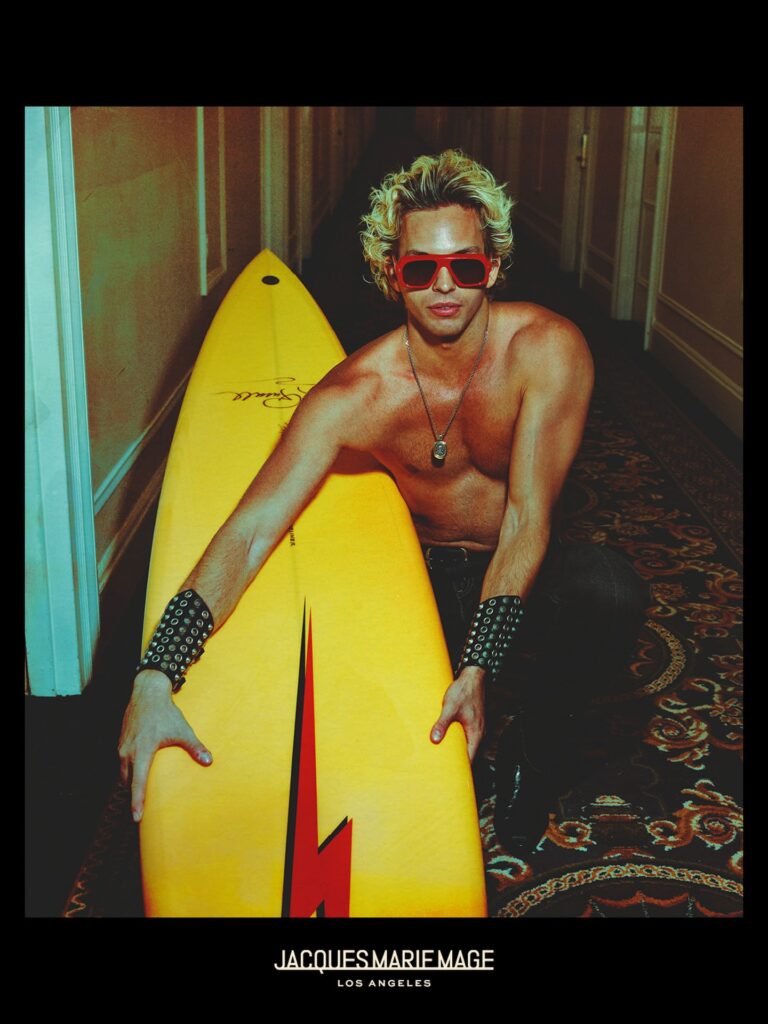
Bunker77 is inspired by Adolph Bernard “Bunker” Spreckels III, the American heir, surfer and countercultural figure whose short life moved between athletic brilliance, inherited privilege, drugs, violence and reinvention.
Developed in dialogue with Takuji Masuda’s 2016 documentary Bunker77, the collection includes four limited-edition eyewear styles, jewellery and accessories featuring a skull-and-bones motif taken from Spreckels’ personal letterhead.
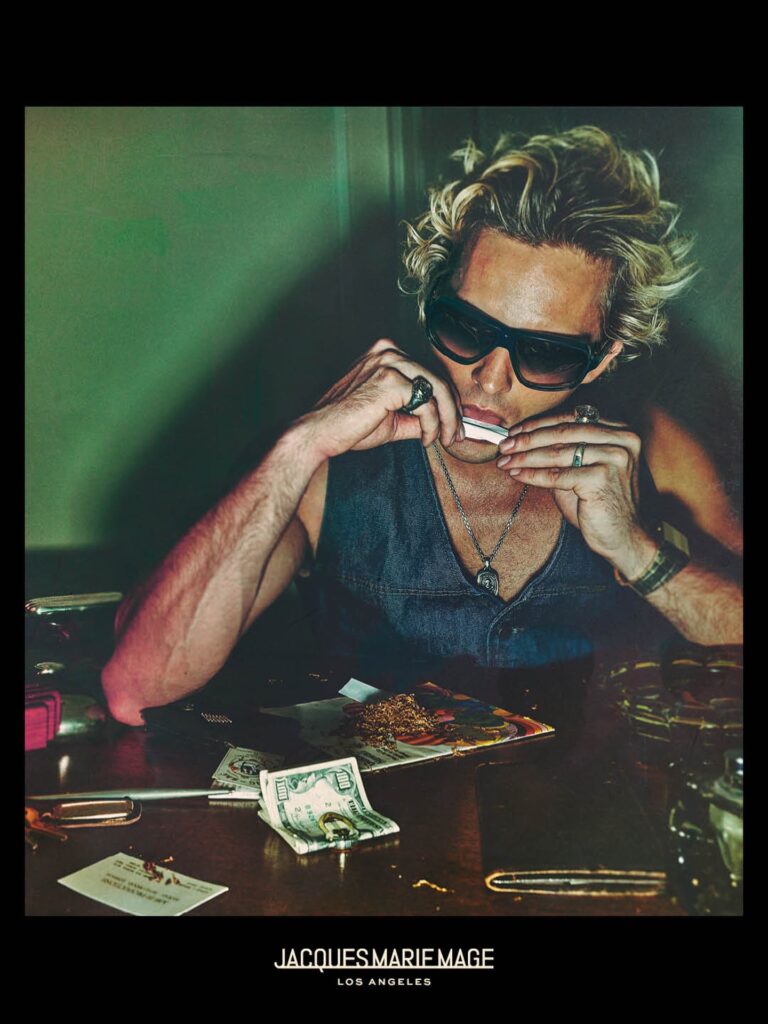
Steven Klein translates this story into an image of bruised colour, exposed bodies and psychological unease. The eyewear is present, but the atmosphere dominates. The accompanying text foregrounds alleged drug dealing and the “beast within”.
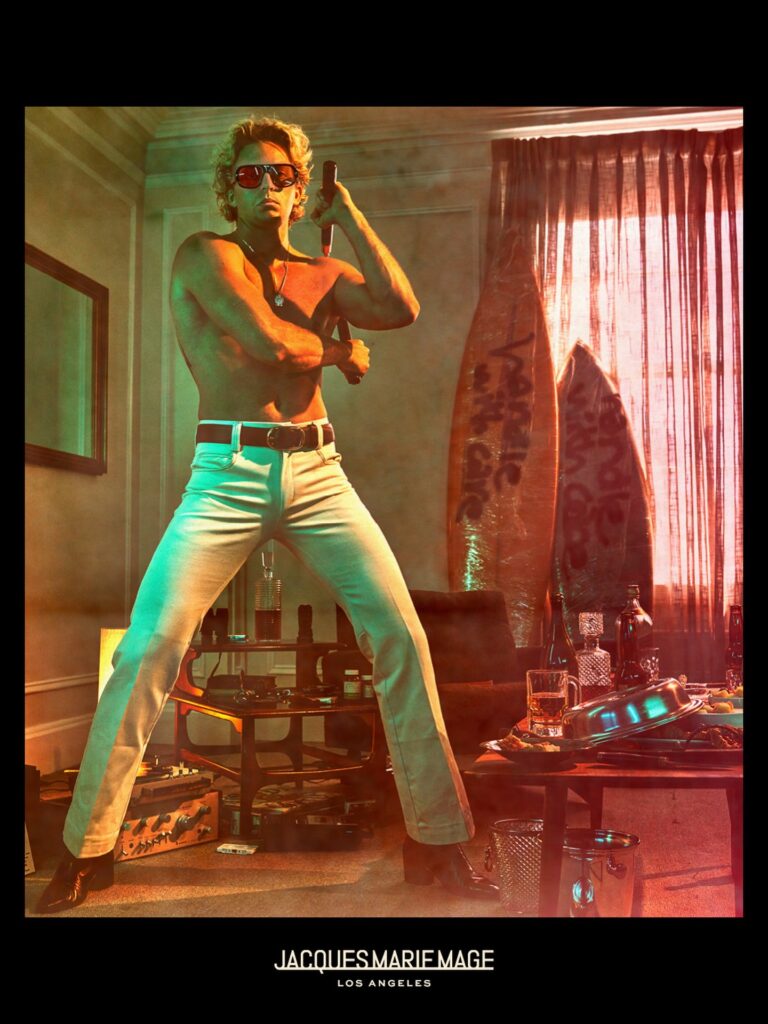
The Instagram post also carries an “AI content” label. This does not establish how extensively generative tools were used, but it creates an uncomfortable contrast. A brand whose value rests on human craft and physical rarity is promoting its product through imagery identified by the platform as involving artificial intelligence.
Unlike Sato, Jacques Marie Mage has built much of its success on complex mythology. Its collectors buy more than acetate and lenses. They buy limited production, historical references, elaborate packaging and access to a carefully constructed universe.
The products support that ambition. A diamond-set edition of The Player was limited to 25 pieces and priced at $4,495 before selling out. It features 10mm cured cellulose acetate, sterling-silver details, white pavé diamonds and a Calavera medallion.
The problem is not a lack of substance. It is that the campaign asks customers to decode a niche cultural biography before allowing them to encounter it.

The Customer Is Not the Audience
Sato sells sunlight, bodies and resort glamour. Jacques Marie Mage sells darkness, danger and aristocratic rebellion. Their aesthetics are different, but their commercial logic is similar.
Both campaigns appear designed to circulate through social media, fashion press and creative networks. The frame becomes a supporting character in a larger spectacle.
That approach can create emotional connection, an increasingly important driver of luxury desirability. But research also shows that customers continue to prioritise the product itself. An EY survey of 1,631 luxury consumers found that quality of materials was the leading purchase driver for 65 percent of respondents, followed by brand heritage at 52 percent.
The strongest campaigns create emotion while making craftsmanship and value easier to understand. They do not force the customer to choose between fantasy and product.
This matters particularly in eyewear. A frame must fit the face, support prescription lenses, remain comfortable and express the wearer’s identity. It is a cultural object, but also an intimate and technical one.
The audience watches, likes and shares. The customer enters a store, tries on the frame and decides whether it belongs on their face. Confusing these two groups can generate attention without generating trust.
Independent opticians are left to close that gap. The brand receives visibility, while the retailer must explain the construction, fit, price and relevance of a product that the campaign has made secondary.
Have the Brands Forgotten Their Customers?
Not entirely.
Sato may be using Kelly’s visual language to reach younger fashion consumers. Jacques Marie Mage may be strengthening the mythology that turned it into a collector phenomenon. A distinctive brand should not attempt to appeal to everyone.
What the optical industry appears to have forgotten is that the core high-end eyewear customer is rarely a teenager arriving from an Instagram feed. This is typically a mature, informed buyer who values design, fit, craftsmanship and long-term ownership more than shock for its own sake. Independent opticians, who speak to these clients every day, were the first to identify the disconnect.
Brands may be trying to attract a younger audience, but that expansion carries a risk: if the new image feels alien to the existing customer, audience growth can quickly become brand dilution. The challenge is not simply to find new consumers, but to do so without losing the trust of those who built the category.
The danger is mistaking the most visible consumer for the most valuable one.
A successful luxury eyewear campaign should make the product identifiable, its price credible and its wearer imaginable. The photographer’s universe should sharpen the brand rather than consume it.
Luxury eyewear does not need to become quieter or less ambitious. It needs to become more precise about the object it is selling and the person expected to wear it.
The frame is supposed to alter presence. But first, it has to be present.


 English
 French
 Italian
 Spanish
 Portuguese
 German
 Korean
 Japanese