

The Independent Luxury Eyewear Brands Defining the Market Today
When it comes to high-end eyewear, very few people truly know how to evaluate a top-tier brand. Following our guide to the Japanese brands that truly matter, we have now identified and explained which brands genuinely belong at the high end of today’s market. Many describe themselves as luxury, but in reality, they are simply premium or fashion products.
One important lesson is that almost none of the brands dictating the market in 2014 or 2015 occupy the same position today. The eyewear industry changes, customers evolve, and luxury moves in cycles. A famous name or an expensive frame is not enough to guarantee long-term relevance.
The first factor we consider is distribution.
A high-end independent eyewear brand should not be available everywhere. The stores in which it appears matter, but so do its neighbors on the shelf. A luxury frame loses part of its identity when it is placed beside mass-distributed collections or appears in every optical store in the same city. Selective distribution protects desirability and gives retailers a genuine reason to curate rather than simply stock.
The second factor is the digital experience.
Today, a luxury eyewear brand is arguably 50% craftsmanship and 50% content, website and visual identity. Customers often encounter a brand on Instagram before they touch one of its frames. Photography, films, campaigns, product presentation and online storytelling have therefore become part of the product itself.
The third factor is the complete customer experience.
Packaging, presentation, tactility and the feeling created when the box is opened all contribute to the perception of value. At this level, luxury should be experienced before the frame even reaches the face.
How We Evaluate High-End Eyewear Craftsmanship
Country of origin alone is not a guarantee of quality. Provenance provides context, but the decisive question is not where a frame was made. It is how the frame was made.
When evaluating acetate eyewear, we look at whether five-axis CNC machining has been used to create complex, innovative shapes that would be difficult to achieve through conventional cutting. We examine whether the temple wire core has been inserted through lamination, how refined its decoration is and whether it forms part of the brand’s visual identity.
Wearability is equally important. A thick or sculptural frame must still be balanced correctly across the bridge, temples and ears. Complexity without comfort is simply decoration.
We also evaluate the precision of the metal elements, the finishing of the wire cores, the originality of the hinges and whether screws, rivets and decorative components have been developed specifically for the brand. The more proprietary elements a frame contains, the stronger its design language can become.
With titanium, we look beyond the material itself. Titanium is not automatically luxurious simply because it is lightweight or difficult to manufacture. We examine the precision of the engraving, the construction of the bridge and temples, the integration of the hinges and the way the brand’s DNA continues through every structural component.
Complexity should not be confused with adding more stamped decoration. True complexity comes from construction, engineering and the intelligent interaction between components.
Finally, limited production matters. Numbered editions, small batches and controlled availability create collectability, but they also allow a brand to take creative risks that would be impossible in mass production.
Based on these criteria, these are the high-end independent eyewear brands we believe are defining the market today.
1. Matsuda
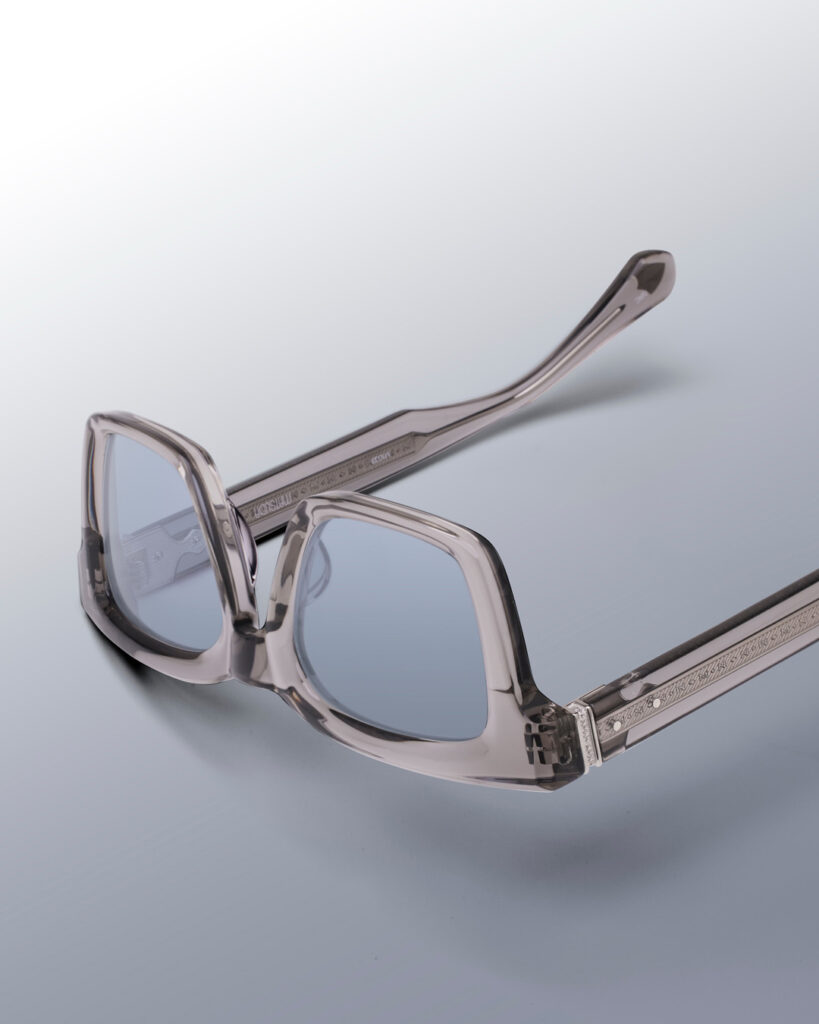
Matsuda occupies a unique position in this ranking because it combines genuine heritage with the energy of a modern independent eyewear house. Mitsuhiro Matsuda founded his fashion house in Tokyo in 1967, with the Matsuda eyewear line launching in 1989. Following a period of inactivity and the founder’s passing in 2008, the brand was revived and reintroduced internationally in 2012 by Fabrice Commelin and CEO and Creative Director James Kisgen, a former Cartier executive.
Matsuda excels in architectural titanium construction, intricately engraved temples, hand-applied lacquer and ornamental metalwork inspired by fine jewelry. Its strength lies not simply in decoration, but in the way engraving, bridges, hinges and structural components carry a consistent and immediately recognizable design DNA. The Heritage Collection also reintroduces archival designs in limited production, connecting Matsuda’s original creative language with contemporary materials, proportions and manufacturing.
2. SATO Eyewear
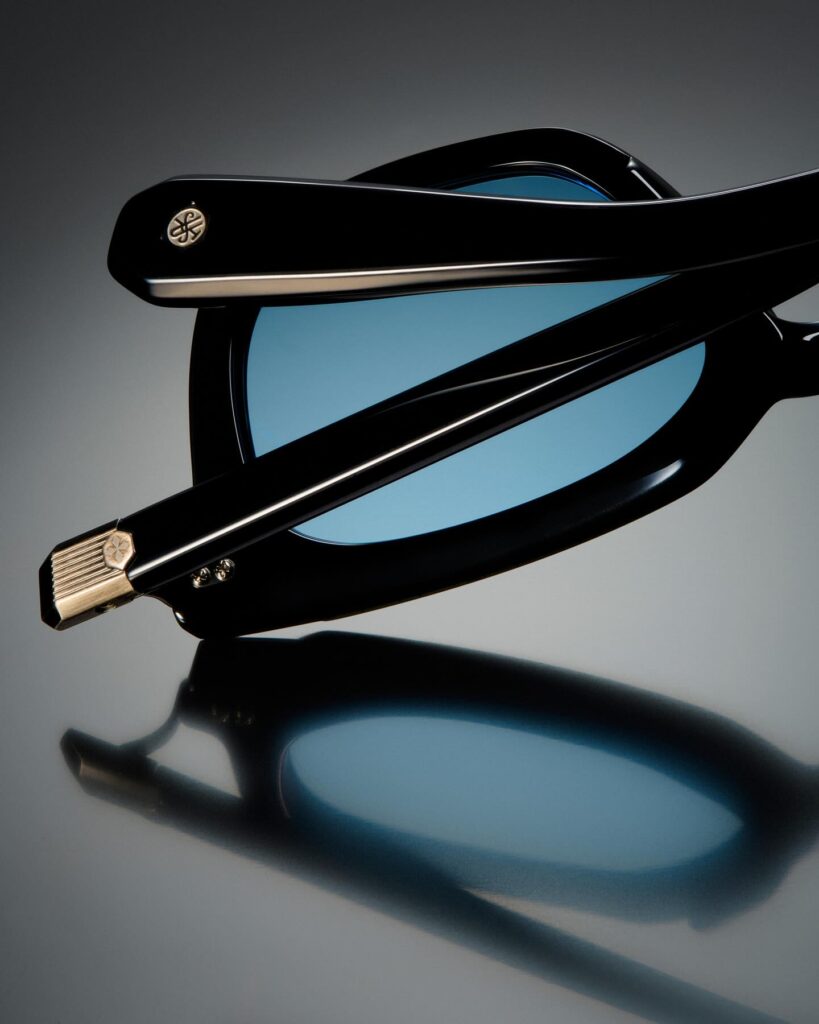
Although SATO has been on the market for only around four years, it already presents one of the most complete propositions in contemporary independent eyewear. Its Japanese-made collections combine complex titanium architecture, laminated wire-core construction, proprietary hinges and a clear design language influenced by the 1990s, industrial structures and futuristic forms.
The frames feel sculptural without ignoring balance and wearability. SATO is equally convincing beyond the product: packaging, campaigns, visual content belong to the same universe. Its strongest models are produced as numbered editions, with some of the rarest limited to 250 pieces, giving the customer a genuine sense of exclusivity. Few young brands currently combine technical ambition, controlled distribution, digital execution and tactile experience so convincingly. For us, SATO checks virtually every box required of a modern high-end eyewear house.
3. Lunetterie Générale
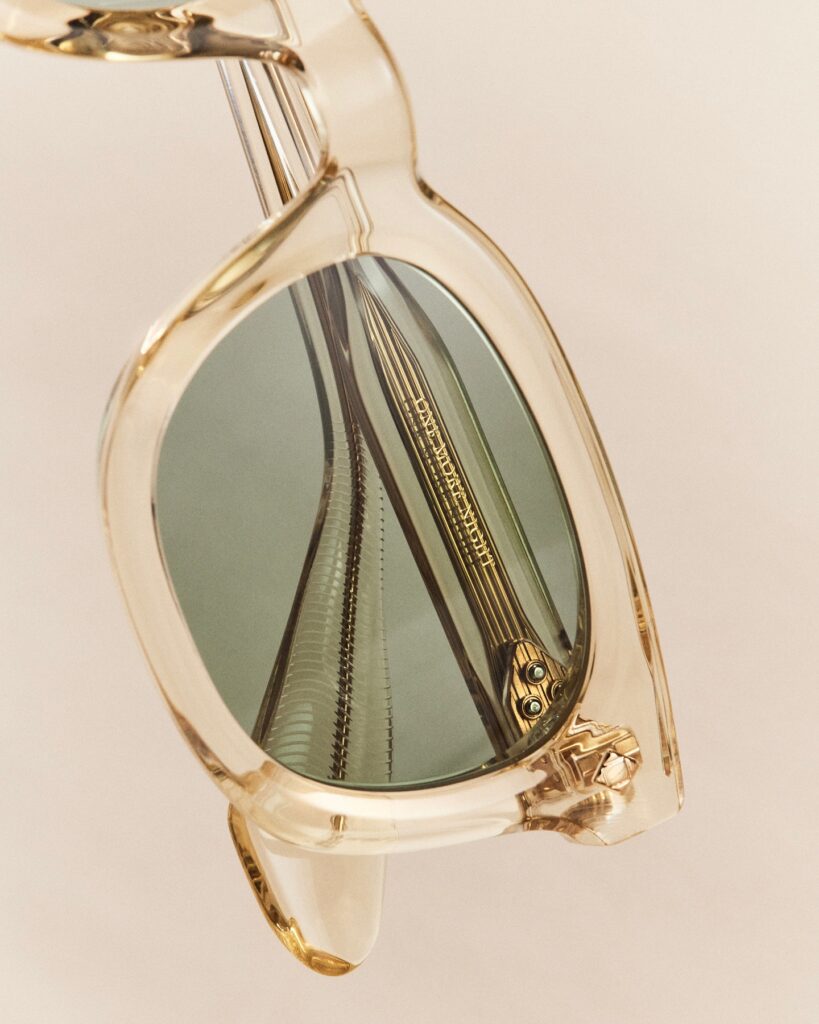
Founded in 2018 by Canadian designer Julien Couture, Lunetterie Générale has developed one of the most coherent identities in luxury eyewear. Its DNA has matured steadily, combining cinematic references, Art Deco influences, classic proportions and increasingly distinctive components. The frames are handmade in Japan in small batches through more than 300 production steps. Its acetate is produced by Takiron, while the titanium series uses advanced molding, precise machining and a production process that can take close to ten months.
What makes the brand particularly relevant today is the balance between refinement and functionality: the designs are recognizable without becoming theatrical and luxurious without becoming difficult to wear. Packaging, digital presentation and product photography reinforce the same world. Lunetterie Générale has evolved from a promising independent label into a serious high-end house and it continues to gain momentum.
4. The Other Glasses
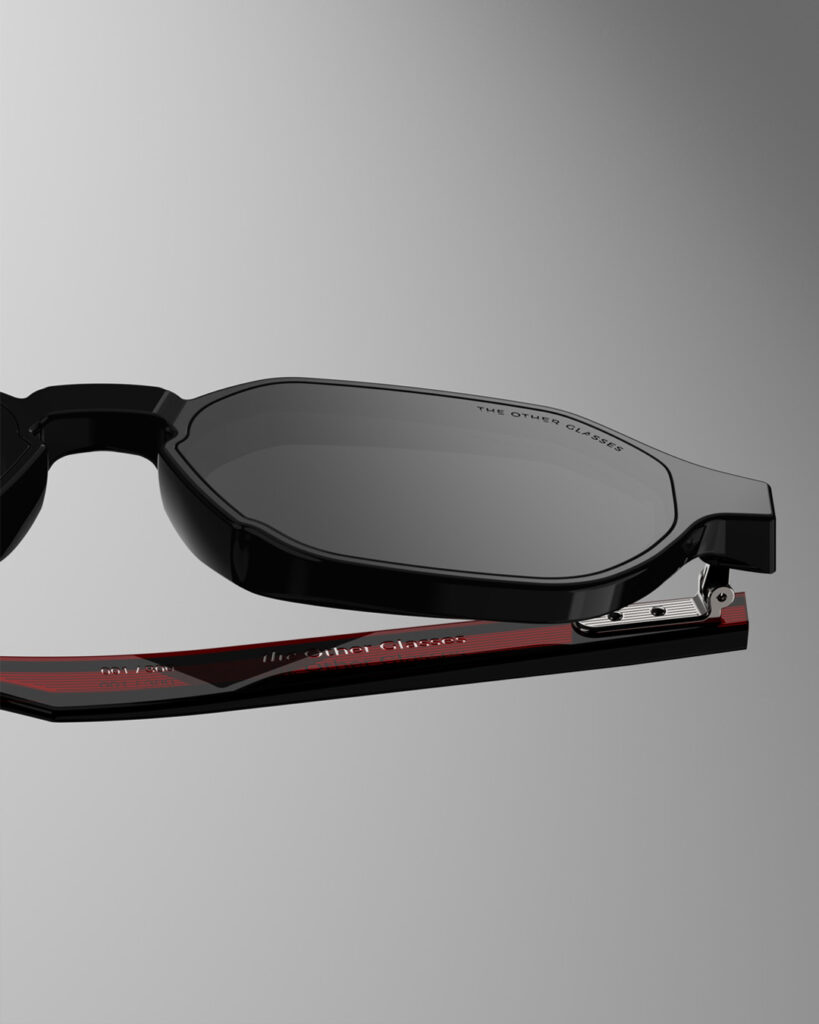
Approximately a year and a half into its journey, The Other Glasses, founded by Andra Simina, operates as a creative studio rather than a conventional eyewear label. Assembled in Romania, it bridges the gap between fashion and function through an elevated collection of timeless styles – from simple to intricate, from subtle to bold – standing at the intersection of art, science and functionality.
Numbered production runs, sophisticated packaging and high-quality content complete the experience, while a distinctive design language turns function into something approaching wearable art.
We like to think of The Other Glasses as your favourite brand’s favourite brand – a young house whose visual language is already becoming a reference point within the industry. Its approach to modern luxury is simple: 50% eyewear, 50% content.
5. Akoni
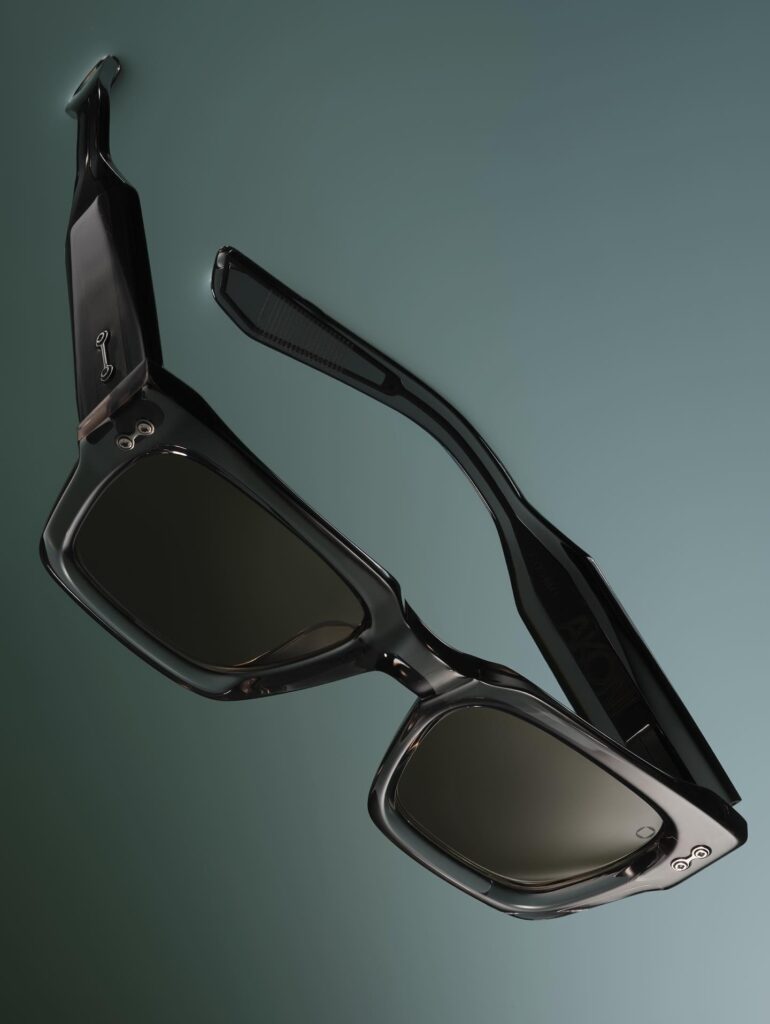
Akoni was founded in Switzerland in 2020 around the concept of “Swiss Precision and Japanese Artistry.” That positioning is visible throughout the collection. The brand combines Japanese acetate and titanium with laminated wire cores, proprietary hinges, highly detailed metalwork and distinctive architectural structures. Its titanium designs are particularly successful when technical elements become part of the silhouette rather than remaining hidden inside the frame.
Even smaller details receive attention: Akoni has developed ceramic nose pads mounted on flexible beta-titanium arms, demonstrating that luxury engineering can extend to components most customers rarely notice. The brand also performs strongly in packaging, digital content and campaign imagery. Although not every Akoni frame is limited, the house periodically releases numbered and non-repeating limited editions. Its greatest strength is consistency: product, storytelling and presentation communicate the same disciplined, futuristic identity.
6. John Dalia
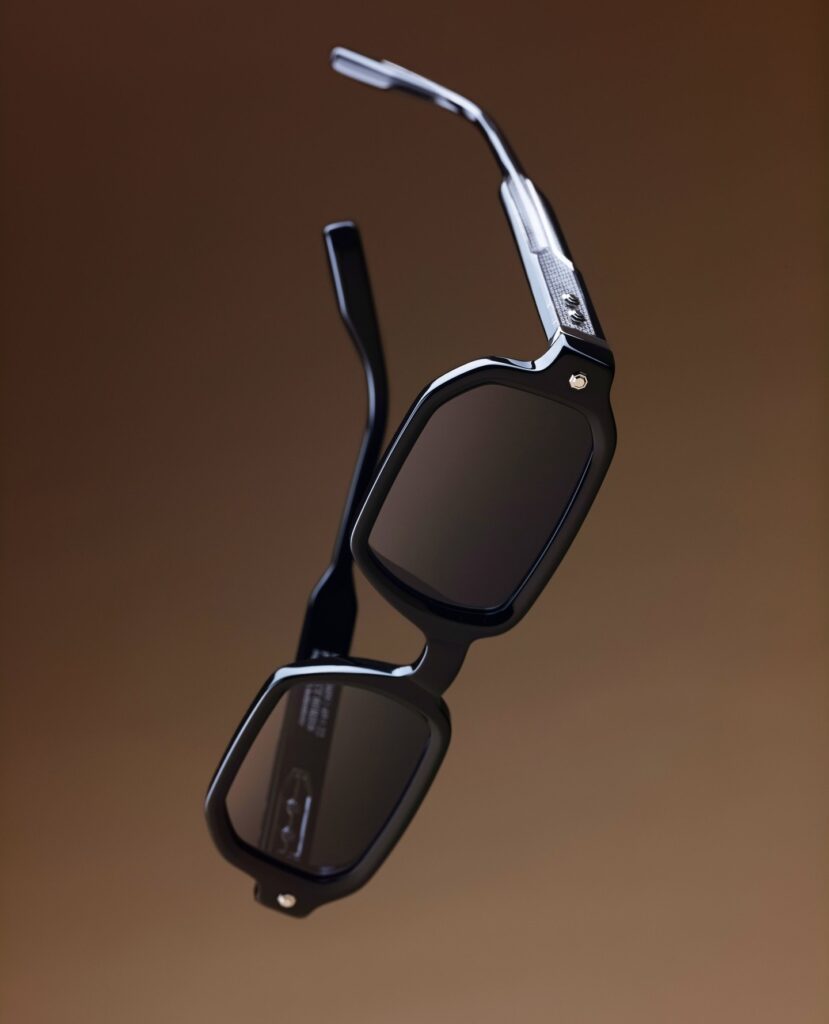
The Parisian house John Dalia was established in 2011, but its collections from the past two years have moved the brand decisively further into the high-end category. The newer frames introduce more ambitious construction, laminated acetate treatments, custom hinges and metalwork approached with the precision of jewelry. John Dalia states that its pieces require more than 100 manufacturing steps, and the attention given to finishing is visible in the latest collections.
The proprietary titanium hinge developed for the Project series is an especially important evolution, giving the frames both a functional advantage and a recognizable technical signature. Some Project models also integrate NFC-based digital authentication, connecting craftsmanship with a more contemporary ownership experience. The latest titanium and combination frames suggest a brand that is no longer relying only on elegant Parisian minimalism, but is increasingly willing to innovate through structure.
7. Sestini
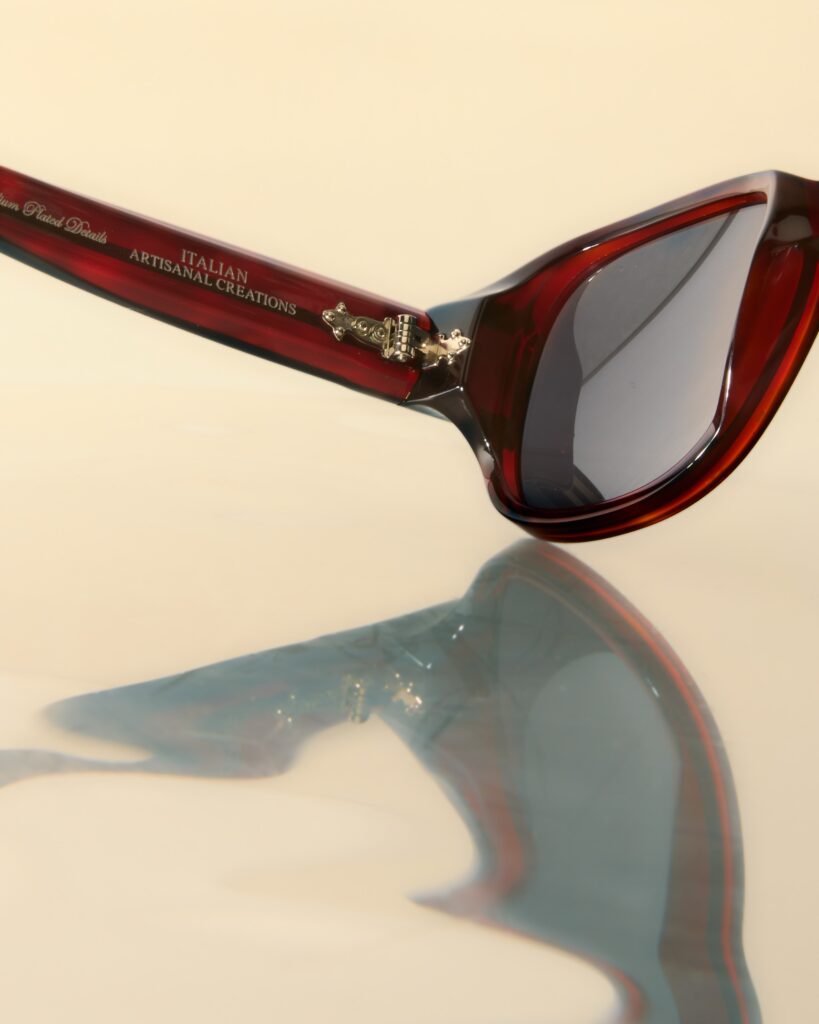
Founded in 2020, Sestini is a young Italian independent house with an acetate-led identity rooted in classical luxury. Its frames are handcrafted in Italy through more than 200 individual steps, with extended tumbling and hand-polishing used to soften the edges and develop depth in the acetate. The designs themselves are generally more traditional than those of the brands placed above it, but the experience and proprietary components elevate the collection.
Recent models feature custom hinges developed over almost two years, hand-enamelled house emblems, cabochon rivets and metal elements created exclusively for Sestini. Individually numbered production, considered presentation and reusable packaging strengthen the sense of ownership. Sestini demonstrates that a brand does not need extreme silhouettes to belong in the high-end category; classical acetate can feel distinctive when every hinge, rivet, wire core and tactile detail contributes to a coherent experience.
8. Jacques Marie Mage
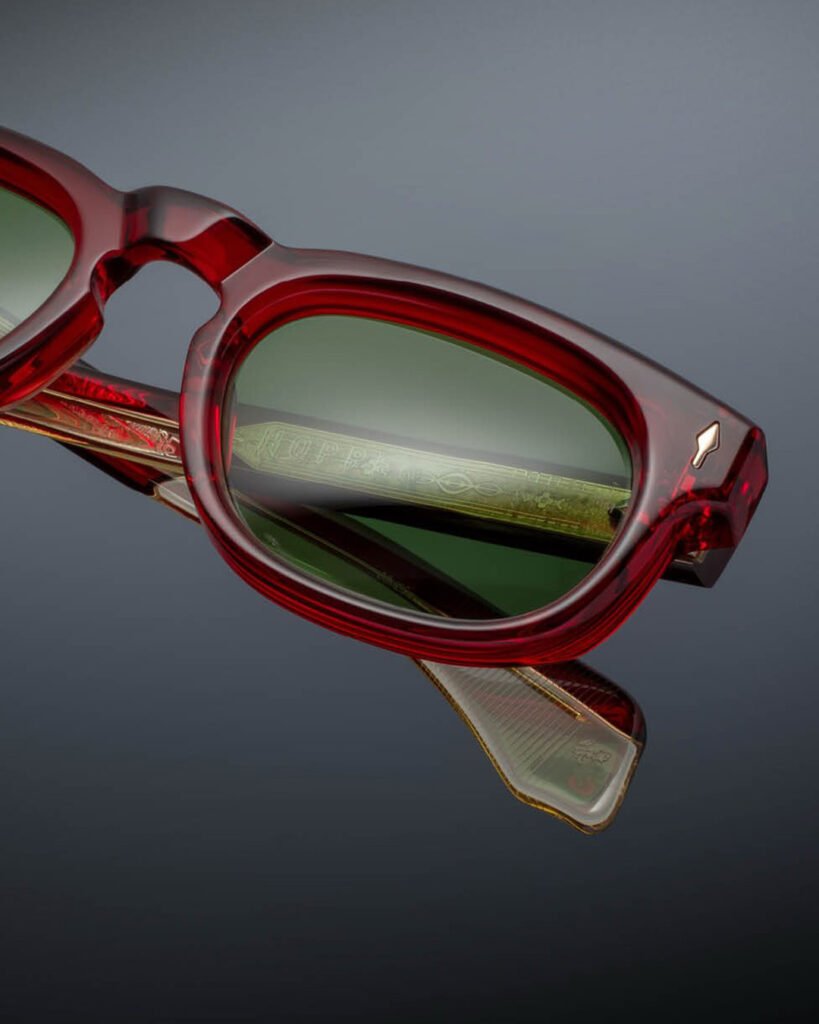
Jacques Marie Mage created the modern market for collectible independent eyewear. Founded in 2014 and introduced to the public in 2015, the Los Angeles house proved that thick acetate frames, highly specific cultural references and strictly numbered production could generate the same enthusiasm as watches, sneakers or art objects. Its Japanese-made frames can require more than 300 production steps and feature laminated temples, engraved wire cores, proprietary multi-barrel hinges and custom metal decorations.
JMM also understands packaging better than almost any eyewear brand: monograph boxes, leather cases, collectible cleaning cloths and individually numbered authenticity cards turn each purchase into an event. Its lower position in this ranking is not a judgment on craftsmanship. It reflects the fact that this guide also rewards emerging momentum, selective discovery and the ability to show where the category may be going next. Without Jacques Marie Mage, however, much of today’s limited-edition eyewear market would probably not exist in its current form.
9. Chrome Hearts
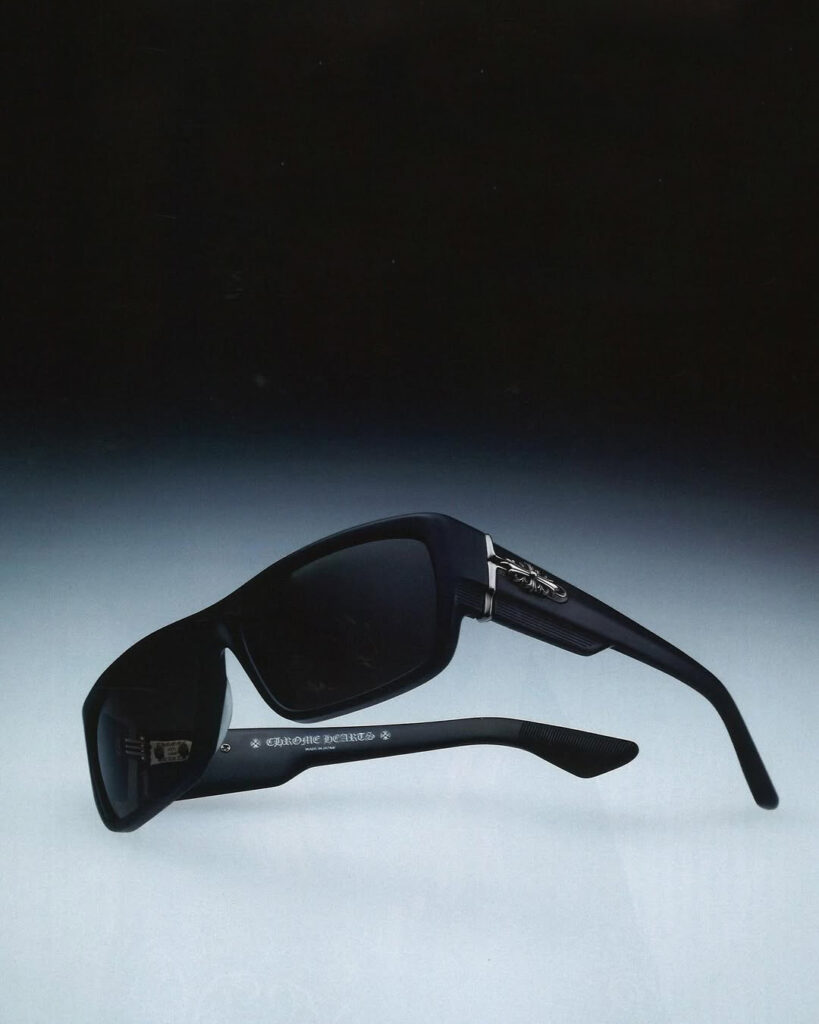
Chrome Hearts occupies a category of its own. It is not simply an eyewear company but a complete luxury universe in which glasses inherit the codes of jewelry, leatherwork and collectible fashion. The frames combine sculptural construction with custom gothic components, precious materials and unmistakable iconography. Official product information confirms the use of .925 sterling-silver motifs, alongside natural woods and Italian leather on selected designs. Fame is undeniably part of the appeal, but it is supported by genuine material complexity and a design language that cannot easily be separated from the house. Even when individual styles are not presented as conventional numbered editions, scarcity, controlled distribution and limited availability create strong collectability. Chrome Hearts demonstrates that brand mythology can add value when it is supported by precision, sculptural ambition and genuinely proprietary elements.
Why Limited-Edition Eyewear Matters
Limited production should not be reduced to a number engraved inside a temple.
At its best, scarcity allows a brand to develop unusual components, experiment with difficult constructions and maintain quality control. It also protects retailers by preventing the same frames from appearing in every competing store.
For the customer, a limited-edition frame creates a stronger emotional connection. The object feels personal, collectible and less exposed to the rapid cycles of conventional fashion.
However, scarcity must be real. Producing thousands of frames and dividing them into nominal “editions” does not create exclusivity. High-end customers are becoming more informed, and artificial rarity is increasingly easy to recognize.
The Future of High-End Independent Eyewear
The next generation of luxury eyewear will not be defined by acetate thickness, titanium alone or the country printed inside the temple.
The strongest brands will be those capable of creating a complete and recognizable universe. They will control distribution, invest in digital storytelling, develop proprietary components, deliver exceptional packaging and produce frames that remain comfortable despite their technical complexity.
Most importantly, they will possess a design DNA that continues from the front of the frame to the hinge, wire core, temple, case, website and retail environment.
Because in high-end independent eyewear, craftsmanship creates the product—but coherence creates the brand.



 English
  French
  Italian
  Spanish
  Portuguese
  German
  Korean
  Japanese