


A London taxi offers a useful setting for an eyewear campaign. Faces come and go, clothes suggest different lives, and frames become part of someone’s identity. For Cutler and Gross, that relationship between object and wearer provides the strongest idea in its Autumn Winter 2026 campaign.
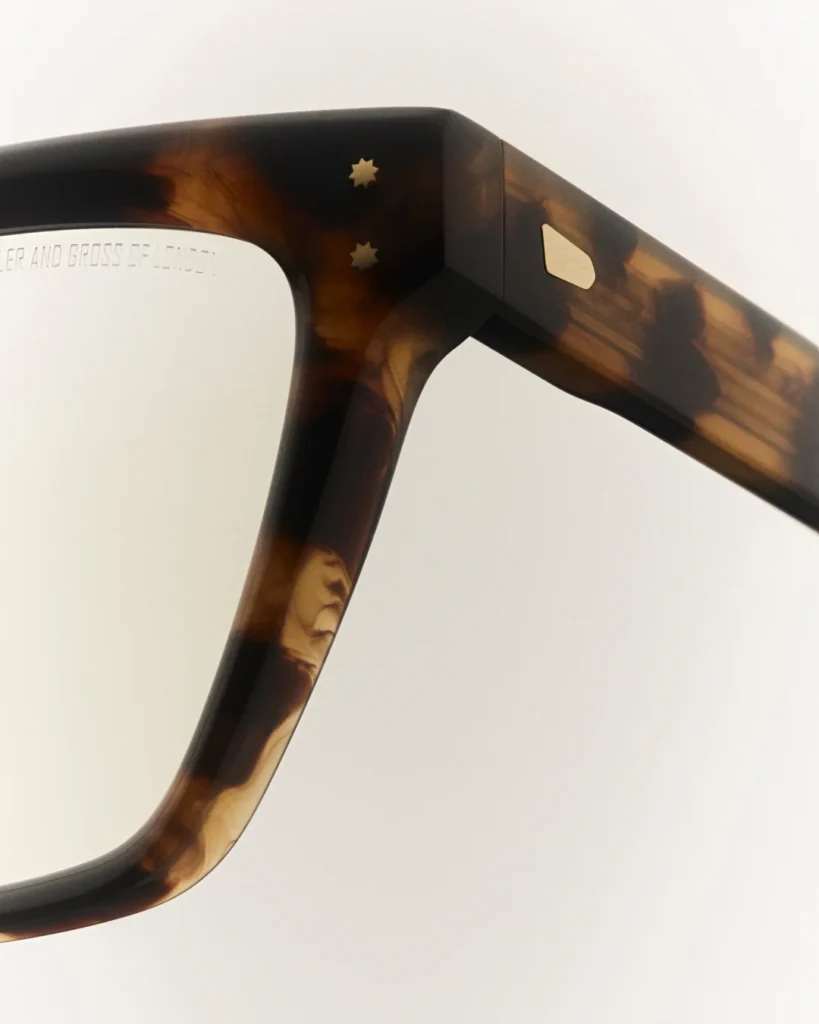
Titled The Knowledge, the campaign accompanies The Joy in Design collection. It draws on the creative atmosphere of 1990s London, with twelve characters photographed in the former Colony Club rooms on Dean Street, a place frequented by the brand’s founders. Creative direction comes from David McKendrick Studio, with photography by Blommers and Schumm. The accompanying film uses the back of a black cab as a stage for passing encounters and private moments.

The approach gives the eyewear a social context. A frame can be described through its construction, but its character becomes clearer on a face. Here, individual presence carries the story. That feels appropriate for a company whose visual identity has long depended on the expressive possibilities of glasses.

There are limits to the premise. Analogue nostalgia and London’s creative past are familiar territory in British fashion. References to a less frictionless life can become a convenient shorthand for authenticity. The campaign’s effectiveness rests on whether its characters hold our attention once those references recede.

The collection itself takes a measured approach to change. Six optical designs and one sunglass introduce new Italian acetate, while the heritage Oyster pin receives a flush-set treatment along the temples. These are adjustments to an existing vocabulary, suggesting that recognisability remains commercially important.
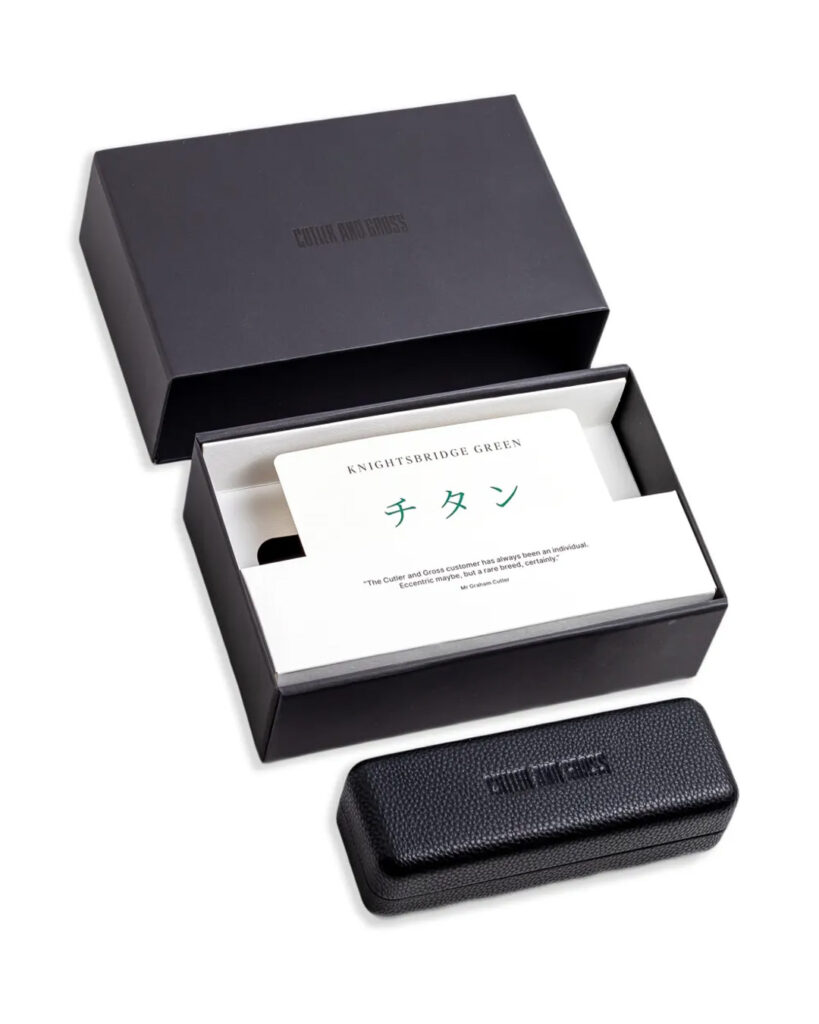
That balance deserves attention in a market where names such as Sato, The Other Glasses and Paloceras form part of the competitive landscape facing established labels. The useful comparison extends beyond frame shapes: packaging, colour presentation, campaign imagery and retail context all contribute to perceived value. Heritage brands face the same scrutiny as newcomers at each of those points.

Cutler and Gross has also made a concrete commercial change. In June 2026, its North American distribution moved from Marchon to Europa Eyewear, with the existing sales team transferring alongside the brand. This does not, by itself, establish that distribution will become more selective. It does make the relationship between positioning and retail execution particularly relevant.
The 2025 Breitling collaboration offered Cutler and Gross a bridge into watch collecting, connecting eyewear with an audience attentive to engineering, provenance and detail. Design references drawn from the Superocean Heritage gave that connection a tangible expression.

Execution proved more complicated. In his Curated Optics interview, CEO Jack Dooley described a pause involving production capacity and delays linked to new biomaterials. He said the licence still had time remaining; his account does not establish that the partnership ended or that Breitling rejected the frames.
The opportunity remains significant for eyewear. Watchmaking brings a culture of collecting and close scrutiny that could strengthen appreciation of frames. Turning that interest into lasting credibility requires the product and its delivery to meet the expectations the partnership creates.

For an optician, a persuasive campaign needs support from the experience of stocking and selling the product. For a customer, the promise must survive the distance between an image and a purchase.
AW26 offers evidence of a brand actively reconsidering how it presents itself. Its most convincing move is giving the wearer room within the heritage narrative. The longer-term test is whether that attention to people becomes equally visible across the business.
Creative Direction: David McKendrick Studio / Photography: Blommers and Schumm



 English
 French
 Italian
 Spanish
 Portuguese
 German
 Korean
 Japanese