


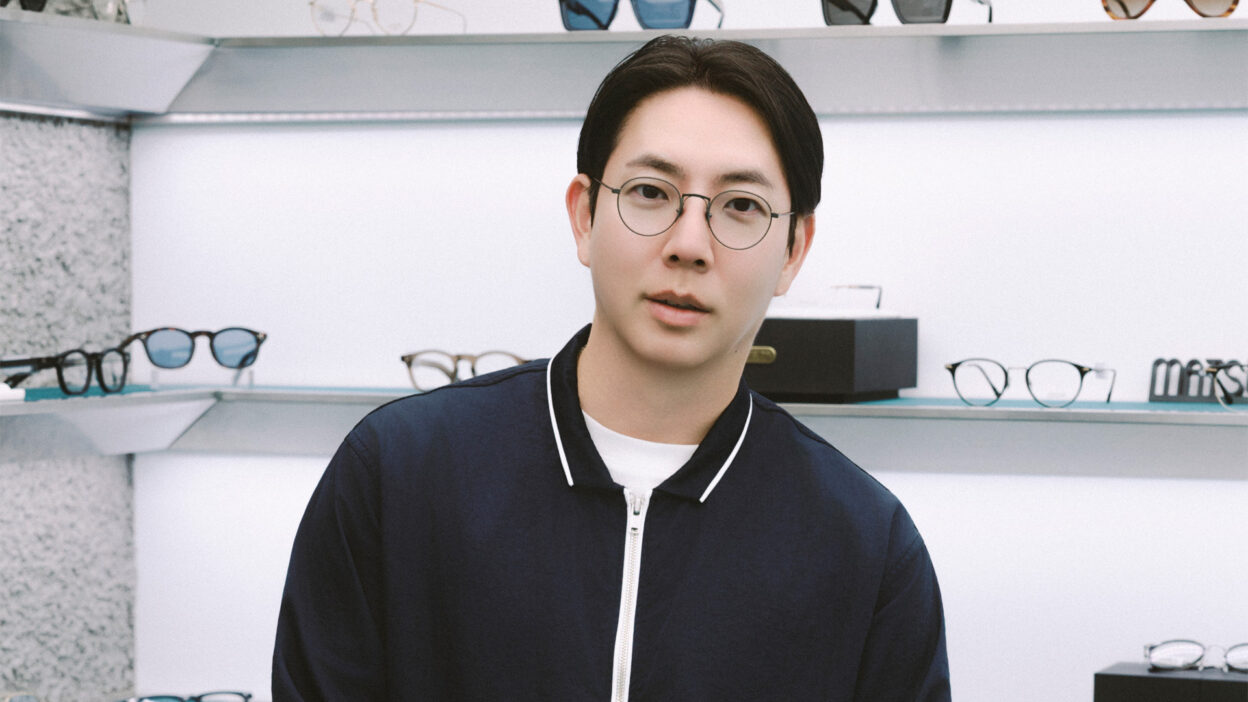
From functional necessity to fashion statement, eyewear in South Korea has undergone a remarkable transformation. Buyer and retailer Aiden Kim discusses the rise of the country’s highly selective consumer, Gentle Monster’s industry-changing influence, and the independent designers shaping Korea’s next chapter.
Over the past decade, South Korea has evolved from a market that rapidly absorbed international trends into one capable of creating its own visual languages and cultural ideas. Few categories illustrate that transition as clearly as eyewear.

Frames are no longer purchased solely to correct vision. They have become expressions of identity, objects of desire and integral elements of a wider fashion and lifestyle ecosystem. Consumers now encounter eyewear through social media, editorial content, fashion boutiques, immersive brand spaces, department stores and independent optical retailers and their expectations have risen across every channel.
Aiden Kim has observed this transformation from several vantage points. After beginning his career in fashion, he moved into eyewear and now works across online business, independent retail and department-store retail. In this interview with Curated Optics, he examines the evolution of South Korea’s eyewear culture, the impact of Gentle Monster and the opportunities awaiting a new generation of independent Korean brands.

How has the South Korean eyewear market evolved over the past decade, both commercially and in terms of consumer attitudes towards eyewear?
I believe the biggest change in the South Korean eyewear market over the past decade is not simply the size of the market, but the way consumers perceive eyewear.
I started my career in the fashion industry before moving into eyewear, and today I work across different parts of the market, from online business and independent retail to department-store retail. Looking at consumers across these different channels, the biggest shift I have seen is that eyewear is no longer viewed primarily as a tool for vision correction.
In the past, eyewear in Korea was largely functional, and traditional optical stores dominated the purchasing journey. Today, eyewear has become an important way of expressing personal taste, identity and style. Social media, celebrity culture and the growing influence of fashion and lifestyle have all accelerated this change.
The retail landscape has evolved with it. Consumers now discover and purchase eyewear through independent optical stores, brand stores, fashion boutiques, department stores and online platforms. The connection between eyewear and the wider fashion industry has become much stronger.
At the same time, Korean consumers have become much more sophisticated. Brand recognition or good design alone is no longer enough. They consider fit, quality, price, brand identity, storytelling and the overall experience surrounding the product.
In that sense, the last decade has been a transition from eyewear as something that helps you see to something that helps others see who you are.
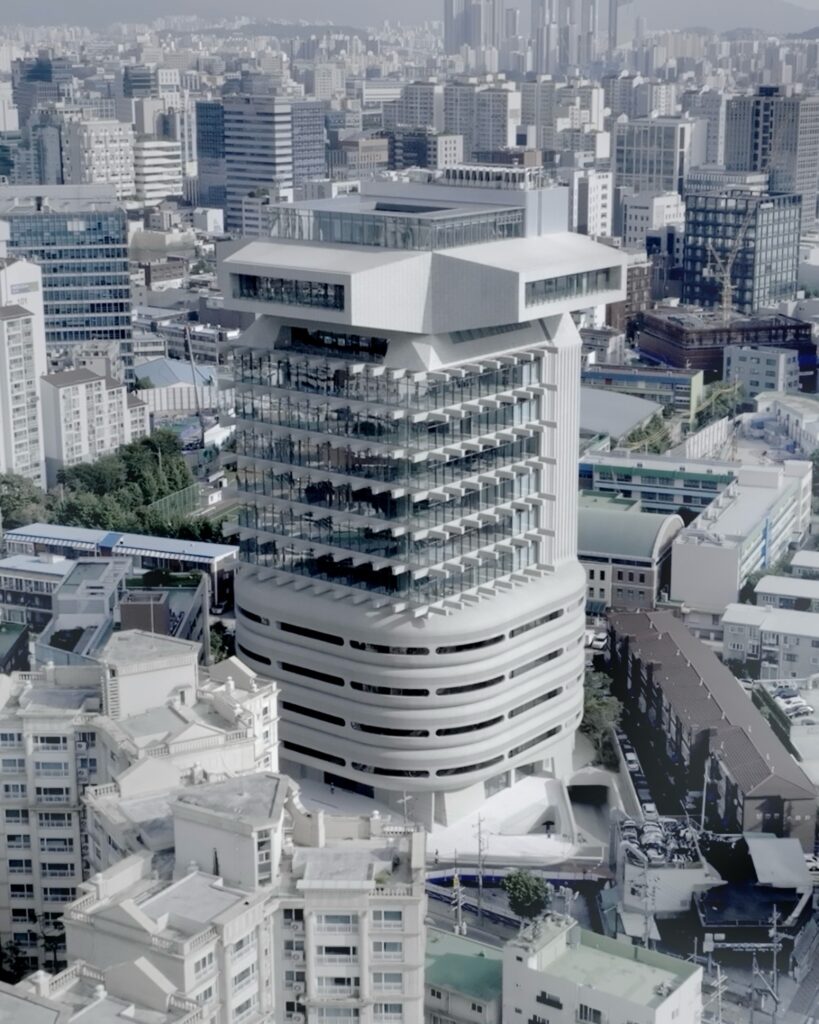
What impact has Gentle Monster had on the local market, particularly in transforming eyewear from a functional product into a fashion and lifestyle statement?
I think Gentle Monster’s biggest impact was not simply introducing a new design language. It changed the way Korean consumers experience and consume eyewear.
Of course, good eyewear brands and fashion-oriented eyewear existed in Korea before Gentle Monster. But Gentle Monster played a major role in bringing eyewear into mainstream fashion and lifestyle culture.
Perhaps most importantly, it helped transform eyewear from something people needed to buy into something they wanted to buy. Consumers began choosing eyewear regardless of whether they needed vision correction, using different frames to express their style, mood or identity.
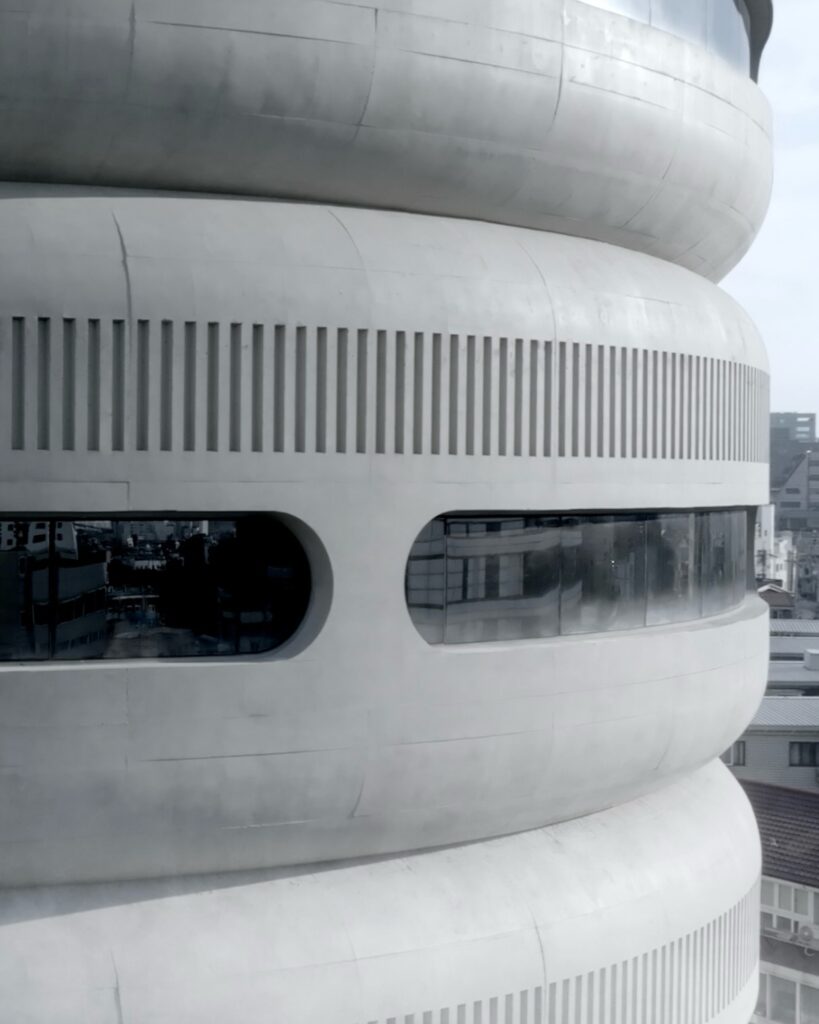
This shift is personally interesting to me because I started in fashion before moving into eyewear, and today I work across both industries. From that perspective, I have seen the boundary between fashion and eyewear become increasingly blurred.
Eyewear brands collaborate with fashion brands, fashion retailers treat eyewear as an important category, and consumers increasingly think about frames in the same way they think about other fashion products.
Perhaps one of Gentle Monster’s greatest achievements was not simply selling a lot of eyewear, but creating a new reason for people to buy it.
Beyond its commercial success, how has Gentle Monster influenced product design, brand storytelling, retail concepts and the expectations placed on other Korean eyewear brands?
I think Gentle Monster significantly raised the standard of what an eyewear brand is expected to be in Korea.
In the past, creating a well-designed, high-quality product could be the main competitive advantage. Today, that is no longer enough. Consumers look at what the brand represents, how it communicates, the imagery it creates and even the spaces in which its products are experienced.
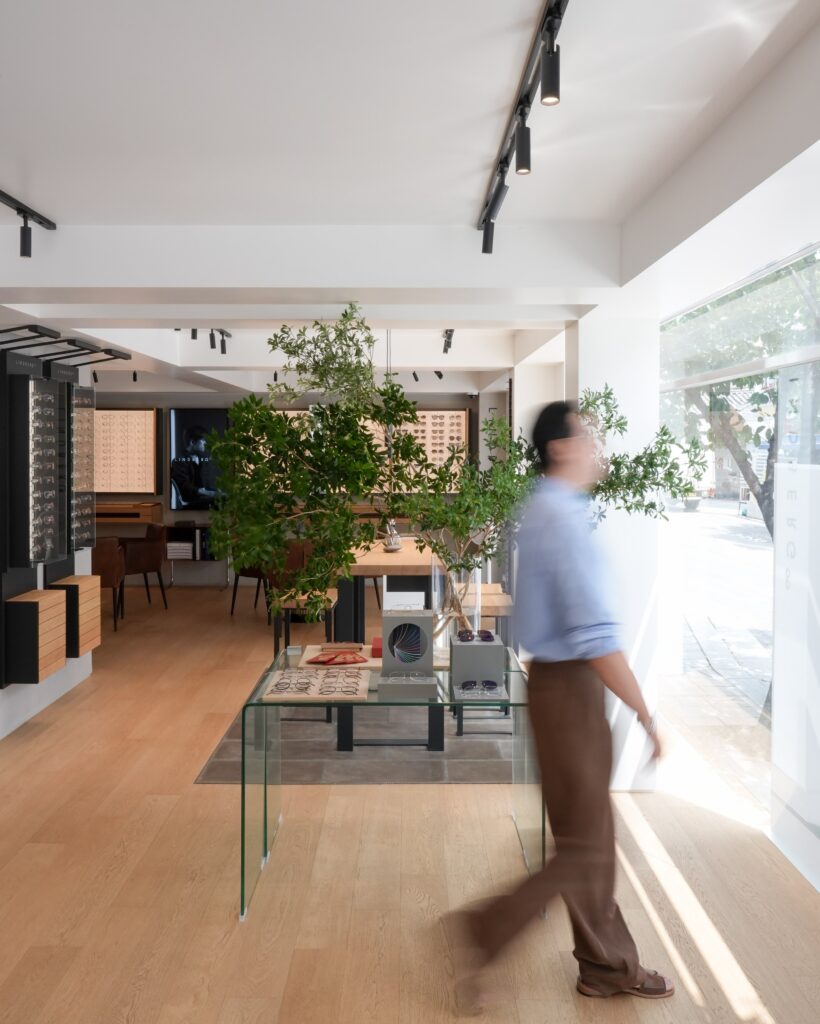
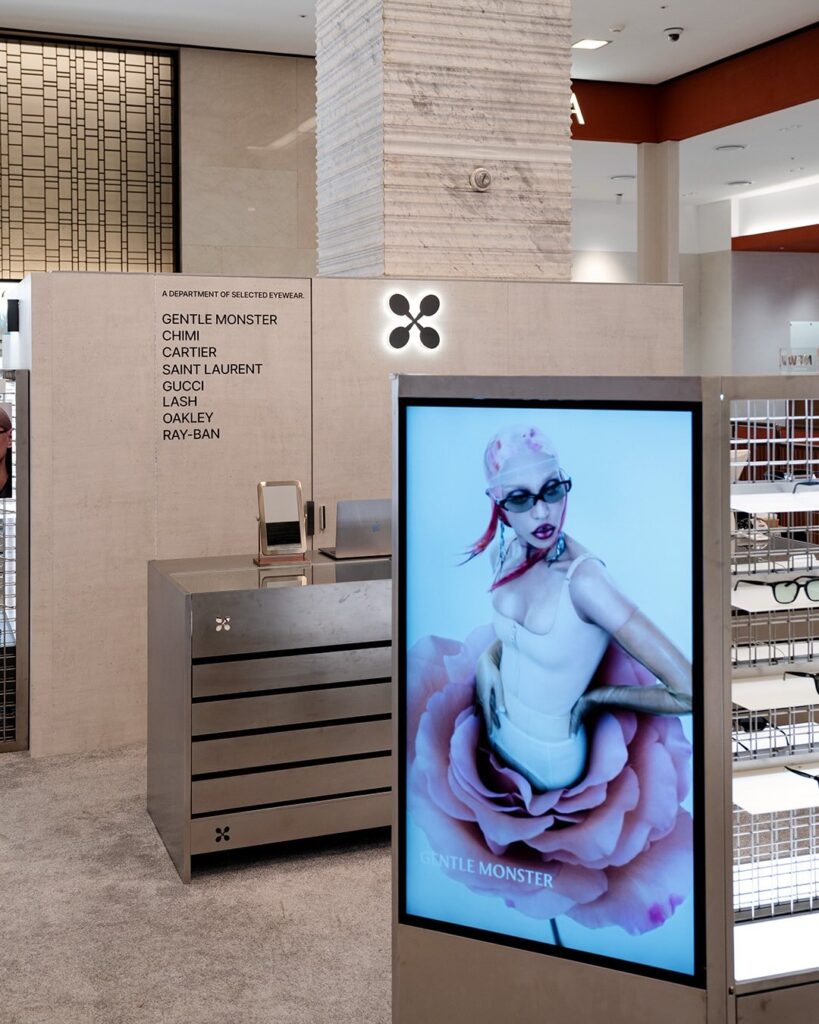
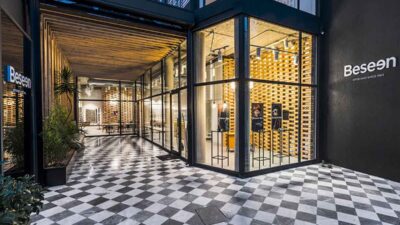
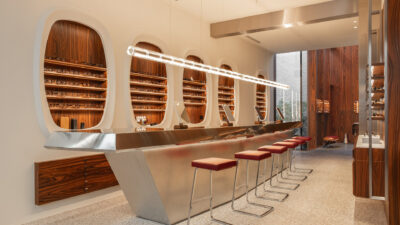
Gentle Monster demonstrated this very clearly by connecting product design with campaigns, collaborations, art, exhibitions and retail spaces to create a consistent brand universe. In particular, turning stores from places of transaction into destinations that people want to visit, experience and share has had a significant influence beyond eyewear and across Korean retail more broadly.
As a result, eyewear brands increasingly need to think like fashion brands. They need to talk about seasons, create content, design spaces and maintain an ongoing conversation with consumers.
This has raised the creative standard of the Korean eyewear industry, but it has also created a challenge for smaller independent brands, because expectations now extend far beyond making a good product.
Gentle Monster did not just influence how eyewear looks. It influenced what an eyewear brand is expected to be.
Today, an eyewear brand is expected not only to make a product, but to build a world around it.
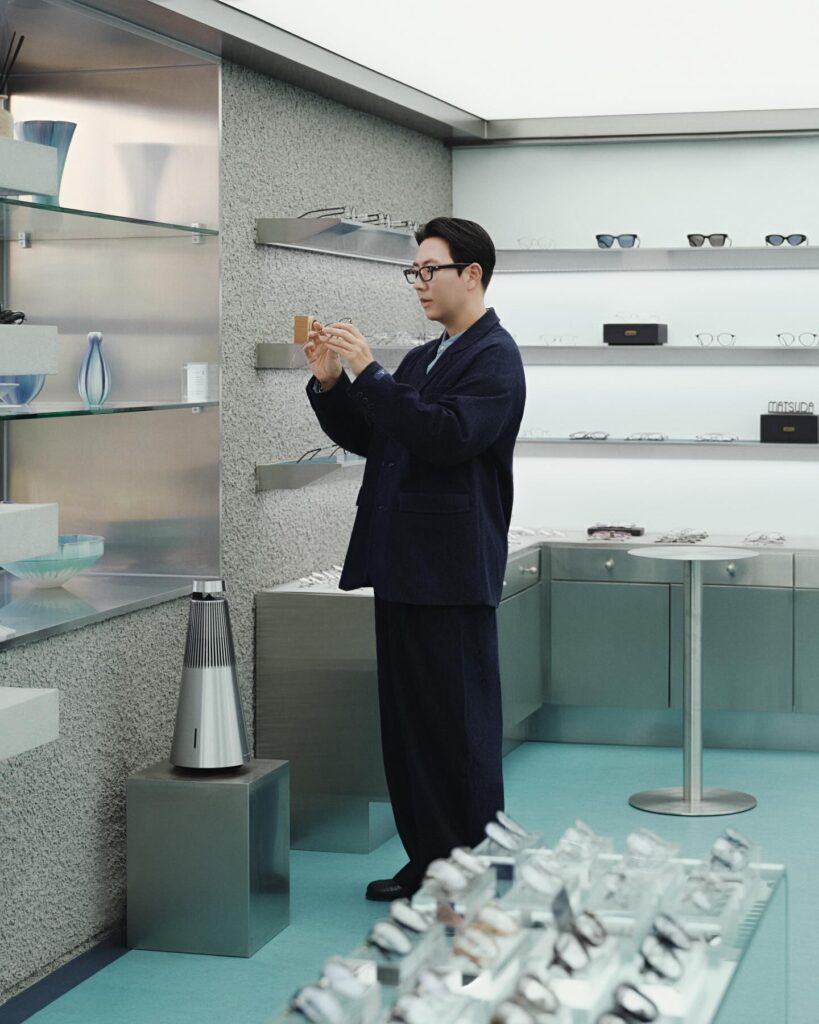
How does South Korea’s independent eyewear sector compete with brands owned, licensed or supported by major international eyewear groups? What are the main advantages and challenges for independent brands?
Independent brands cannot realistically compete with major international eyewear groups by playing the same game and I do not think they need to.
Large groups have obvious advantages in capital, production scale, global distribution, marketing budgets and internationally recognised brand portfolios.
Independent brands have different strengths: speed, freedom and a clear identity. Smaller organisations can respond quickly to changes in consumers and culture, and they can commit more strongly to a specific design language or point of view rather than trying to appeal to everyone.
As a buyer and retailer working with both global luxury names and independent eyewear brands, I often see that brand size does not necessarily determine what ultimately resonates with the customer.
Korean consumers increasingly care about whether something feels new and interesting, whether it fits their personal style and whether the brand has a distinctive identity. This creates real opportunities for independent brands.
Their strategy should therefore not be to imitate large groups, but to make what only they can do even clearer.
Of course, there are significant challenges, capital, global distribution, international sales, marketing and the resources required to maintain visibility over time.
For an independent brand, creating something good is difficult. Sustaining it is even harder.
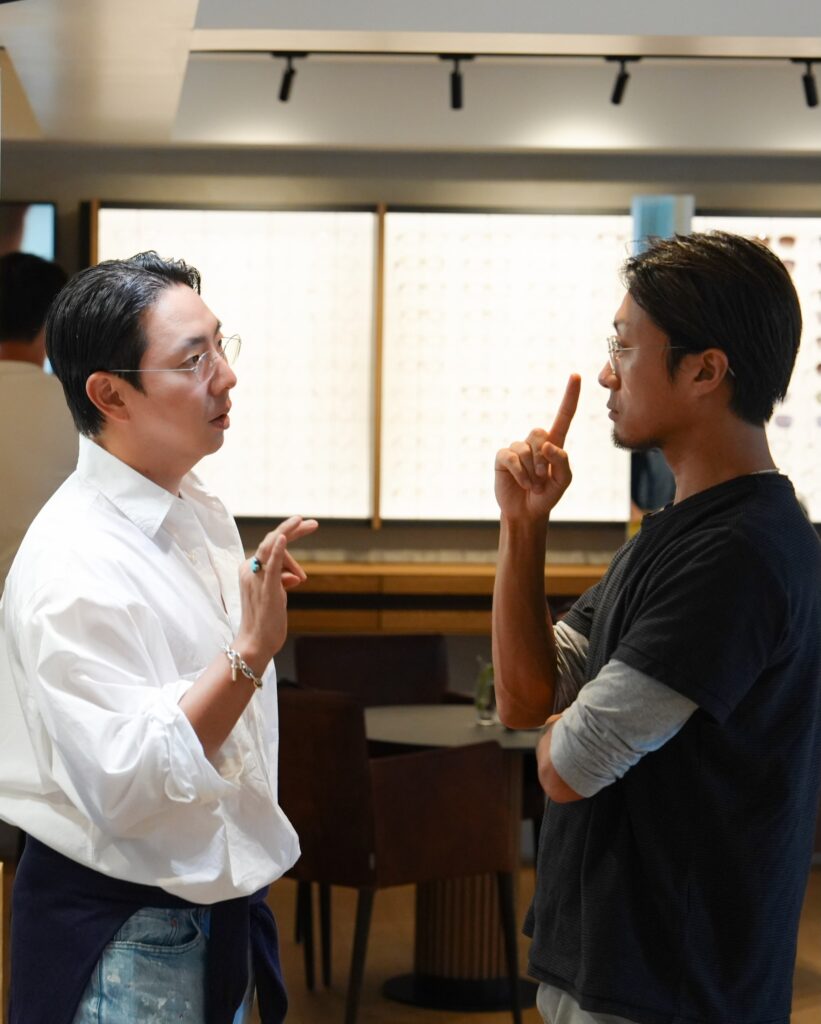
What defines the South Korean eyewear consumer today in terms of design preferences, fit, quality, price, brand identity and the overall shopping experience?
I would describe today’s Korean eyewear consumer as fast, informed and highly selective.
Consumers discover new brands and trends extremely quickly. But because they can compare products, prices, styling images, reviews and brand information almost instantly through online platforms and social media, they are also much harder to convince.
Design remains important, but fit is equally critical. Eyewear sits at the centre of the face, and just a few millimetres can completely change how someone looks. Korean consumers increasingly expect both strong design and comfort rather than choosing between the two.
When it comes to price, I would not describe Korean consumers simply as price-sensitive. They are value-sensitive. They are willing to invest in expensive products when the design, quality, identity or rarity gives them a clear reason to do so.
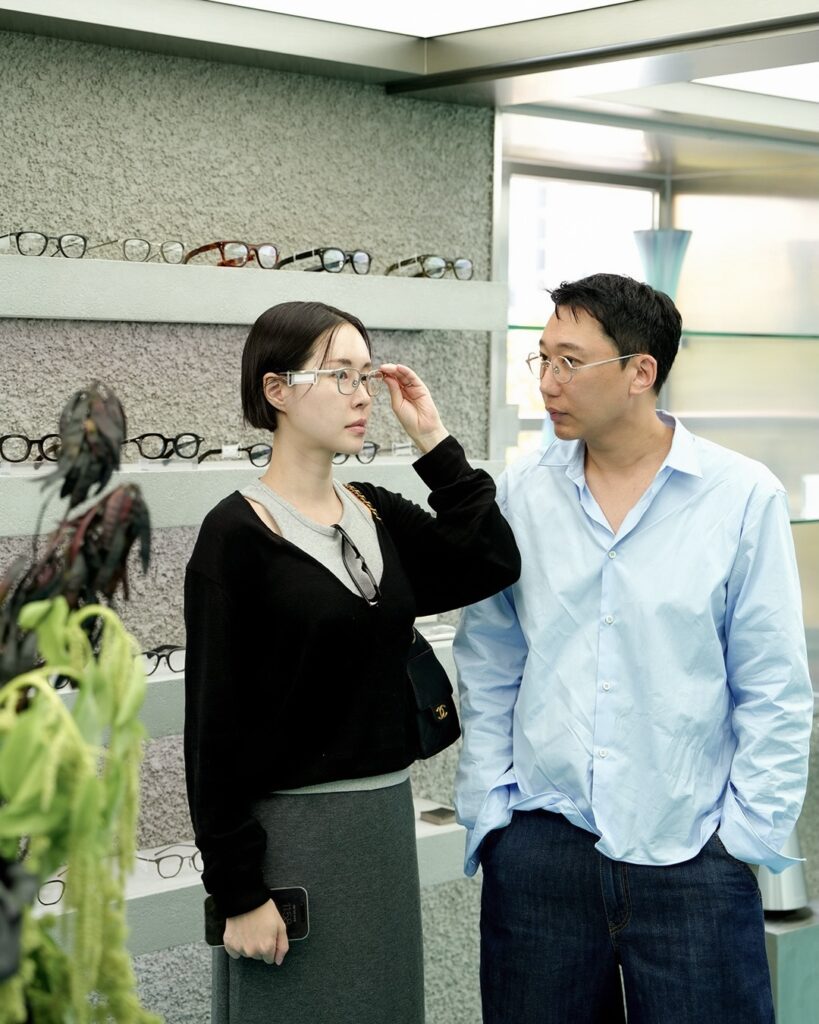
Working across online, independent retail and department stores allows me to see different types of consumers, but one thing they increasingly share is a higher expectation of both product and experience.
For quite some time, we have approached social media not simply as a sales channel, but more like a media platform. Our content has gradually evolved towards a web-magazine format, with editorial stories about brands, designers, products, fashion and culture.
In our experience, informative content often creates stronger curiosity than simply telling someone to buy a product. Sometimes the first interaction a consumer has with a brand is not inside a store, but through a screen.
At the same time, we believe online and offline should complement each other.
Stories that can be difficult to communicate fully inside a store, the history of a brand, a designer’s philosophy or the cultural context behind a product, can be explored much more deeply through digital content.
What cannot be experienced through a screen, the actual fit and detail of a frame, professional fitting, conversation with an optician and the atmosphere of a physical space, should be experienced offline.
That is why I believe good brands, good products and professional opticians are now the starting point rather than the finish line for physical retail.
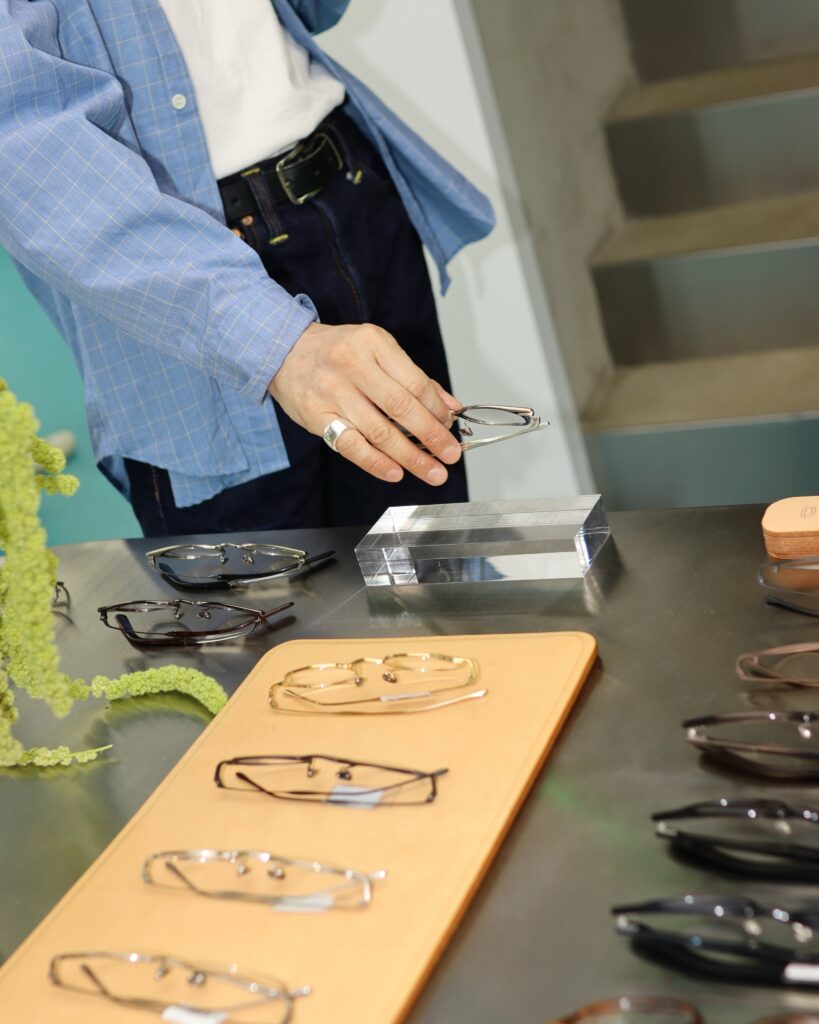
In our stores, for example, we serve hand-brewed filter coffee using carefully selected beans, exhibit works by artists whose work fits the concept of the space, and regularly organise trunk shows and brand showcases. These are not simply sales events. They are ways for customers to experience the product, the brand and our point of view from different perspectives.
For us, online and offline are not competing channels. Each should offer what the other cannot.
Ultimately, Korean consumers are no longer choosing only a product. They are also choosing the taste, culture and experience surrounding it.
How do eyewear preferences and purchasing habits differ across generations, particularly between Gen Z and Millennials and older consumers?
There are certainly generational differences, but I believe age itself is becoming less important than personal taste and lifestyle in the Korean market.
Gen Z discovers and adopts new brands and trends very quickly. Social media, celebrities and fashion content have a strong influence, and there is generally less hesitation about trying an unfamiliar brand. They are also very comfortable using eyewear as a way to quickly change or express their style.
Millennials tend to have more experience with different brands and products, so they often evaluate a combination of design, quality, brand identity, rarity and value. Many have developed clear personal tastes and are willing to invest when they understand and connect with a product.
For older consumers, comfort, lens quality, professional fitting and service generally remain very important, particularly for those who wear glasses throughout the day.
However, what we see in stores increasingly challenges these simple demographic categories. A fashion-conscious customer in their 40s or 50s may choose a much more experimental independent brand than a younger customer, while someone in their 20s may be looking for a very classic frame they can wear for years.
So, when trying to understand today’s Korean eyewear consumer, “What are you into?” is increasingly more useful than “How old are you?”
Eyewear is a particularly interesting category in this respect because it sits directly on the face and can immediately change how someone presents themselves.
Based on the available data or your professional experience, how often does the average South Korean consumer purchase or replace eyewear? Does this frequency differ between prescription glasses, sunglasses and frames purchased primarily as fashion accessories?
I think it is difficult to define Korean eyewear purchasing behaviour with one average replacement cycle because it varies significantly depending on eyesight, lifestyle, interest in fashion and, most importantly, the purpose of the purchase.
I think it is useful to distinguish between a replacement cycle and a purchase cycle.
Prescription eyewear is still often driven by functional needs, changes in vision, lens condition or the physical condition of the frame. In these cases, consumers may use one pair for a relatively long period and replace it when necessary.
Sunglasses and frames purchased primarily for fashion behave differently. Consumers are often not replacing something they can no longer use. They are adding another design, colour or style to their wardrobe.
For consumers who are highly engaged with fashion, eyewear can function much like shoes or clothing: different products for different moods, occasions and outfits. Some customers therefore purchase several frames within a year, while others may use one high-quality pair for a long time.
For this reason, I think understanding why someone buys eyewear is more meaningful than trying to define one purchasing frequency for the entire Korean market.
For prescription eyewear, need often drives replacement. For fashion eyewear, desire creates an additional purchase.
Looking ahead over the next three to five years, which trends are likely to shape the South Korean eyewear market, and which independent Korean brands or designers should the international industry be watching? How do you think the market will evolve?
Over the next three to five years, I believe the Korean eyewear market will become more segmented and more selective rather than simply becoming bigger.
Korean consumers have already experienced a huge range of domestic and international brands, and their expectations have risen accordingly. Good design or short-term hype alone will become increasingly difficult to sustain.
This means brand identity will become even more important. It is not only about what a brand makes, but why the brand exists, what makes it different and whether it can communicate that point of view consistently over time.
I also expect the boundary between fashion and eyewear to become even less relevant. Collaborations between eyewear and fashion brands are already natural, and eyewear will increasingly be treated not as a separate accessory category but as an integral part of fashion and lifestyle.
Independent brands have a real opportunity in this environment. Korean consumers do not necessarily choose according to the size of a company, which means a smaller brand with a distinctive design language and a clear identity can still attract significant attention.
At the same time, gaining attention and building a sustainable brand are two very different things. Consistency will become one of the biggest challenges for the next generation of independent brands.
When the international eyewear industry looks at Korea, I do not think it should be searching for “the next Gentle Monster.” Instead, it should be looking at the next generation of Korean designers who are developing their own language in completely different ways.

One of the names I would watch is WUJIC JO. Having followed the products and collections closely, what interests me is that the brand does not simply follow what is currently popular in Korea. It is developing its own perspective and design language. I think designers with that kind of independent attitude can show a much broader and more diverse side of Korean eyewear to the international market.
Ultimately, I believe the future of Korean eyewear is not about having more brands. It is about having more distinctive brands.
Korea has evolved from a market that quickly absorbs trends into one that increasingly creates new tastes and cultural ideas of its own. The next three to five years will be an important period for seeing how Korean eyewear develops its own languages and communicates them to the global market.
 English
  French
  Italian
  Spanish
  Portuguese
  German
  Korean
  Japanese