



One of the biggest mistakes optical stores make isn’t choosing the wrong brands; it’s choosing the wrong colors from the wrong brands.
Walk into many optical stores today, and you’ll notice the same pattern when it comes to colored frames. Many brands still approach color the way they did ten or twenty years ago. Their bold collections often feel theatrical rather than sophisticated, while many of the brands shaping today’s luxury eyewear market deliberately focus on timeless tones.
Safe colors are easier to sell but building an unforgettable store requires much more than playing it safe.
In this Curated Optics article, we show you how to introduce color through frames from leading brands, without relying on overly theatrical eyewear labels.
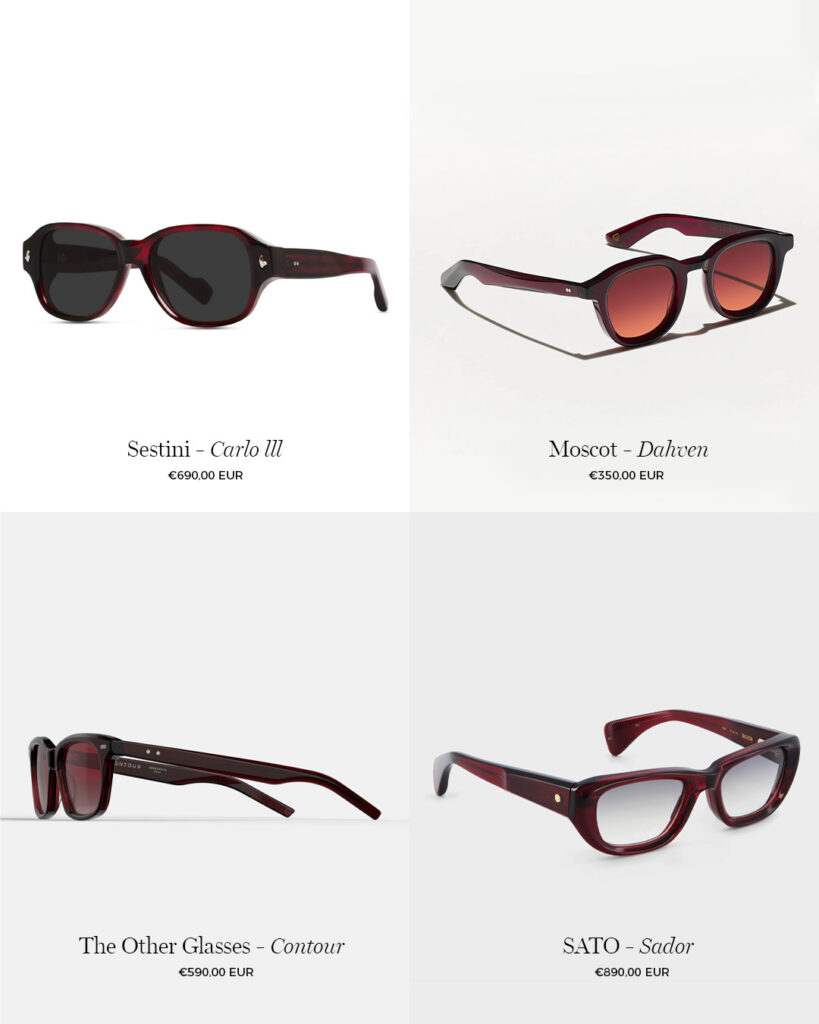
During a recent conversation with one of our Canadian collaborators and retail creative director, we realized that very few opticians truly know how to build a timeless wall of colorful eyewear. Instead, many continue purchasing outdated color combinations simply because they are offered that way by suppliers.
The problem is simple: you’re allowing brands to curate your store.
It should be the other way around.
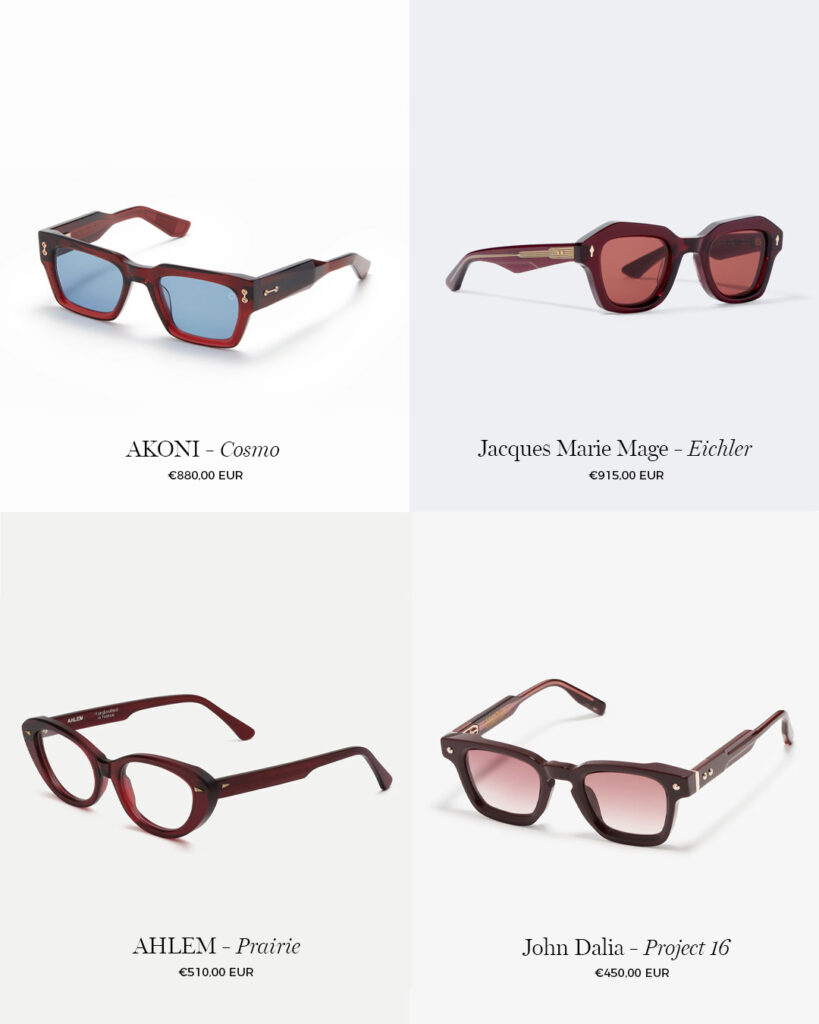
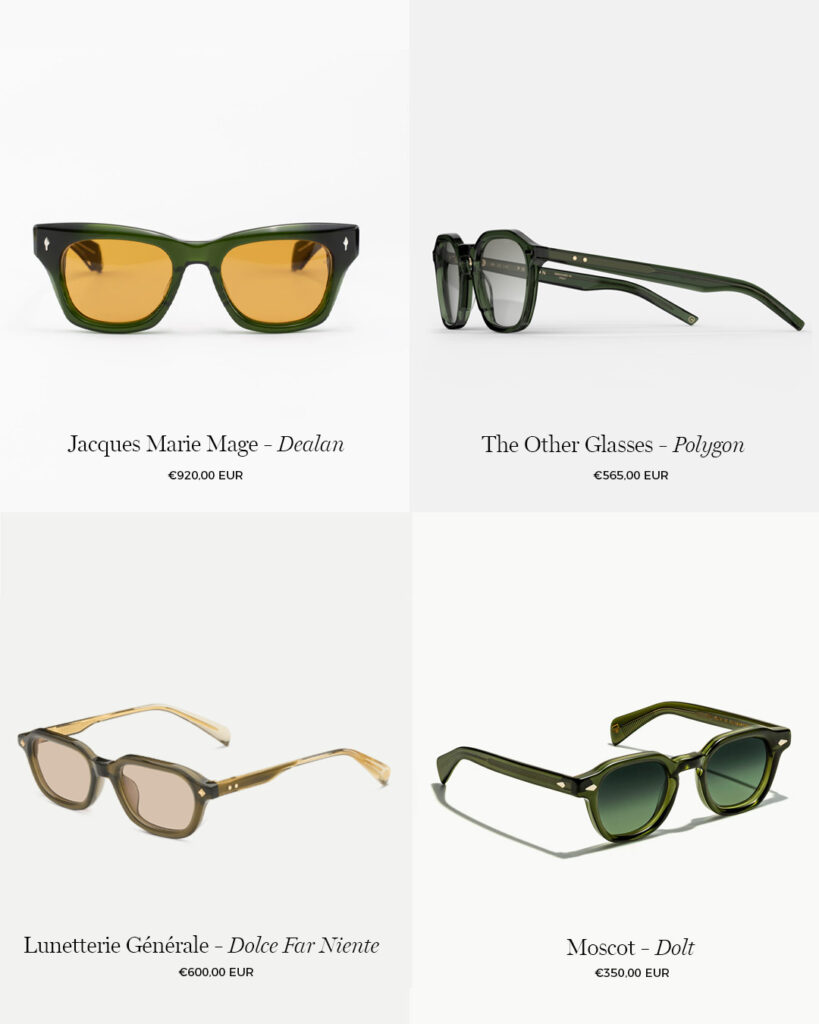
A great optical retailer acts like a curator. Instead of allowing one supplier to dominate an entire colorful display, select the most beautiful colors from five, six different independent brands. Choose only exceptional frames from each collection and build your own visual language.
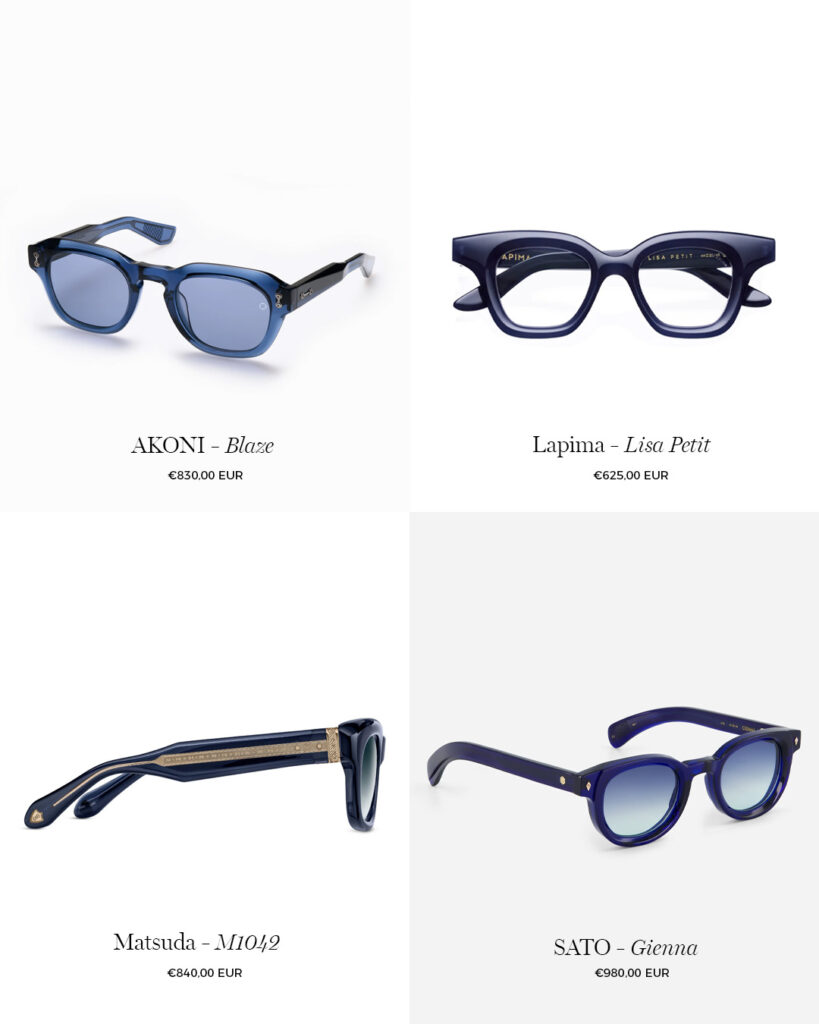
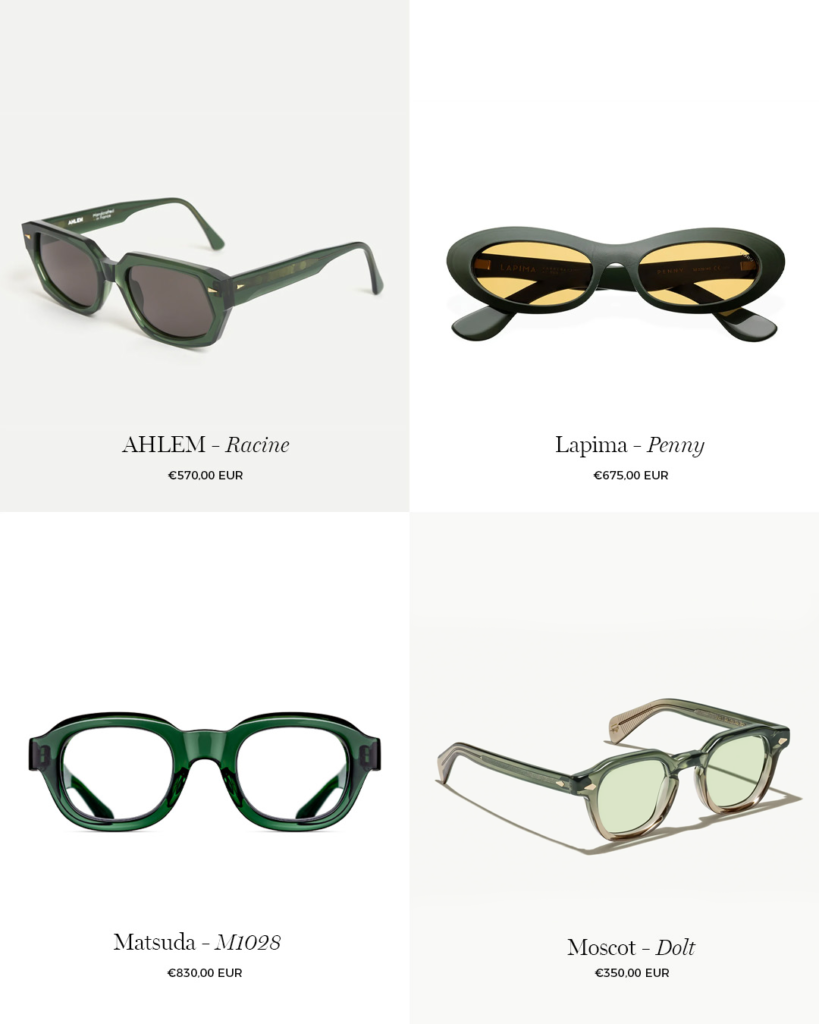
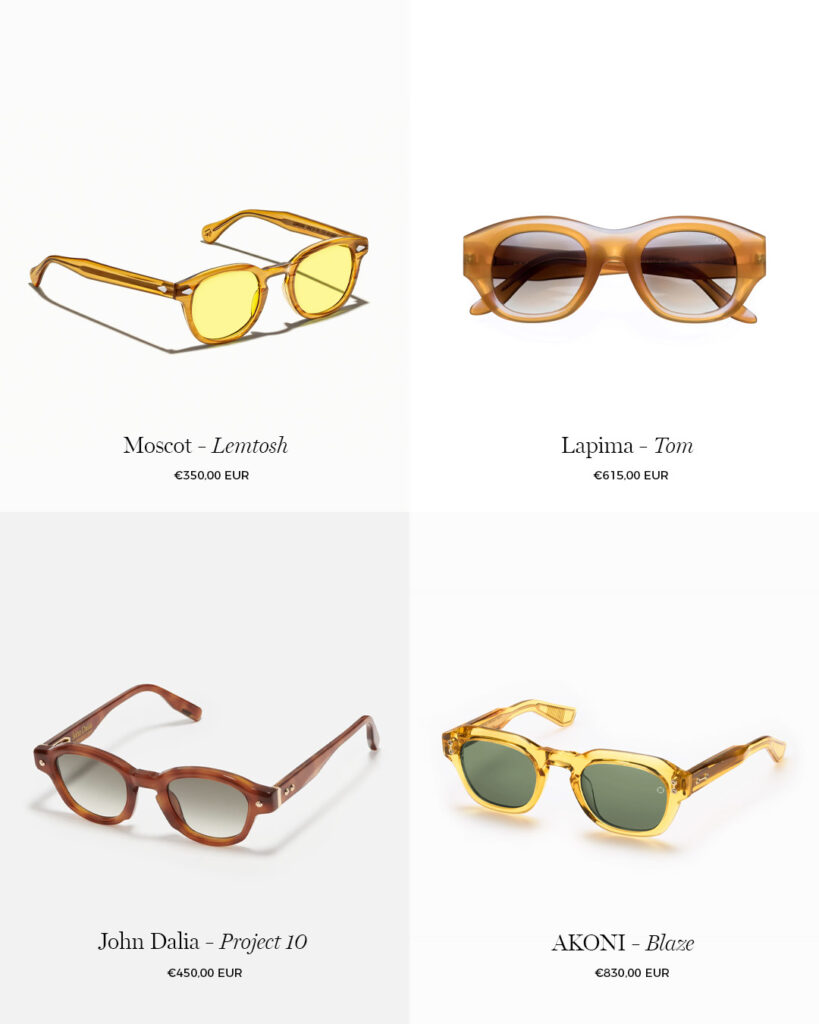
Organize your display into harmonious color families: crystal, champagne, olive, forest green, cobalt blue, navy, burgundy, plum, amber, translucent grey, and deep black. The result feels intentional, elegant, and impossible for competitors to copy.
Your customers shouldn’t recognize a supplier’s merchandising strategy.
They should recognize your taste.
Color is one of the few elements that instantly creates identity inside an optical store. When thoughtfully curated, it transforms a display into a destination.
Think seasonally.
Spring and summer naturally invite translucent acetates, lighter blues, champagne tones, soft greens, and playful sunwear. Autumn and winter work beautifully with richer browns, deep burgundies, darker transparencies, olive greens, and sophisticated jewel tones. Small seasonal rotations keep your store looking fresh without constantly replacing inventory.
Pay attention to your local market, but don’t become trapped by it.
Fashion-forward cities may embrace bold colors immediately, while more conservative markets may respond better to refined transparent acetates and earthy palettes. Your role isn’t simply to satisfy existing demand it’s to educate your customers and gradually shape their taste.
Presentation matters just as much as selection.
Grouping frames by color rather than by brand changes the way customers explore your collection. A display that flows naturally from crystal to champagne, olive, blue, burgundy, and black feels balanced, premium, and visually engaging.
Finally, don’t let sales representatives define your color strategy.
Build direct relationships with the brands whenever possible. Today, ordering directly, reordering quickly, and even returning merchandise has become easier than ever for many independent brands. Your objective isn’t to buy everything a supplier wants to sell. It’s to select only the pieces that strengthen your identity.
Remember, sales representatives are naturally incentivized to move inventory. A curator is incentivized to build culture.
Every brand wants more space on your shelves.
Your responsibility is different.
Create a store that customers remember not because of one supplier’s display, but because of your vision, your taste, and your ability to curate something they can’t experience anywhere else.
When preparing your buying list for SILMO this year, think in terms of what your display actually needs: eight blue frames, eight green frames, seven yellow frames, and twelve burgundy frames.
Then look for those colors within the collections of brands you already buy from. This is how you build a considered, cohesive eyewear wall.
The best optical stores don’t simply sell eyewear.
They curate color, aesthetics, and identity.
And that’s exactly what customers remember long after they leave.



 English
  French
  Italian
  Spanish
  Portuguese
  German
  Korean
  Japanese