



The eyewear label draws on mid-century American design, Japanese manufacturing and a growing consumer interest in products with a recognisable history.
The renewed interest in vintage eyewear has created opportunities for brands with access to credible archives. Julius Tart Optical sits within this expanding category, combining references from post-war New York with contemporary Japanese production.

Launched in 2016, the brand was developed with Richard Tart, nephew of Julius Tart, and eyewear designer Tommy O’Gara. Its collections draw on documents, materials and original frames connected to Tart Optical, a name associated with some of the most recognisable acetate designs of the mid-20th century.

Rather than moving far beyond this visual history, Julius Tart Optical has chosen to remain close to it. Models such as the AR, FDR and Harold feature compact proportions, visible rivets and substantial acetate construction. Adjustments in sizing, materials and manufacturing make the designs more suitable for today’s optical market, while their vintage character remains central to the product.

The AR is the clearest example of this strategy. Available in several sizes and colour variations, it provides the brand with an identifiable core product while allowing retailers to address different customers without constantly introducing new silhouettes.
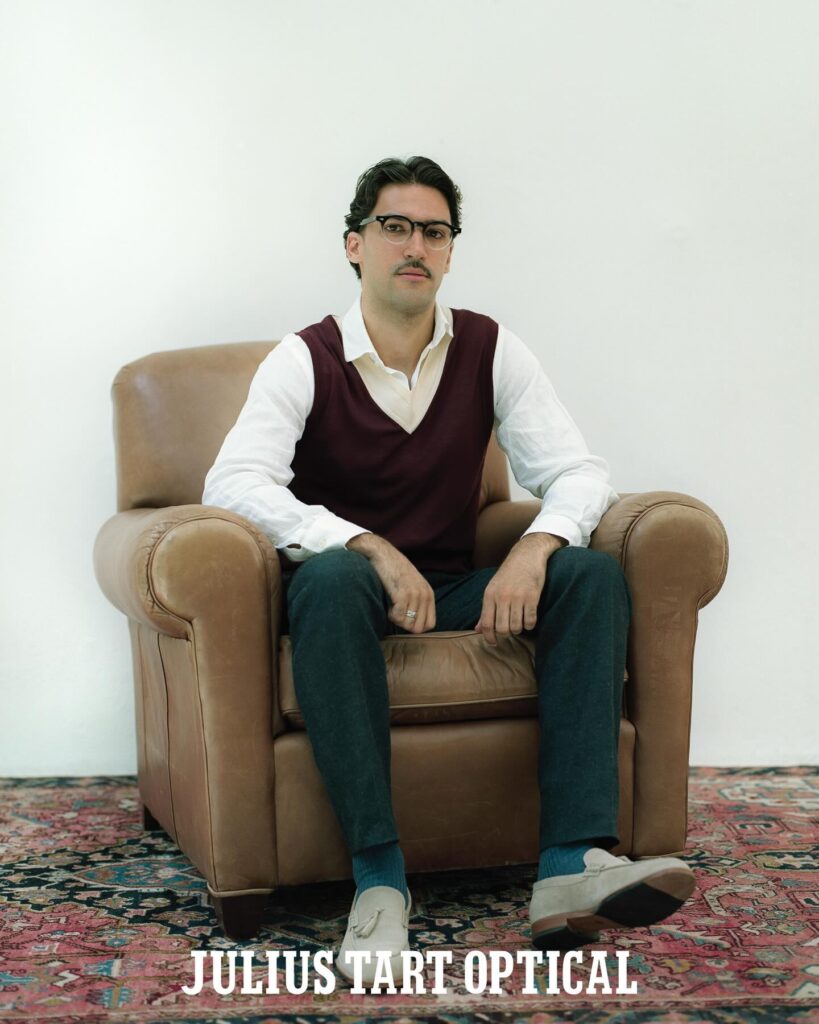
This approach reflects a broader change in the premium eyewear sector. As the market becomes more crowded, smaller labels are increasingly using provenance, specialist manufacturing and focused distribution to distinguish themselves. Julius Tart Optical is sold through a network of independent optical stores rather than relying exclusively on large-scale fashion retail.

There are limits to an archive-led strategy. Remaining close to familiar designs can make innovation less visible, particularly in a category where many brands now reference similar mid-century shapes. The challenge is to preserve continuity without allowing heritage to become repetitive.

For Julius Tart Optical, the commercial proposition is relatively straightforward: recognisable design, Japanese production and a controlled connection to eyewear history. Its relevance will depend on how successfully the brand can develop that formula while maintaining the clarity that made it noticeable in the first place.



 English
  French
  Italian
  Spanish
  Portuguese
  German
  Korean
  Japanese