


In luxury eyewear, everyone talks about titanium, rare acetates, and precious metals. Yet there is one material that remains in a category of its own: natural horn.
Not because it is expensive.
Because it is incredibly difficult.
Many independent brands introduce one or two horn pieces as halo products. Rigards, Jacques Durand, and several haute eyewear maisons have all explored its beauty. But when it comes to building an entire identity around horn craftsmanship, one name has defined the category for decades: Hoffmann Natural Eyewear.
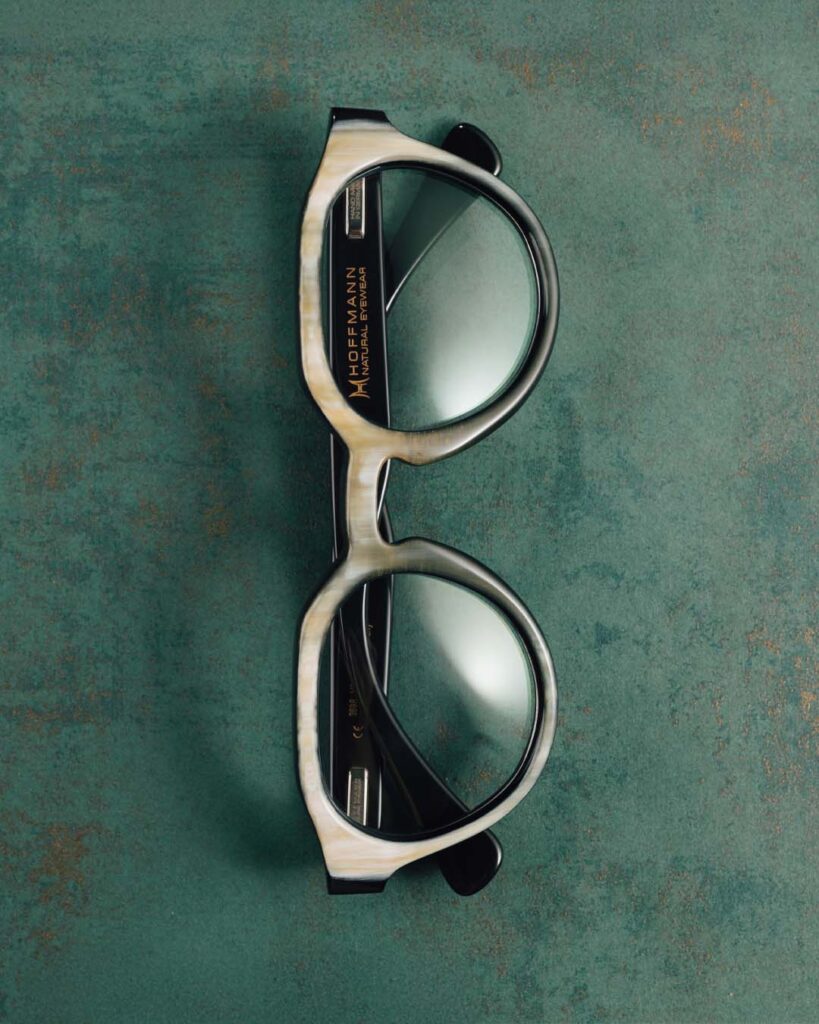
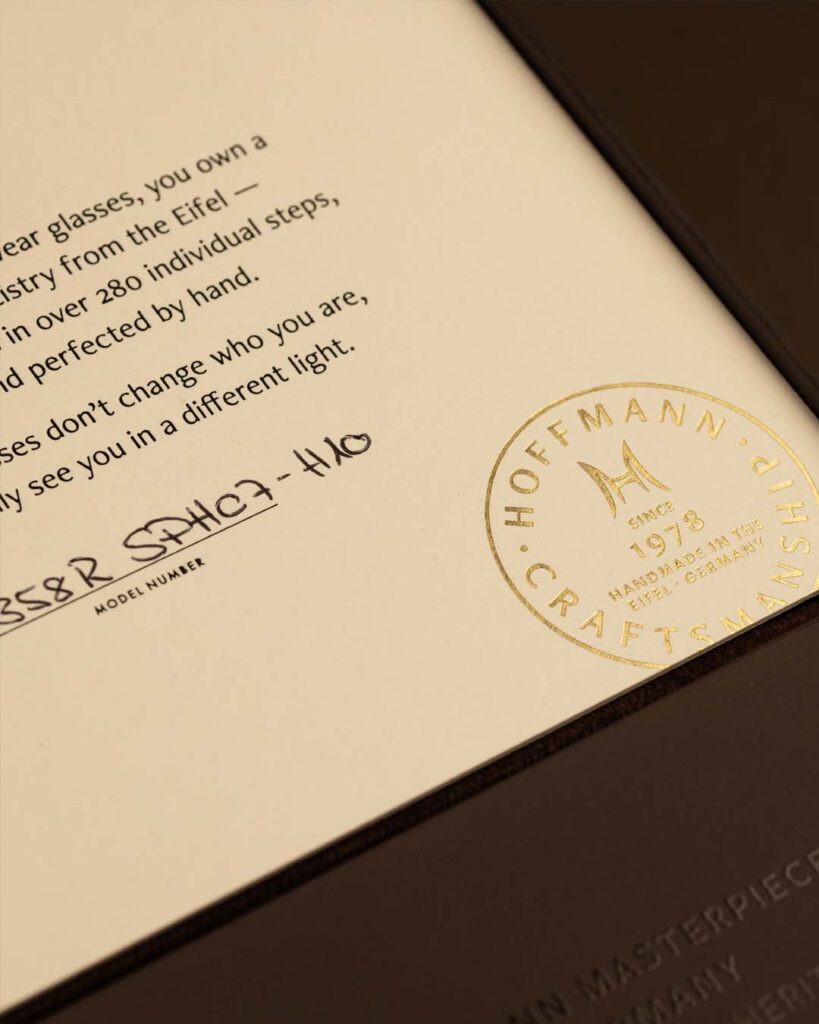
Since 1978, the German atelier has dedicated itself almost exclusively to creating handcrafted horn eyewear, transforming one of nature’s oldest materials into contemporary luxury. Every frame is produced in-house in Germany through an artisan process involving around 280 individual manufacturing steps, with more than 500 natural horn shades and colour variations available.

Horn Is Not Just Rare. It Is Alive.
Unlike acetate, every horn sheet carries its own fingerprint.
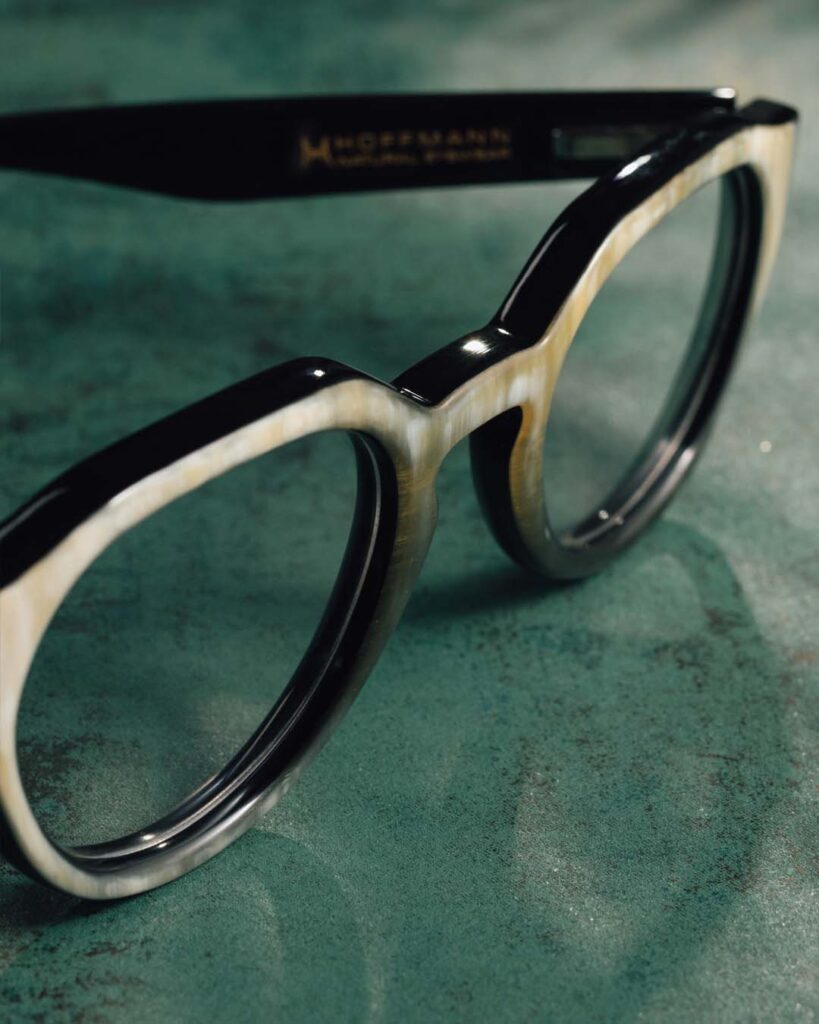
Its natural grain, translucency and depth change from piece to piece. Two frames can never be identical.
This is precisely why collectors love horn.
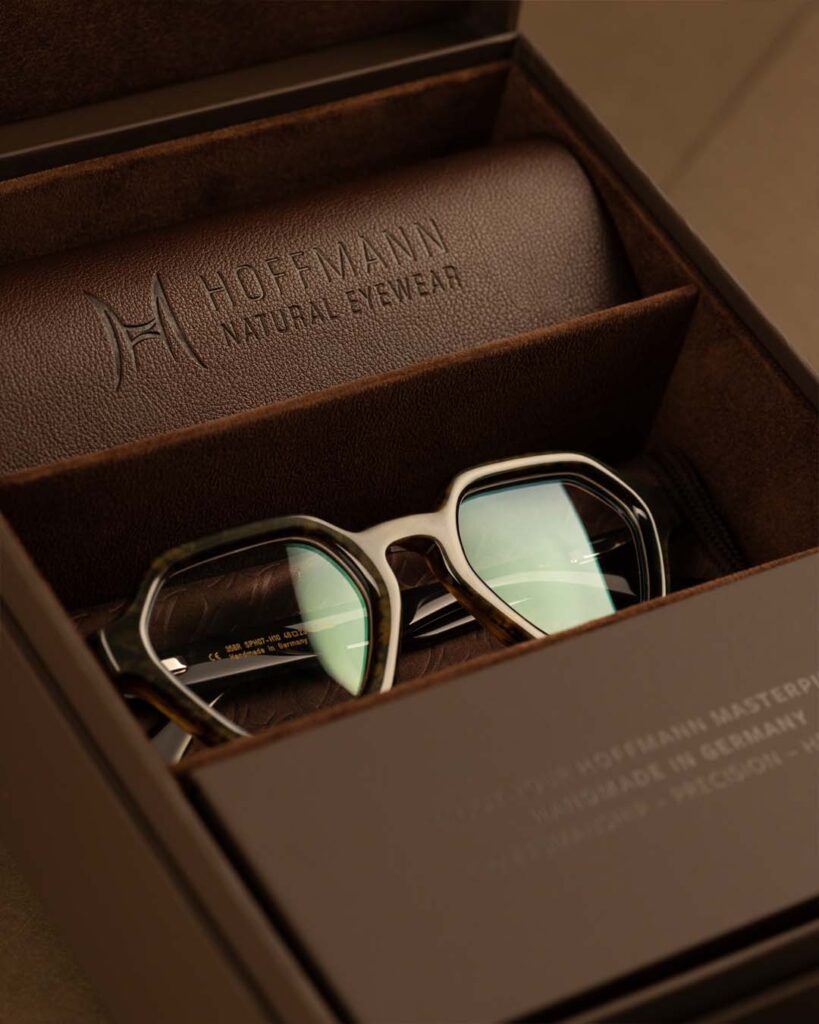
The material interacts with light differently than anything else used in eyewear. Instead of reflecting light from its surface, horn creates an internal depth that gives every frame an almost organic glow. It feels warm to the touch, develops character over time and offers a tactile experience that synthetic materials simply cannot reproduce. Hoffmann uses Asian water buffalo horn, carefully selecting and matching each piece by hand before production begins.

Why Many Opticians Avoid Horn
Ironically, the very qualities that make horn exceptional also make it intimidating.
Horn is significantly more sensitive than acetate or titanium during glazing and adjustment.
Installing prescription lenses requires experience, patience and precise control. Excessive pressure, incorrect heating or careless handling can damage the frame. Even routine adjustments demand an understanding of how the material behaves.
For this reason, many optical stores simply choose not to work with horn collections.
Not because clients don’t appreciate them.
Because servicing them requires skills that fewer and fewer workshops possess.
Horn is therefore not only a luxury material it is also a test of craftsmanship for everyone involved, from the manufacturer to the dispensing optician.
The Company Behind Maybach Eyewear
Within the luxury eyewear industry, Hoffmann’s expertise extends far beyond its own brand.
The German manufacturer is also recognized as the company behind the production of Maybach Eyewear, one of the world’s most exclusive luxury eyewear collections. That relationship reflects a level of manufacturing know-how earned through decades of specialization in natural materials rather than mass production.
When a luxury brand wants genuine horn expertise, there are very few ateliers capable of delivering it at this level.

Innovation Inside Tradition
What makes Hoffmann remarkable is that it has never treated horn as a nostalgic material.
Instead, the company has continued to innovate around it.
Its proprietary Triplex Horn® construction allows the brand to produce what it describes as the world’s slimmest horn frames while maintaining exceptional structural stability and everyday wearability. Patent-protected hinge concepts also simplify glazing and improve durability without compromising the elegant appearance of the frames.
This is an important distinction.
Many brands use horn.
Hoffmann develops technologies specifically for horn.
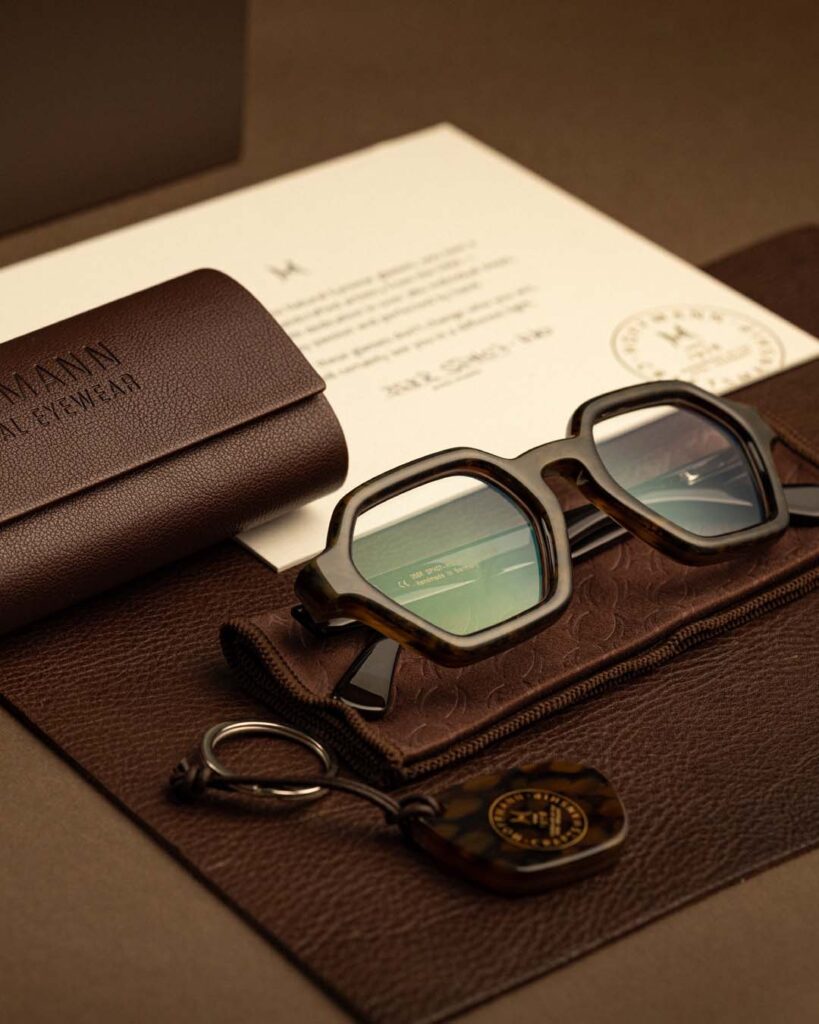
Understatement Instead of Logos
In today’s luxury market, branding often means visibility.
Hoffmann follows the opposite philosophy.
Its frames deliberately avoid exterior logos, allowing the material, craftsmanship and the wearer’s personality to become the focus. The design language is quiet, restrained and timeless an interpretation of luxury that values substance over recognition.
It is a philosophy increasingly aligned with today’s collector, who seeks exclusivity without overt branding.
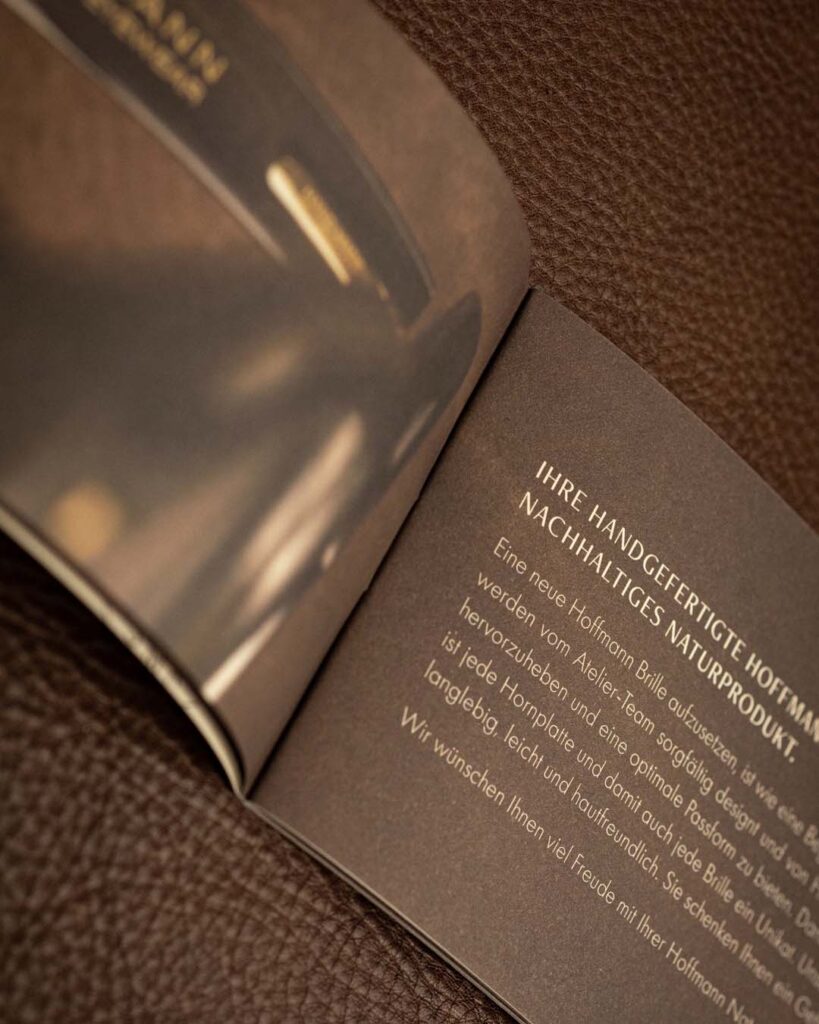
A Material for Connoisseurs
Natural horn will probably never become mainstream.
It is too expensive to produce.
Too demanding to manufacture.
Too delicate for industrial-scale production.
And perhaps that is exactly why it remains so desirable.
In an industry increasingly driven by efficiency and automation, horn reminds us that true luxury is often measured not by marketing, but by the number of hands required to create something extraordinary.
For nearly five decades, Hoffmann has demonstrated that this ancient material still has a place at the very highest level of eyewear craftsmanship not as a novelty, but as an enduring expression of artisan luxury.


 English
  French
  Italian
  Spanish
  Portuguese
  German
  Korean
  Japanese