

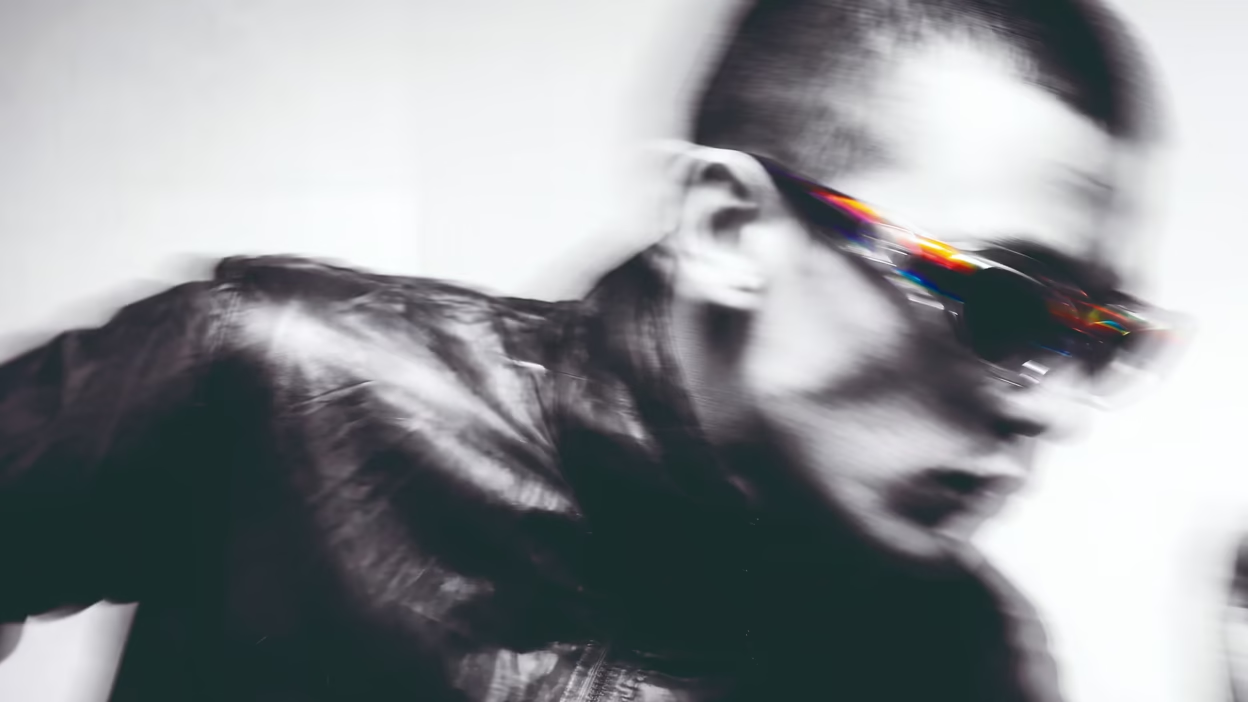
Long positioned as an accessible entry point into independent eyewear, Etnia Barcelona enters collectible territory with an €880 limited edition shaped by the visual language of Felipe Pantone.
Independent eyewear has its own informal hierarchy. Some brands build their identity around rarity and four-figure price tags. Others make design-led frames available to a broader audience.
Etnia Barcelona has traditionally belonged closer to the second category. With expressive colour, recognisable Mediterranean energy and core models generally positioned between approximately €159 and €229, the Barcelona brand has become an accessible entry point into independent eyewear. Its proposition has been creative without becoming intimidating, premium without placing itself exclusively in collector territory.
That context makes its collaboration with Felipe Pantone more significant.
Priced at €880 and limited to 1,000 numbered pieces, the release is not simply another colourful capsule added to the Etnia catalogue. It represents a deliberate move into the high-end segment, one where artistic authorship, technical complexity, scarcity and presentation are expected to justify value.
Etnia Barcelona is not abandoning its accessible position. It is testing how far the brand can extend beyond it.
The result is an ambitious product that attempts to turn the visual language of one of contemporary art’s most recognisable colourists into a functional, transformable object.
Colour Built Into the Frame
Most artist collaborations treat eyewear as a surface. A familiar frame receives a new colour treatment, a recognisable motif or a signature placed discreetly on the temple.
Etnia Barcelona and Felipe Pantone take a more convincing route. Instead of placing the artist’s work on the eyewear, the project attempts to make the eyewear behave like his work.
Pantone’s practice sits between the physical and the digital. Gradients, geometric fragmentation, reflective surfaces and optical interference recur across his paintings, sculptures and large-scale installations. His compositions often appear unstable, changing according to light, distance and the position of the viewer.
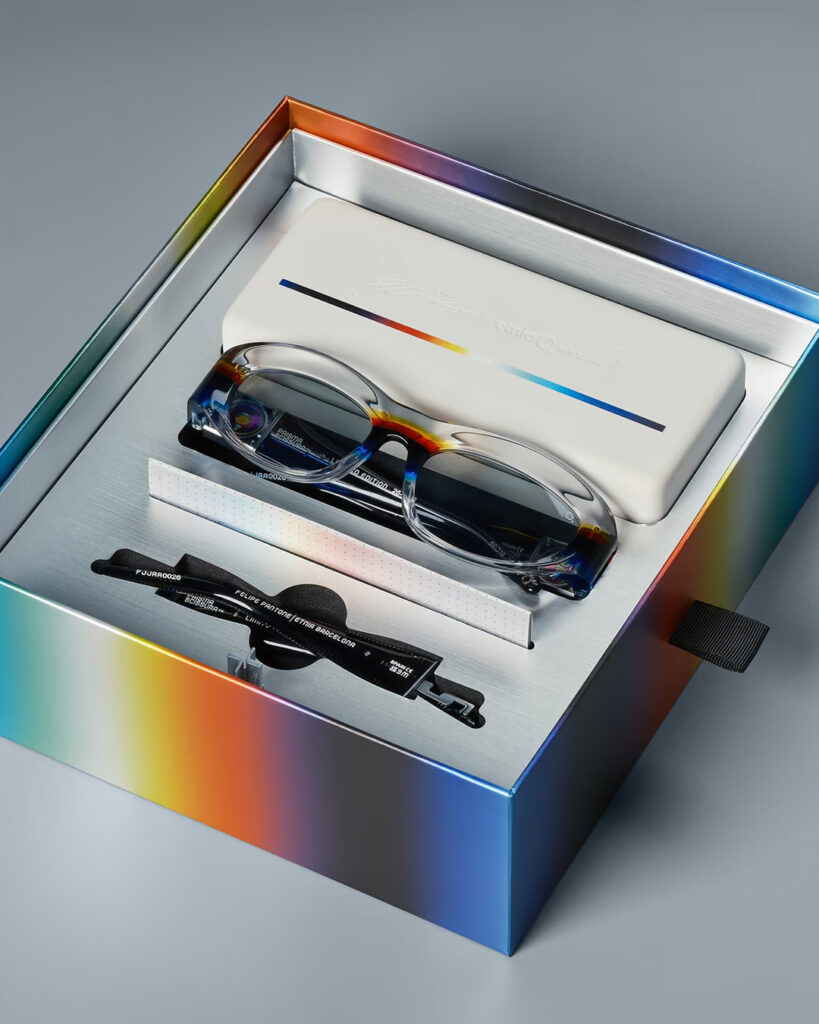
Translating that language into eyewear required more than selecting an expressive palette.
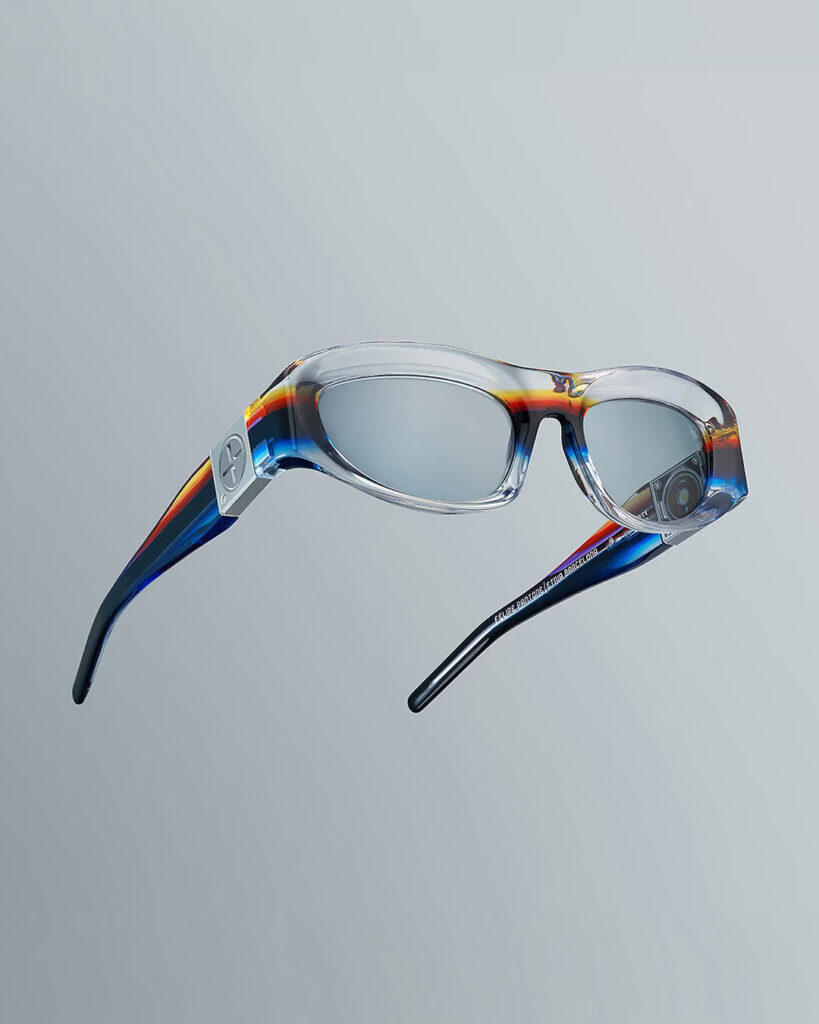
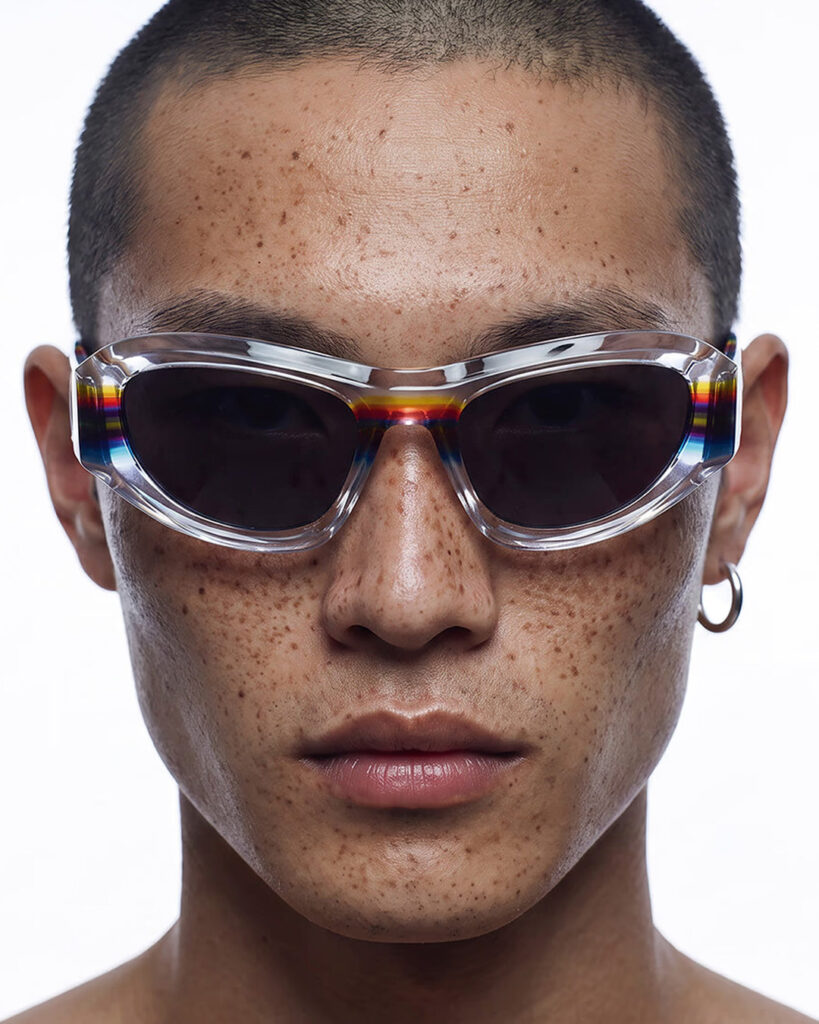
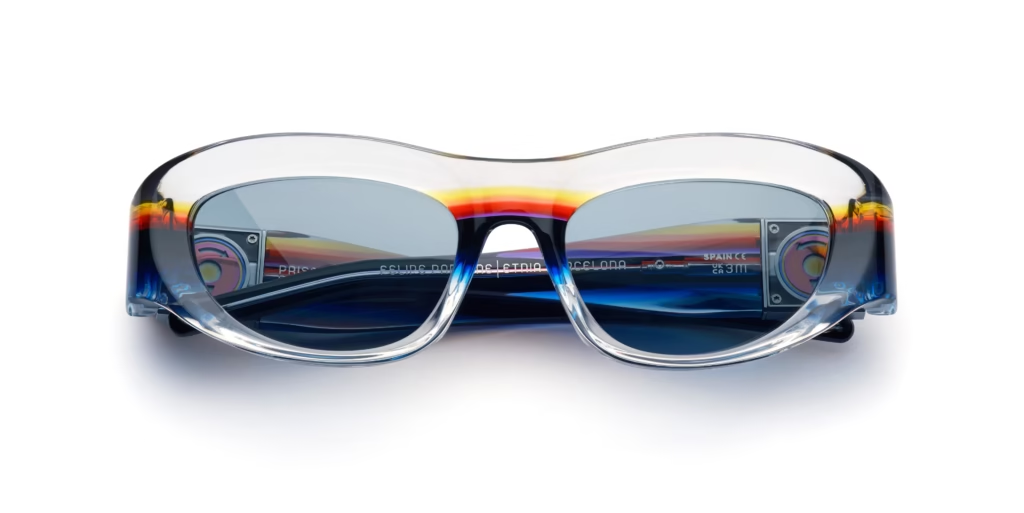
For the collaboration, Etnia Barcelona developed a multilayer acetate construction composed of 11 precisely arranged layers of colour. The chromatic effect is embedded within the material before the frame is machined, giving the object a depth that a surface print could not achieve.
The frame does not simply reproduce one of Pantone’s images at a smaller scale. It interprets the principles behind his practice: movement, visual tension and continuous transformation.
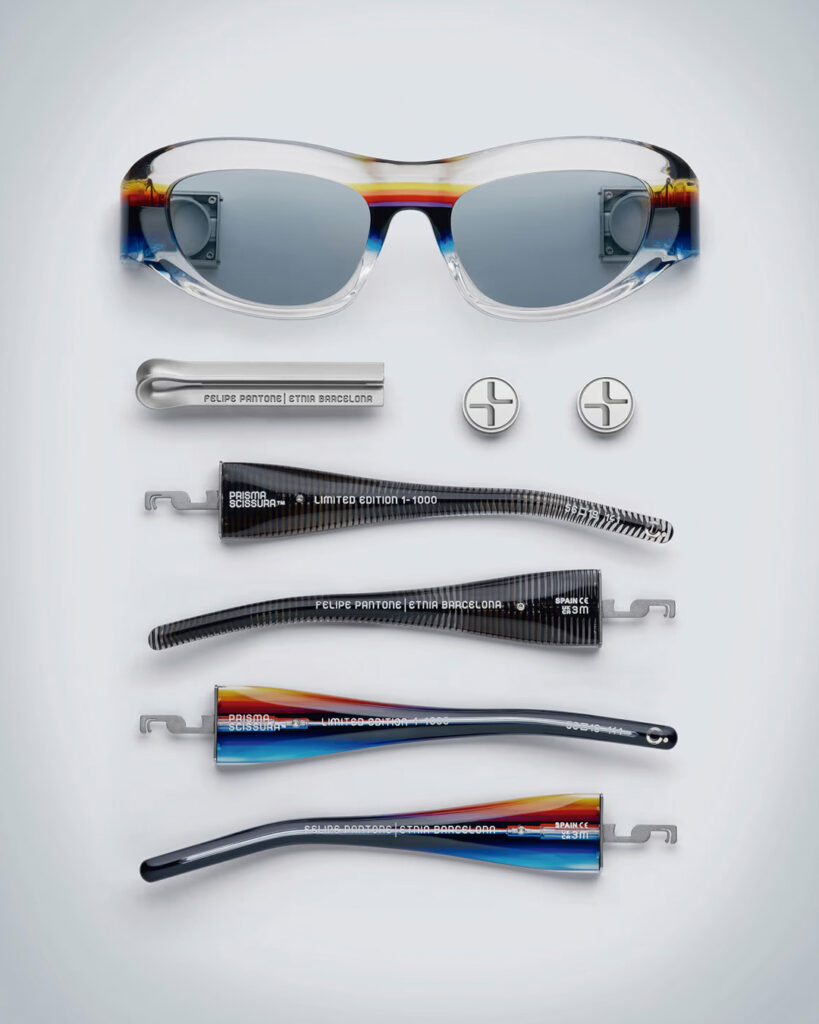
Moiré patterns introduce another form of instability. Created through the interaction of repetitive lines, the effect produces the perception of motion across an otherwise static surface. Applied to the temples, it ensures that the eyewear never presents exactly the same image from every angle.
A Frame Designed to Change
The collaboration’s most significant technical idea may be its interchangeable temple system.
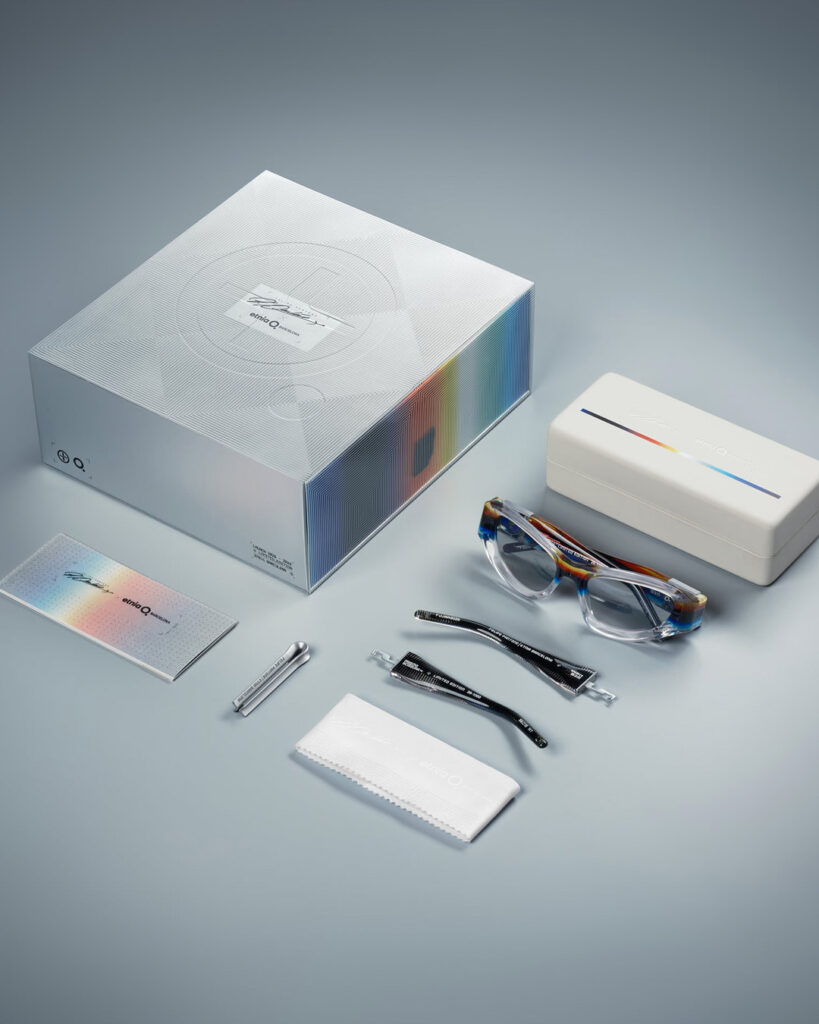
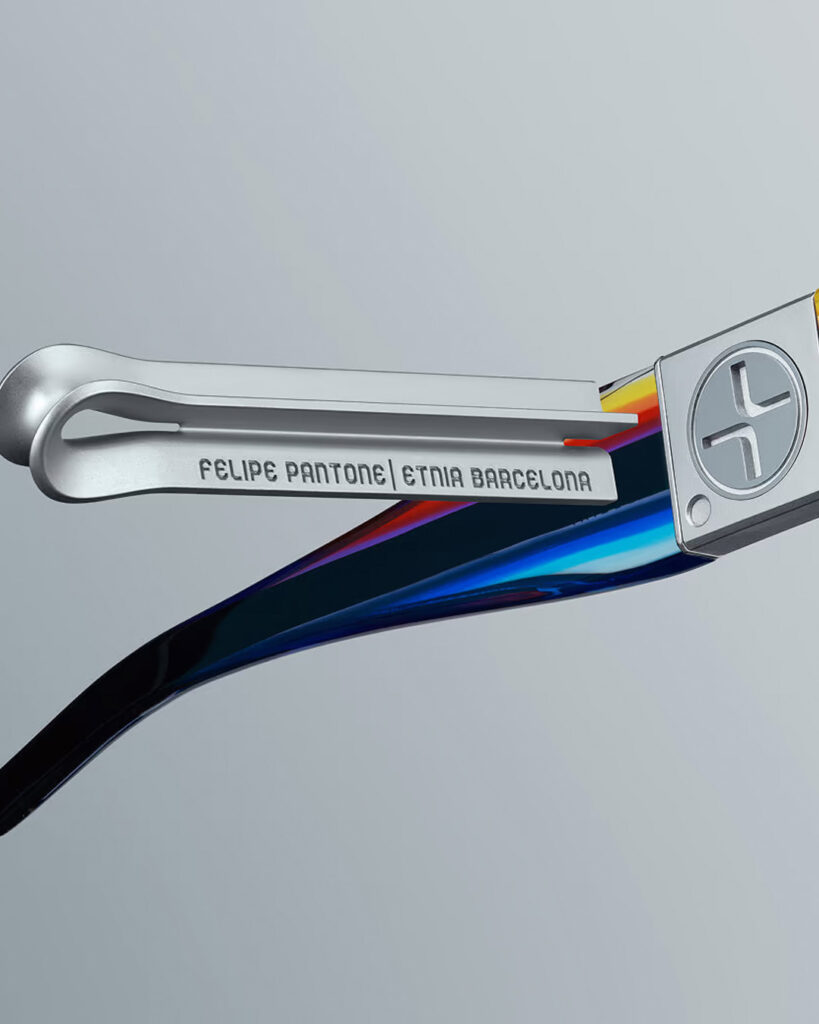
Developed specifically for the project, the titanium mechanism allows different temples to be attached using a dedicated tool included with the frame. The wearer can move between chromatic and patterned configurations, altering the character of the object without replacing its central structure.
Customisation in eyewear is usually presented as a choice made before purchase: a different lens, finish or colourway selected from a fixed menu. Here, transformation remains part of the experience after the frame has been acquired.
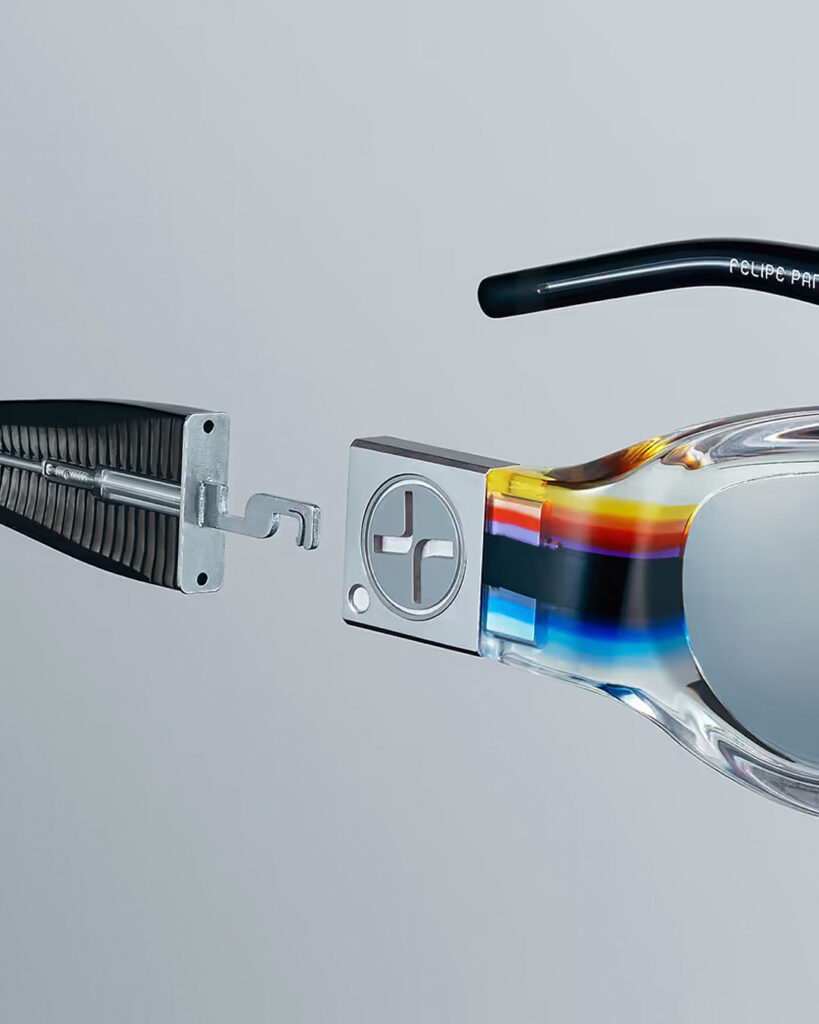
That gives the mechanism a conceptual purpose beyond novelty. Pantone’s art is concerned with flux, with the way images change through perception, technology and motion. The exchangeable temples make that instability functional.
The frame is not designed to arrive at one definitive appearance. It is designed to remain open.
What Makes It a High-End Product?
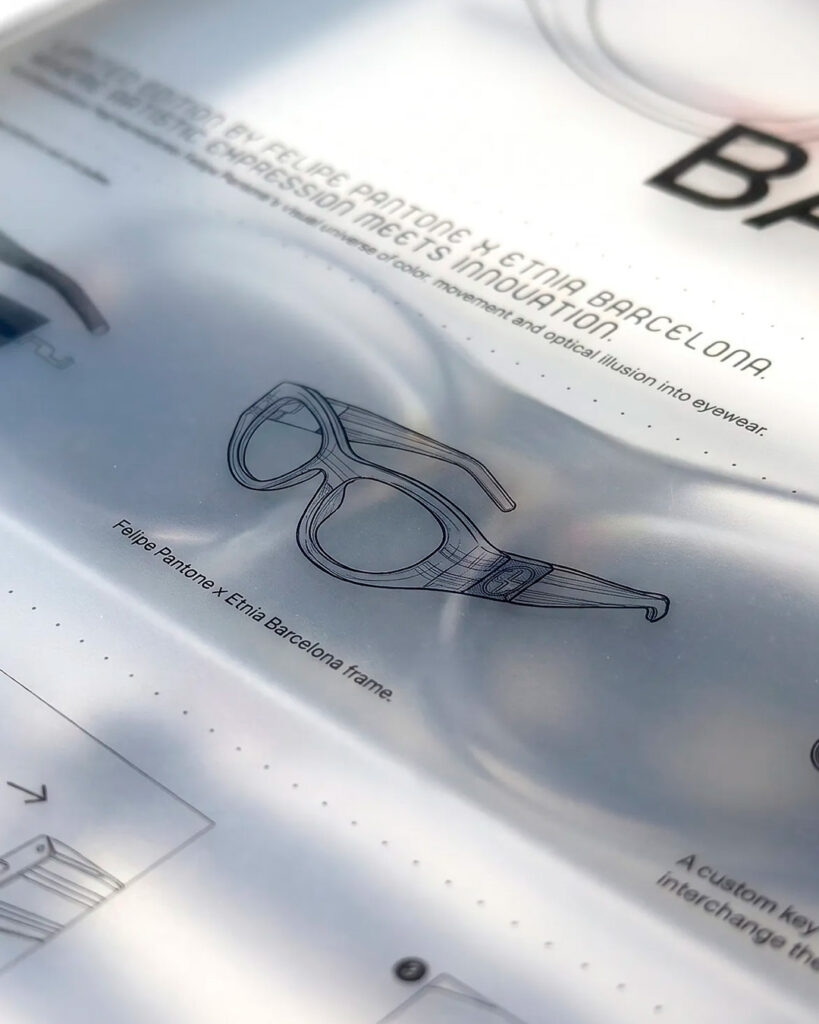
The €880 price places the Felipe Pantone edition far above Etnia Barcelona’s regular collection. The difference, however, is not based on an artist’s signature alone.
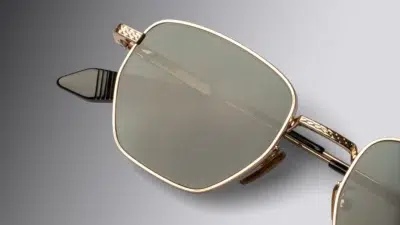
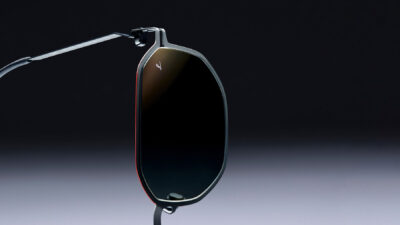
The frame is made from natural acetate and fitted with Barberini photochromic mineral lenses. According to the official specifications, the lenses move from category 2 to category 3 as exposure to ultraviolet light increases.
As the lenses darken outdoors and become lighter under reduced UV conditions, the relationship between lens, acetate and face also changes. A functional response to light becomes part of the object’s visual behaviour.
The titanium temple mechanism, labour-intensive acetate construction and limited production add further distance from the brand’s standard offer.
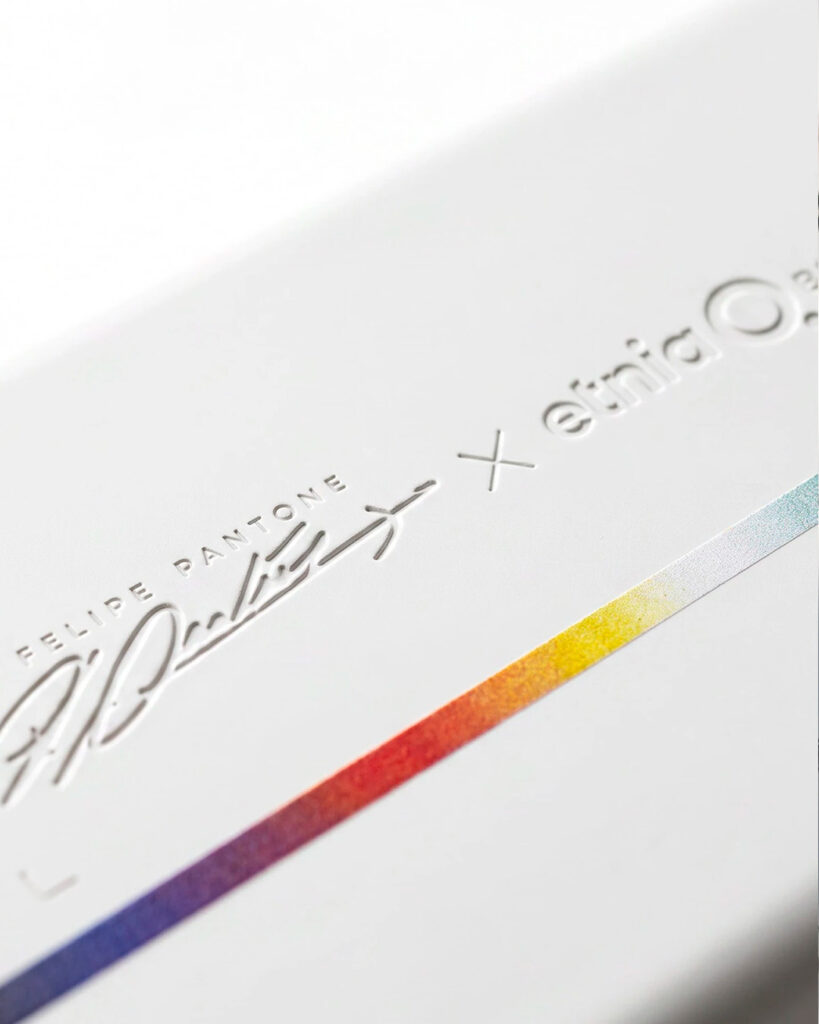
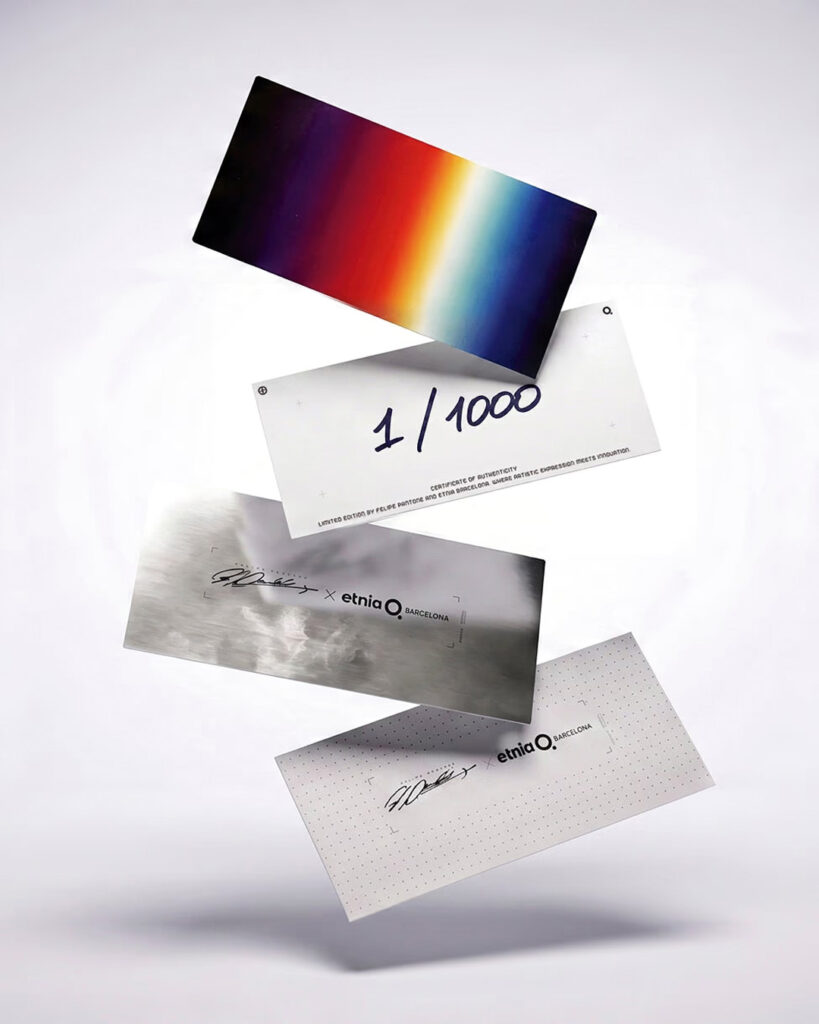
Then there is the presentation. Each numbered edition arrives with interchangeable temple components, a dedicated transformation tool, a certificate and a 157-page limited-edition art book. The packaging is conceived as part of the object rather than as something to discard after purchase.
Together, these elements allow Etnia to make a credible high-end argument. The price increase is supported by material development, engineering, scarcity and a more complete ownership experience.
From Graffiti to Optical Engineering
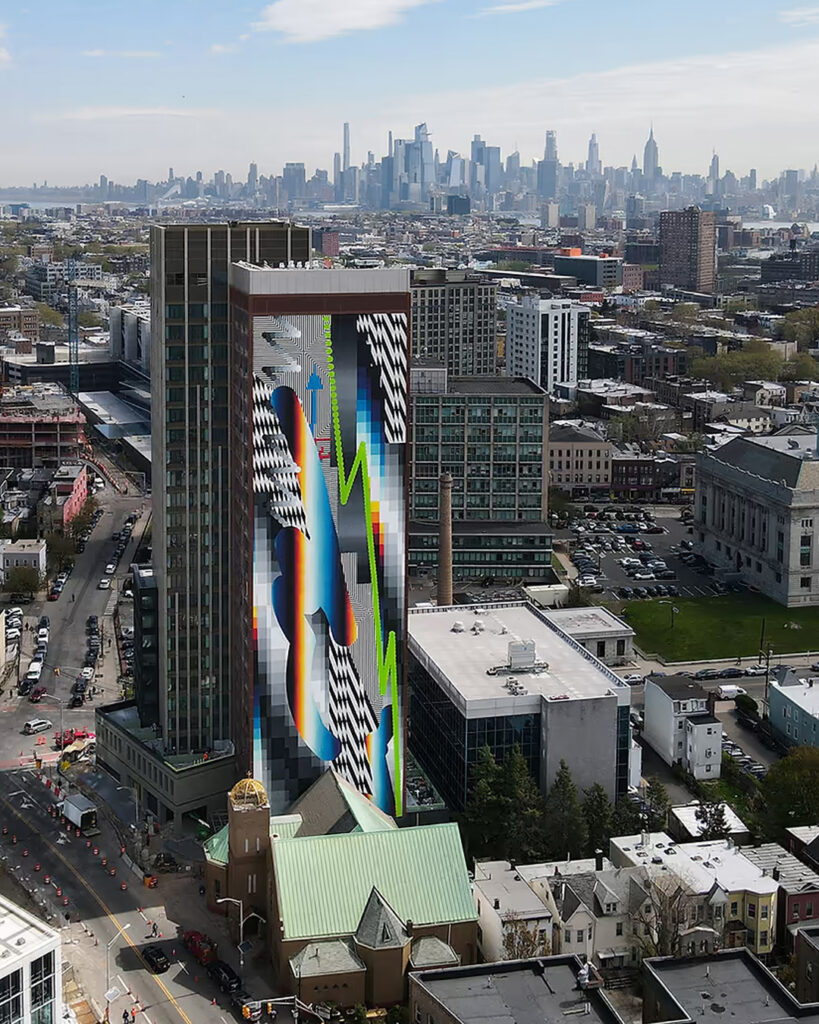
Born in Argentina and raised in Spain, Felipe Pantone developed his early visual vocabulary through graffiti before expanding into painting, sculpture, kinetic art and architectural interventions.
His work frequently examines how digital culture has altered the way images are produced and perceived. Intense colour gradients recall editing software and illuminated screens, while grids, glitches and optical patterns connect those digital references to physical space.
Eyewear provides a particularly relevant format for that investigation. It is both an object being observed and an instrument through which its wearer observes the world. Positioned directly between vision and identity, the frame becomes a natural place to explore perception.
Etnia Barcelona also brings an established relationship with art and colour to the project. The brand has spent more than two decades using cultural collaborations to extend the vocabulary of independent eyewear. With Pantone, that history meets an artist whose practice is unusually compatible with the technical possibilities of acetate.
More importantly, the artist provides Etnia with cultural authority as it enters a higher price category. Pantone’s involvement is not simply a promotional association; it gives the product a reason to exist beyond the brand’s established commercial range.
Can an Accessible Brand Move Upmarket?
Moving from entry-level independent eyewear into the high-end segment is not automatic. A higher price does not immediately create greater desirability, and scarcity means little when the object itself lacks distinction.
Etnia Barcelona appears to understand that challenge.
Rather than applying luxury codes superficially, it has developed a product whose construction, interaction and presentation differ substantially from its core range. The collaboration creates separation without denying the brand’s existing identity. Colour remains central, but it is treated with greater technical and conceptual ambition.
This is an important distinction. The Felipe Pantone edition should not be read as evidence that Etnia Barcelona has suddenly become a high-end brand across its entire portfolio. It is better understood as a strategic extension: proof that the company can operate at a more exclusive level when the product, collaborator and execution support it.
The release may also allow Etnia to speak to a different customer, one who buys eyewear not only for design and function, but as a numbered cultural object.
The Artist’s Name Is Not the Final Argument
Limited production alone does not create collectability. Neither does the presence of a prominent collaborator.
The strongest reason to consider this edition successful is the extent to which Pantone’s visual language has been integrated into the physical object. Remove the artist’s name and the concept would still be legible through the layered acetate, optical patterns and transformative construction.
That is the test many creative collaborations fail. Recognition depends too heavily on branding, while the product underneath remains largely unchanged.
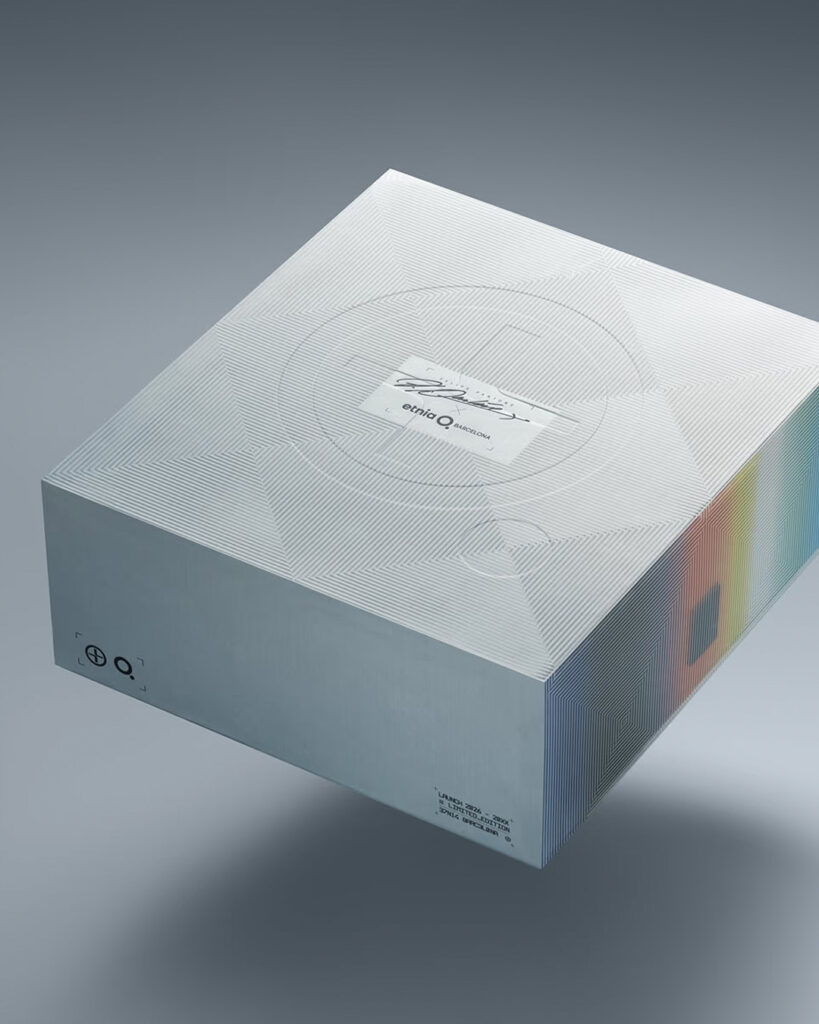
Etnia Barcelona and Felipe Pantone offer a stronger proposition. The artist’s contribution determines how the frame is made, how it responds to its environment and how the wearer interacts with it.
For Etnia Barcelona, the collaboration is also a statement of intent. A brand known for making independent eyewear approachable has produced something rarer, more complex and significantly more expensive.
Whether this becomes the beginning of a broader move upmarket remains to be seen. For now, the Felipe Pantone edition demonstrates that Etnia Barcelona can enter high-end territory without abandoning the colour and creative accessibility on which its reputation was built.
 English
  French
  Italian
  Spanish
  Portuguese
  German
  Korean
  Japanese