

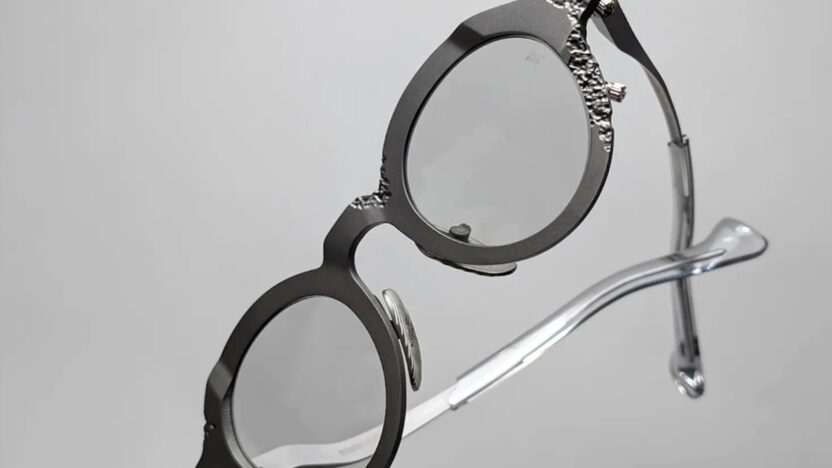
In a niche dominated by familiar avant-garde names and agent-shaped uniformity, Edward Gucewicz’s solid-titanium objects offer independent opticians a possible way out.
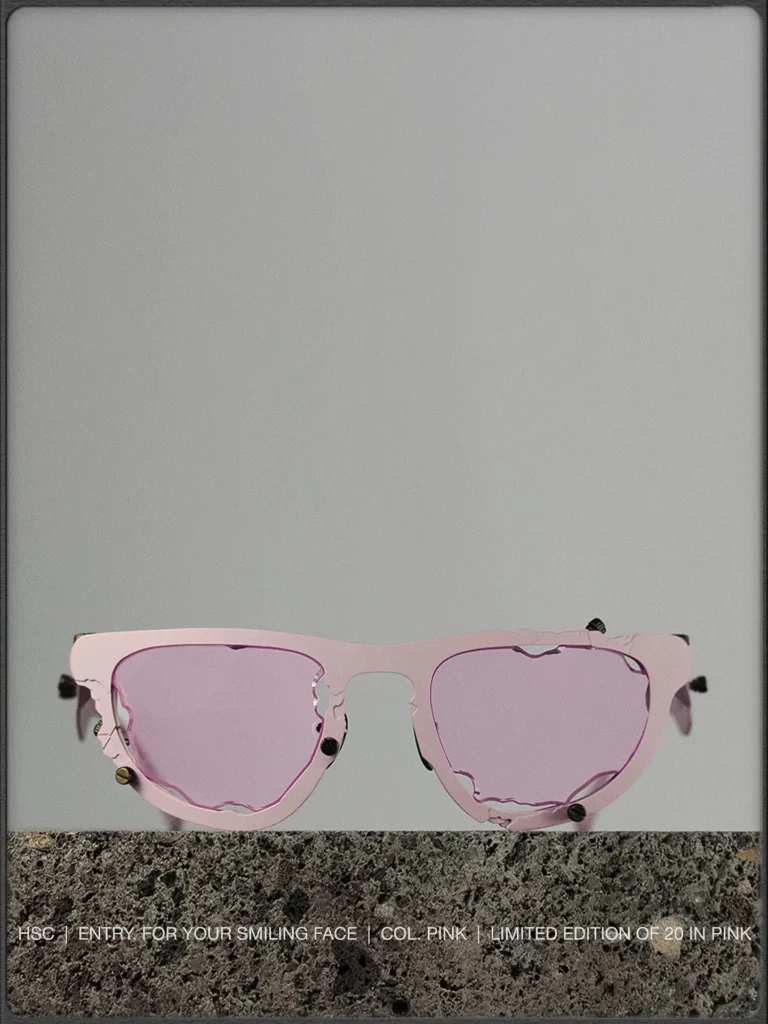
There is a theatrical eyewear market: small, self-serious, frequently absurd and, depending on whom you ask, tightly controlled.
Kuboraum is its most obvious gravitational force. The brand proved that eyewear could become mask, sculpture and cultural passport. But its success also helped create a category so recognisable that many supposedly independent optical stores now present remarkably similar versions of rebellion.
This is not a market in which functionality comes first. Its archetypal customer is at Berghain during the weekend and is almost certainly not returning to a conventional office on Monday. If there is a workplace involved, it probably looks more like an art studio.
Demand is limited because the audience is limited. Opticians buy only a few pieces, making them cautious and giving distributors disproportionate influence over what reaches the shelves. Agents naturally favour brands that are already proven, recognisable and commercially safer. The result is a strange paradox: an industry that celebrates radical individuality while producing increasingly uniform portfolios.
Another paradox of this industry is that agents sign multiple brands targeting the same consumer, allowing them to control distribution as they see fit while ensuring that certain favoured brands retain their market-leading position.
And this is precisely where Titanium Museum becomes interesting.
This brand could offer opticians a way out of the homogenization driven by sales agents, which makes every store look the same. As an optician, your goal should be to discover brands that others do not carry.
Titanium That Refuses to Disappear
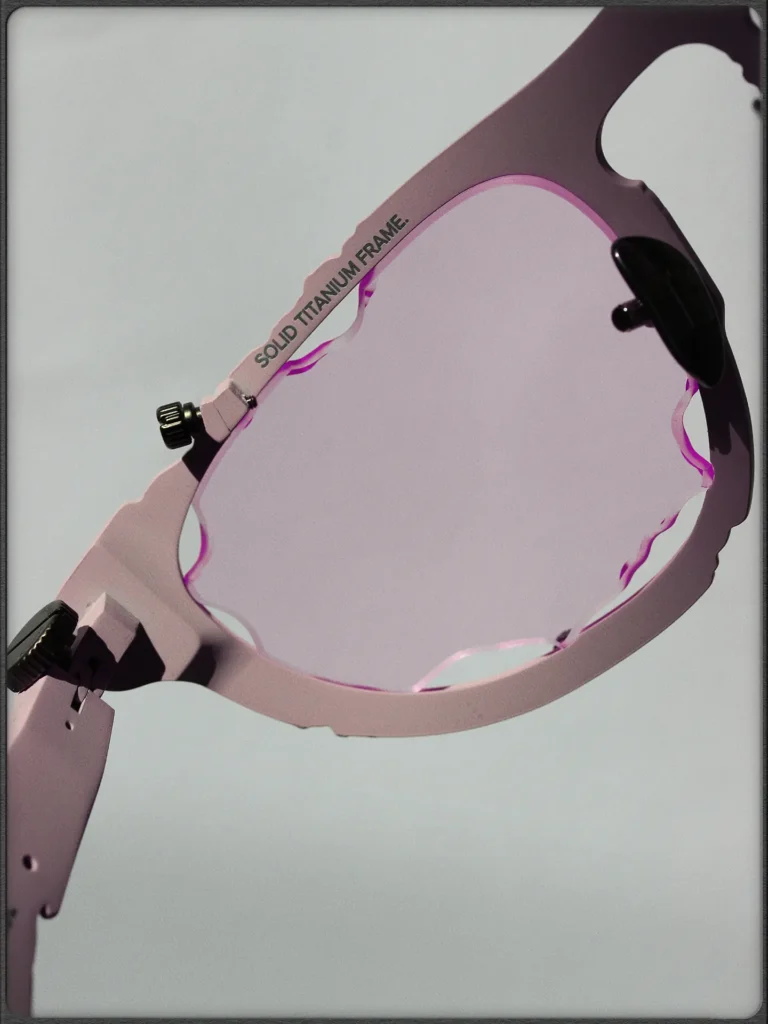
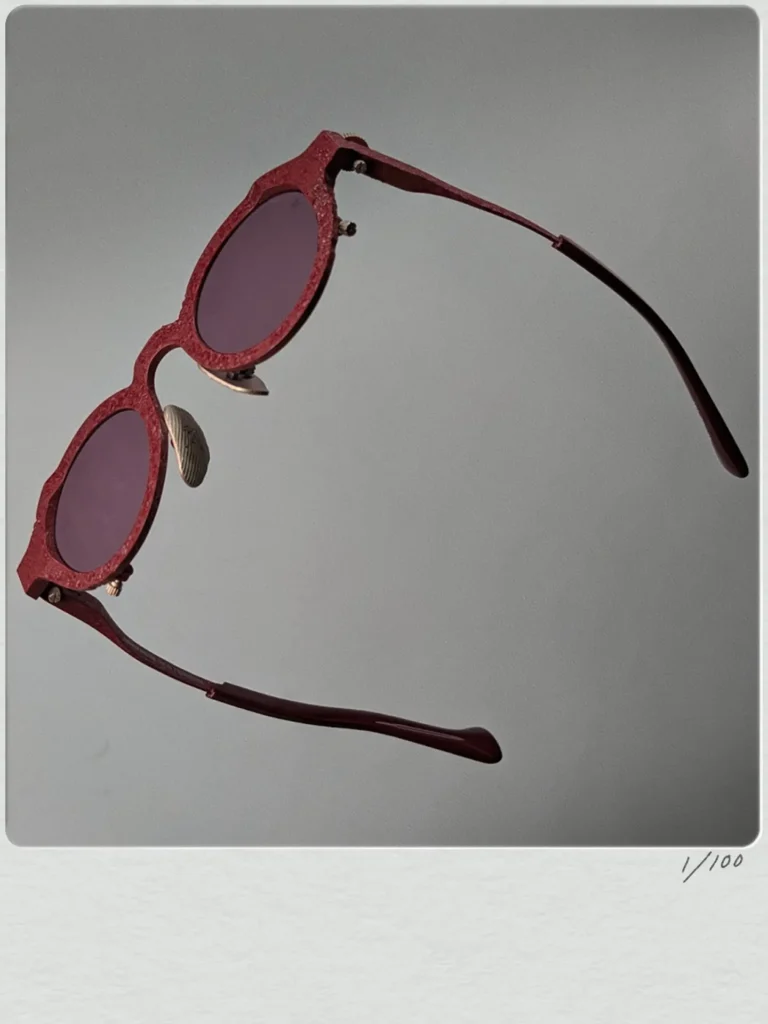
Titanium Museum is an independent eyewear project by Scottish designer Edward Gucewicz, working from a remote studio in the Scottish Borders. His approach deliberately rejects the almost invisible titanium frames the optical industry has trained us to expect. Instead, he gives the material architectural weight, recreating the substantial volumes normally associated with chunky acetate entirely in solid titanium.
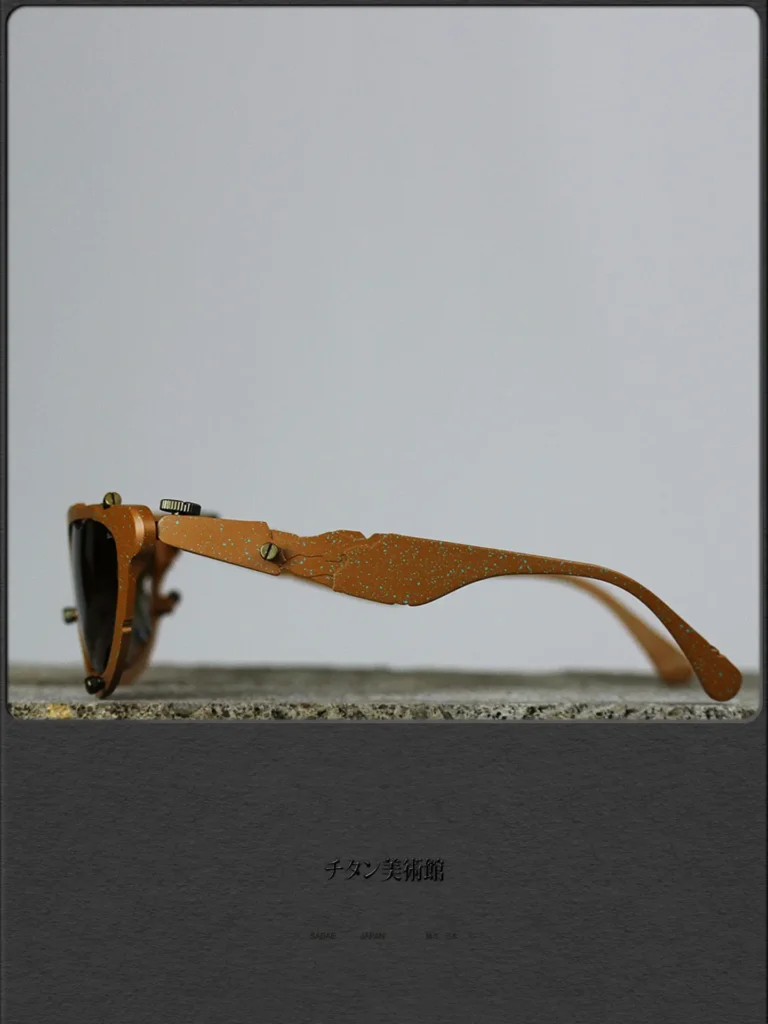
The mechanics are not disguised. Screws, hinges and structural components become the aesthetic. Even the branding serves a mechanical purpose, with a “T” incorporated directly into the structure of the temple end.
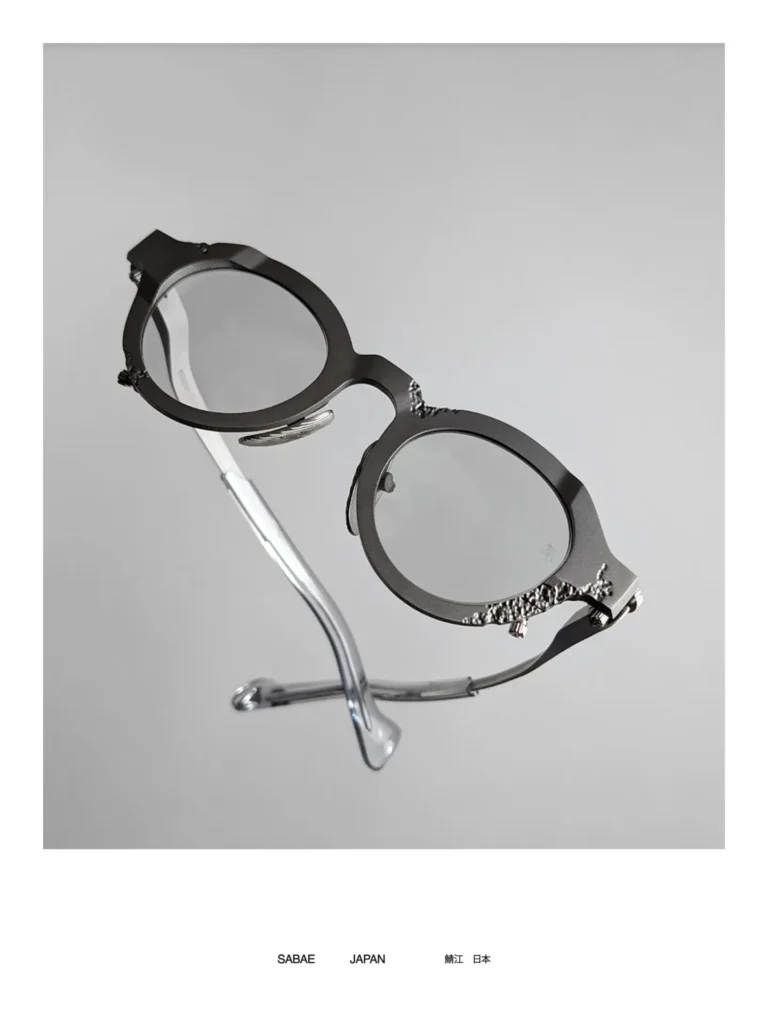
The project is organised more like an institution than a conventional fashion brand. Frames are released as numbered Accessions, presented through a digital archive. The language of seasons, trends and lifestyle campaigns is replaced by that of preservation, engineering and permanence. According to its collection catalogue, the limited, serialised objects are finished and hand-painted in Sabae, Japan.
It is admittedly theatrical. But unlike much of this category, the performance is supported by substance.
When “Avant-Garde” Is Just Expensive Plastic
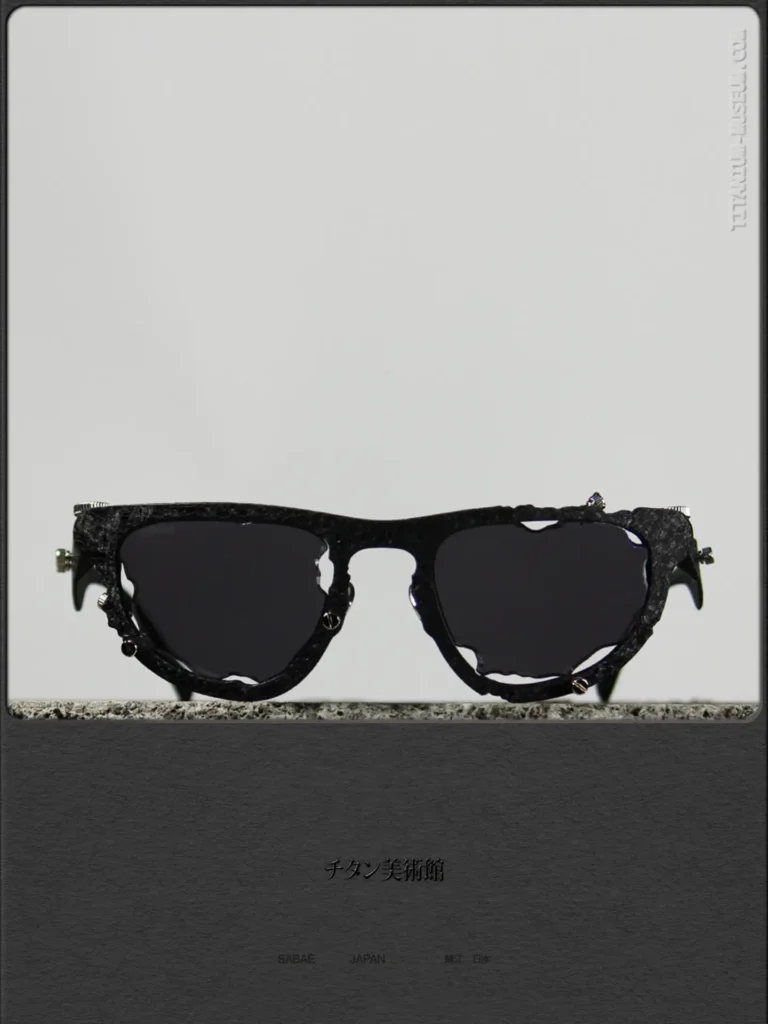
Curated Optics generally approaches theatrical eyewear with caution. Too often, visual aggression becomes a convenient distraction from an ordinary product: a piece of sheet metal presented as sculpture, or an oversized block of plastic sold as cultural rebellion.
Titanium Museum is harder to dismiss.
It is not selling the illusion of materiality. It is selling solid material that has been carved, engineered, assembled and deliberately exposed. That does not automatically make every frame practical, discreet or universally wearable. Nor should we pretend that conventional functionality is the primary conversation here. These are theatrical objects that happen to hold lenses.
But they are exceptionally well-resolved theatrical objects.
The Case for Breaking Portfolio Uniformity
Portfolio uniformity is not proof of anti-competitive conduct. Yet from an independent optician’s perspective, the effect can feel uncomfortably similar. A small number of agents, brands and familiar aesthetics repeatedly determine what “independent eyewear” looks like across different stores and even different countries.
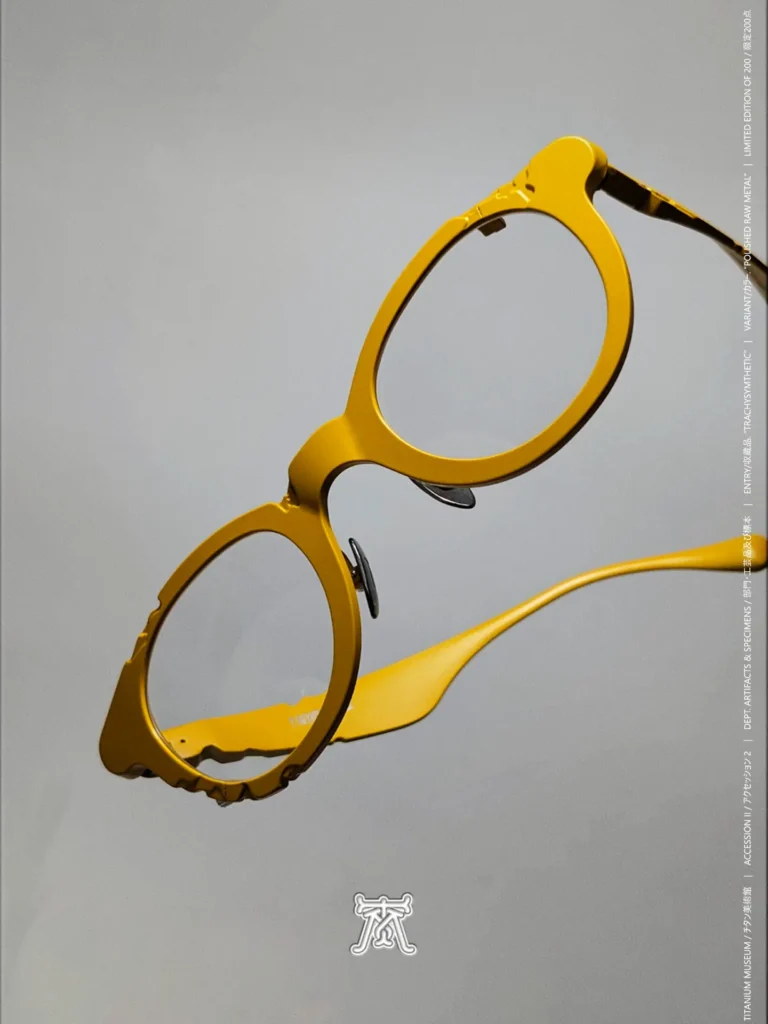
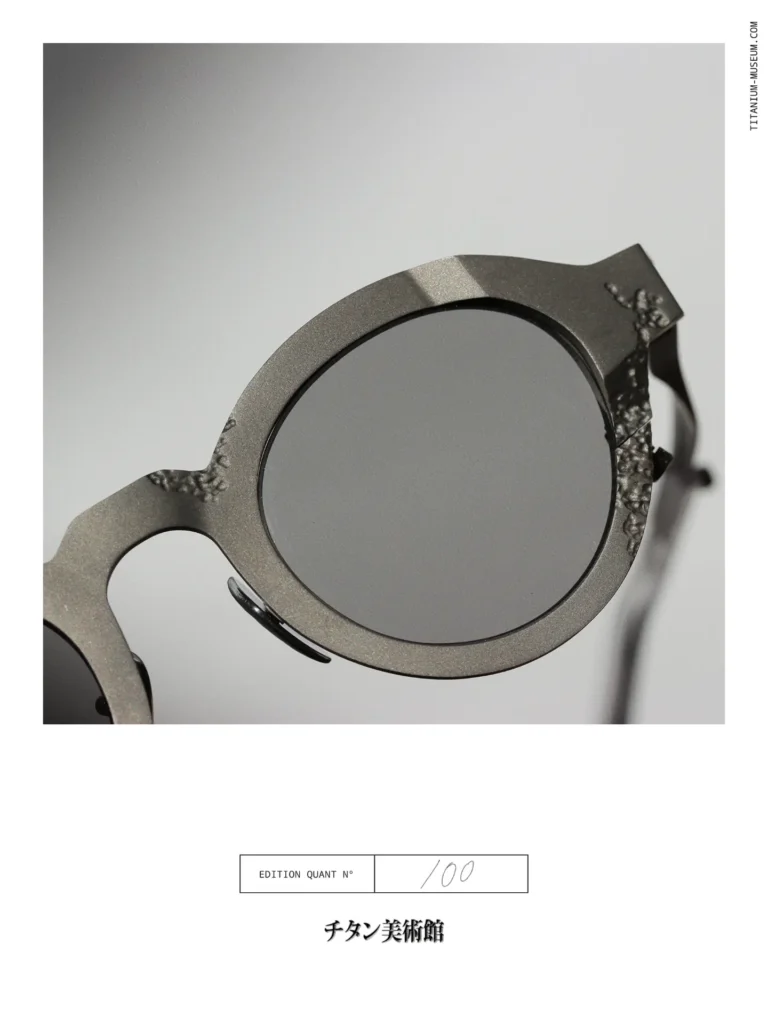
Titanium Museum offers opticians a credible opportunity to step outside that system. Not simply because it is strange, brutalist or difficult, but because its quality gives the provocation legitimacy.
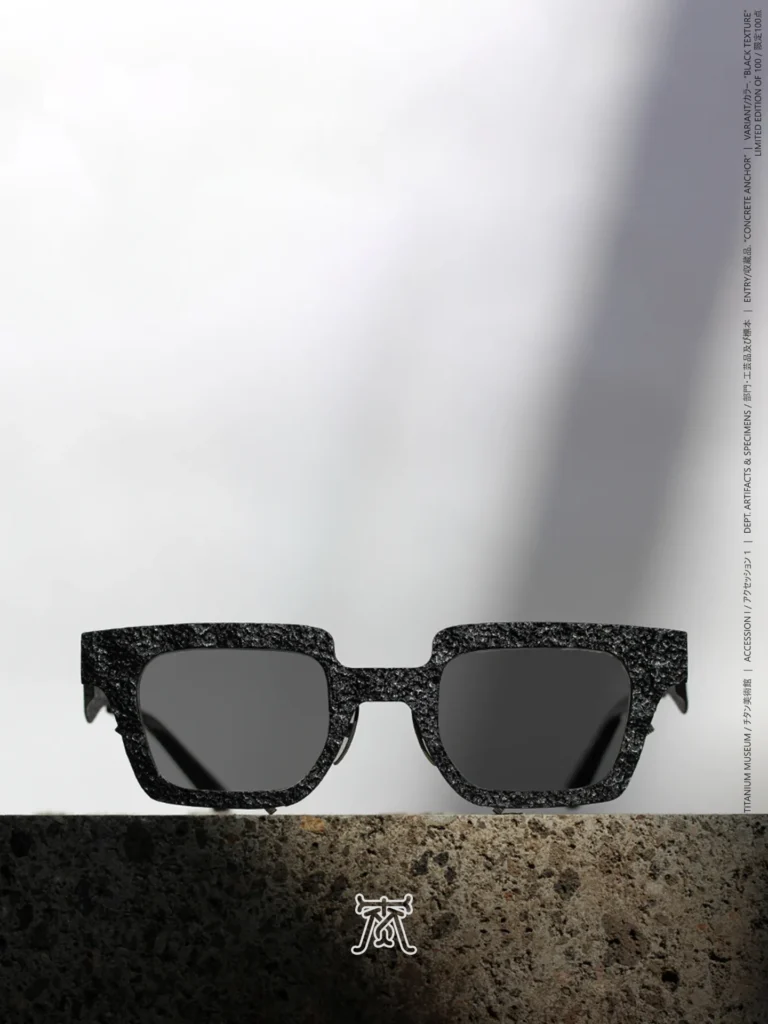
For retailers already serving this highly specific customer, the brand could become more than another avant-garde name. It could be a point of differentiation from the labels currently dominating the theatrical category, and a way to reclaim some control over a portfolio increasingly shaped by distribution networks.
Because when every rebel stocks the same rebellion, rebellion becomes a uniform.
Titanium Museum may not be for everyone. That is exactly why more independent opticians should be looking at it.
It remains to be seen whether Titanium Museum will also excel in distribution, overcome resistance from agents in this category, and establish a strong position in the market.

 English
  French
  Italian
  Spanish
  Portuguese
  German
  Korean
  Japanese