


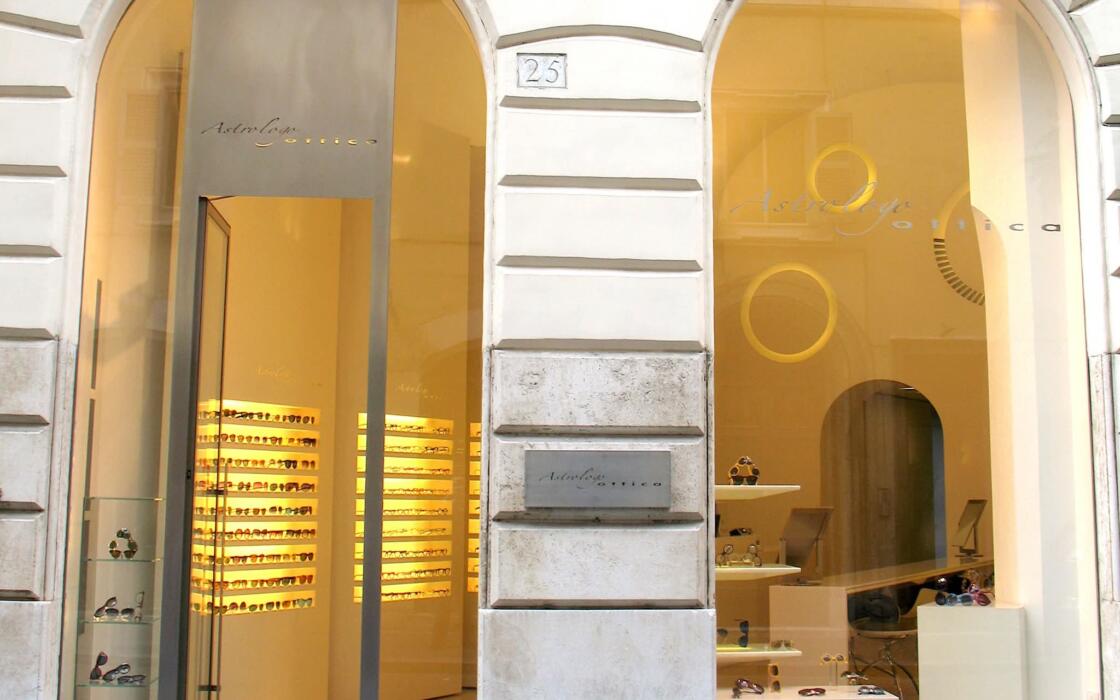
On a quiet Roman street, somewhere between heritage and discretion, there is a shop that doesn’t behave like a shop at all. It behaves more like a radar.
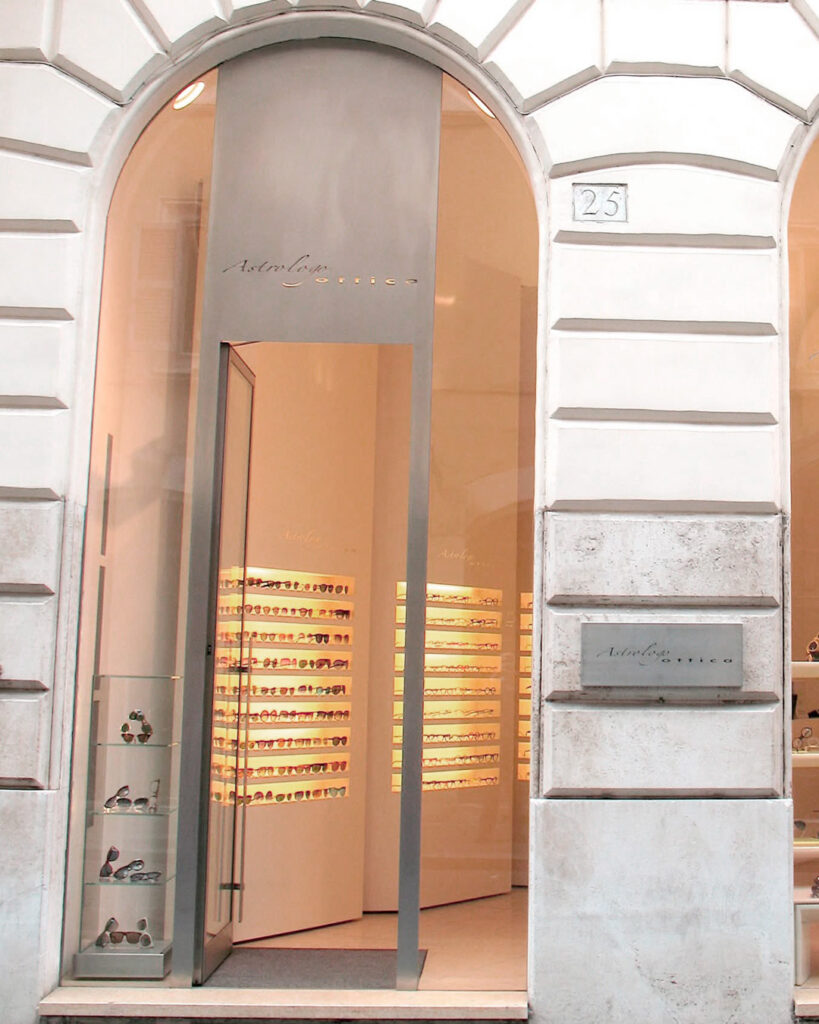
Along Via della Fontanella di Borghese, the narrow artery leading toward Palazzo Borghese, history is not a backdrop; it is structural. This was once the domain of the Borghese princes, the same lineage that produced Pope Paul V. Five centuries ago, the street hosted stables and storage spaces rather than boutiques, which explains the unusual proportions still visible today: vaulted ceilings, generous heights, and a sense of depth that feels almost accidental.
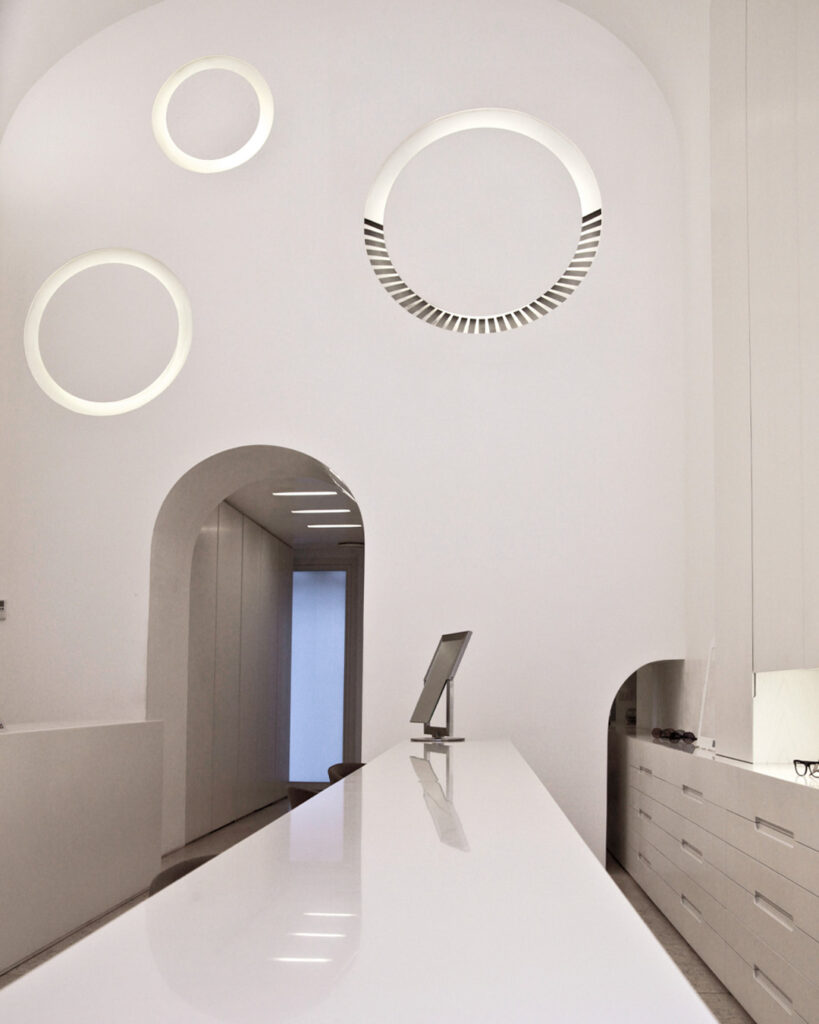
Inside one of these spaces sits Astrologo Ottica, a store that deliberately contrasts its architectural past. The shell is historic; the interior is clean, modern, almost clinical in its restraint. It is not nostalgic. It is precise.
A business built on anticipation, not reaction
If most optical retailers curate, Astrologo anticipates.
The business, founded in 1932 and still family-run today, has evolved without abandoning its original philosophy: expertise first, product second. But what defines its current relevance is something more specific, a long-standing commitment to sourcing independent eyewear before it becomes visible to the broader market.
Fabrizio Russo, who now runs the store, does not rely on distributors as a primary filter. He travels, researches, attends fairs like SILMO and MIDO, and often works directly with makers. The result is a portfolio of more than 30 brands, many of them discovered and introduced personally.
This is not a recent strategy. It is the model the store has operated on for decades.
The value of being first
There is a difference between selling niche brands and building a system that consistently finds them first.
Astrologo belongs to the second category.
The process is cumulative: relationships with small manufacturers, direct sourcing whenever possible, and a willingness to invest in brands that are not yet commercially validated. This creates a specific type of authority, not trend-following, but trend-defining at a micro level.
Convincing customers to buy from unknown names is not straightforward. As Russo himself notes, large brands require no explanation; independent ones demand storytelling, education, and patience. The sale is often secondary to the conversation.
That dynamic, slower, more deliberate, is precisely what builds long-term trust.

A space that reflects the
philosophy
The store itself mirrors this approach.
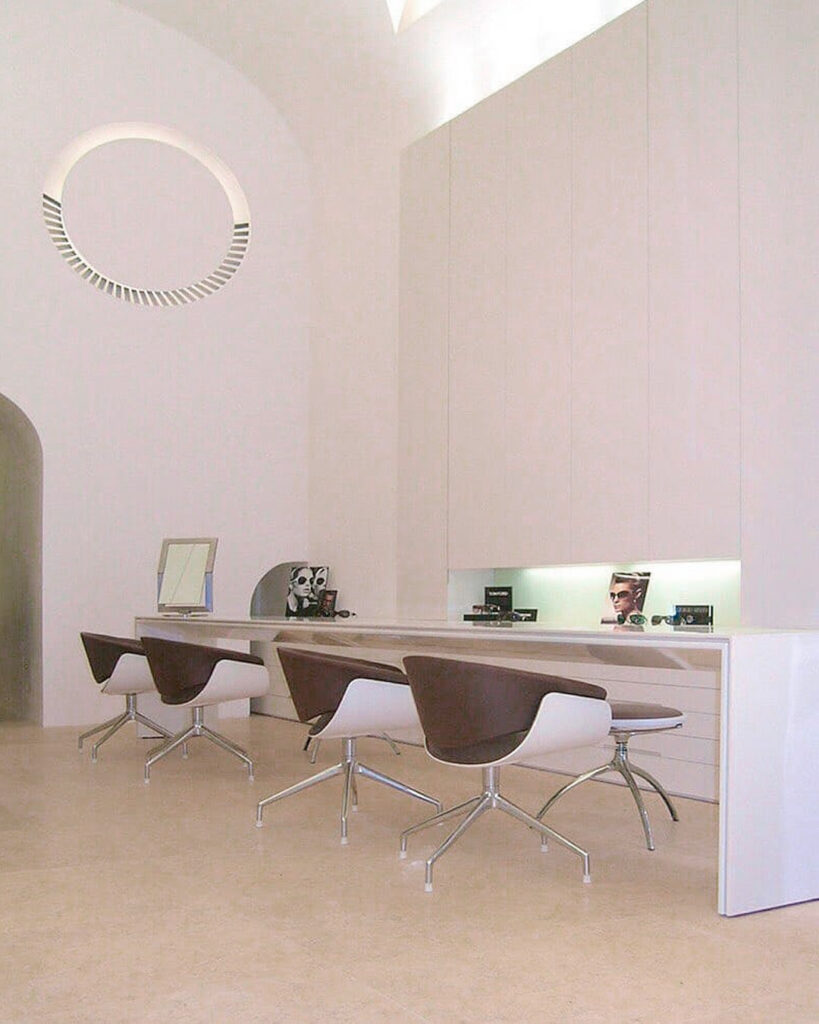
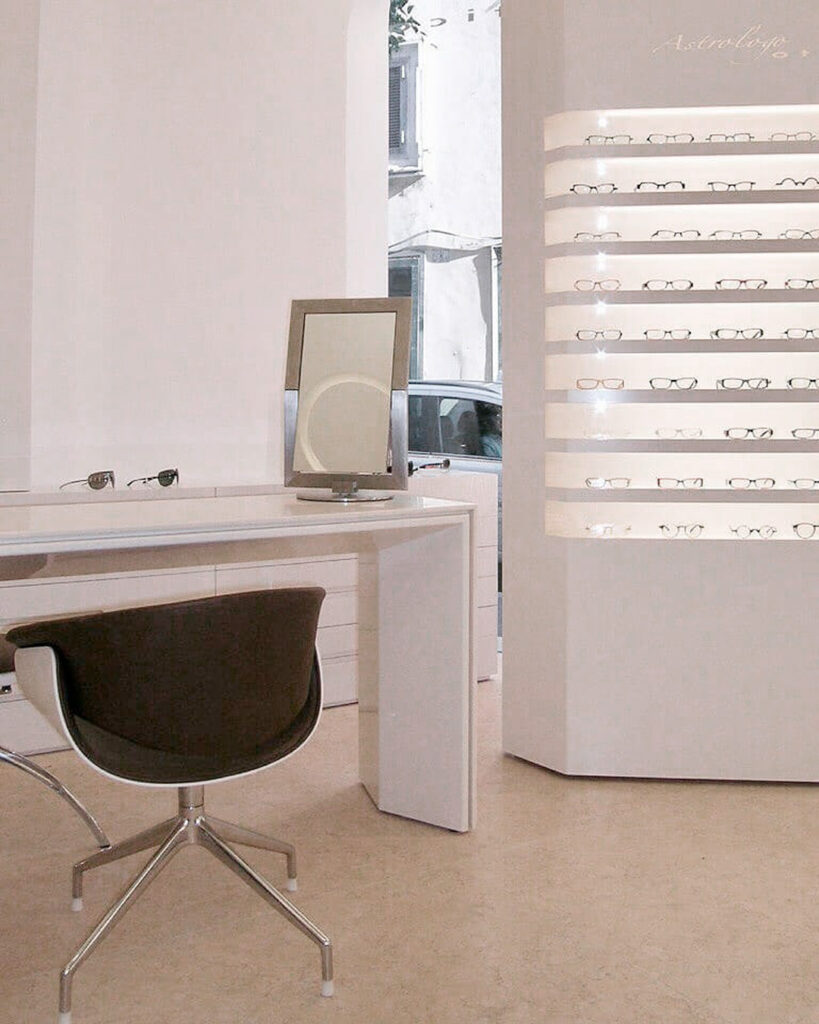
There is no visual noise, no logos competing for attention, no dominance of global fashion licenses. Instead, the presentation is sparse, almost gallery-like. Each frame is given space physically and conceptually, to justify its presence.
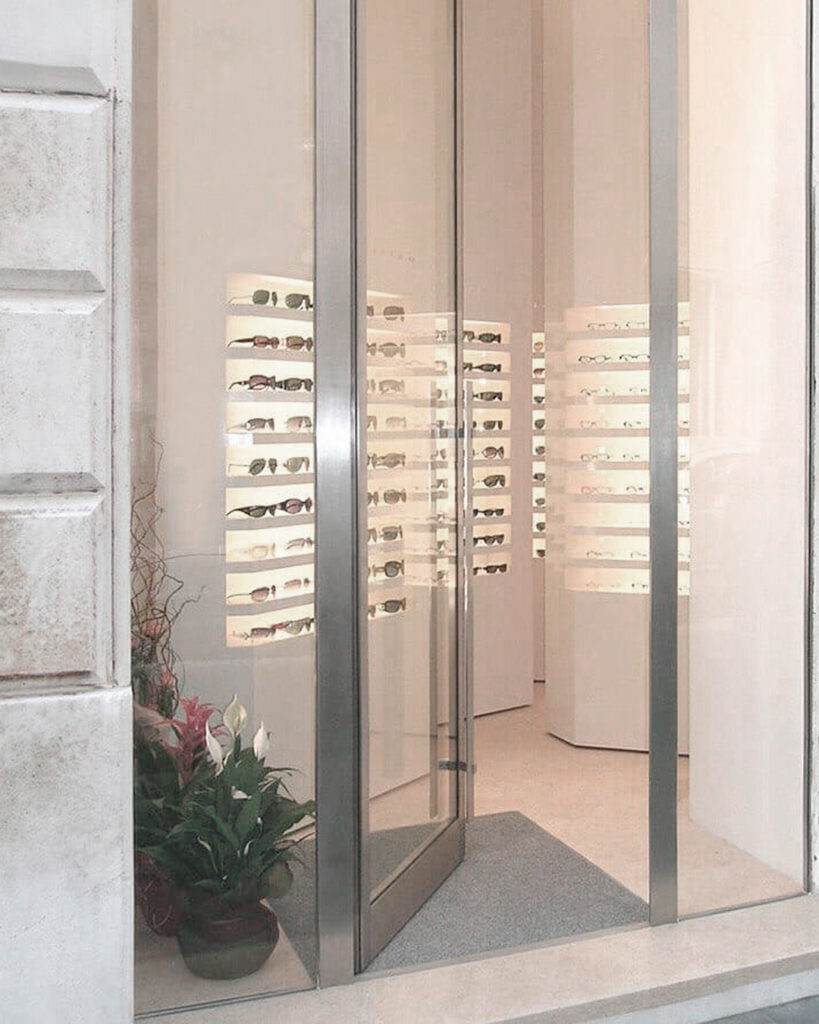
This is consistent with the broader philosophy: fewer products, better explained.
Astrologo’s selection spans handcrafted frames made from high-quality materials, often produced in small quantities and with a focus on durability rather than seasonal turnover. The emphasis is not on trend cycles but on permanence objects that age well, both physically and stylistically.
Between heritage and relevance
What makes Astrologo particularly interesting is not just its history, but how it uses that history.
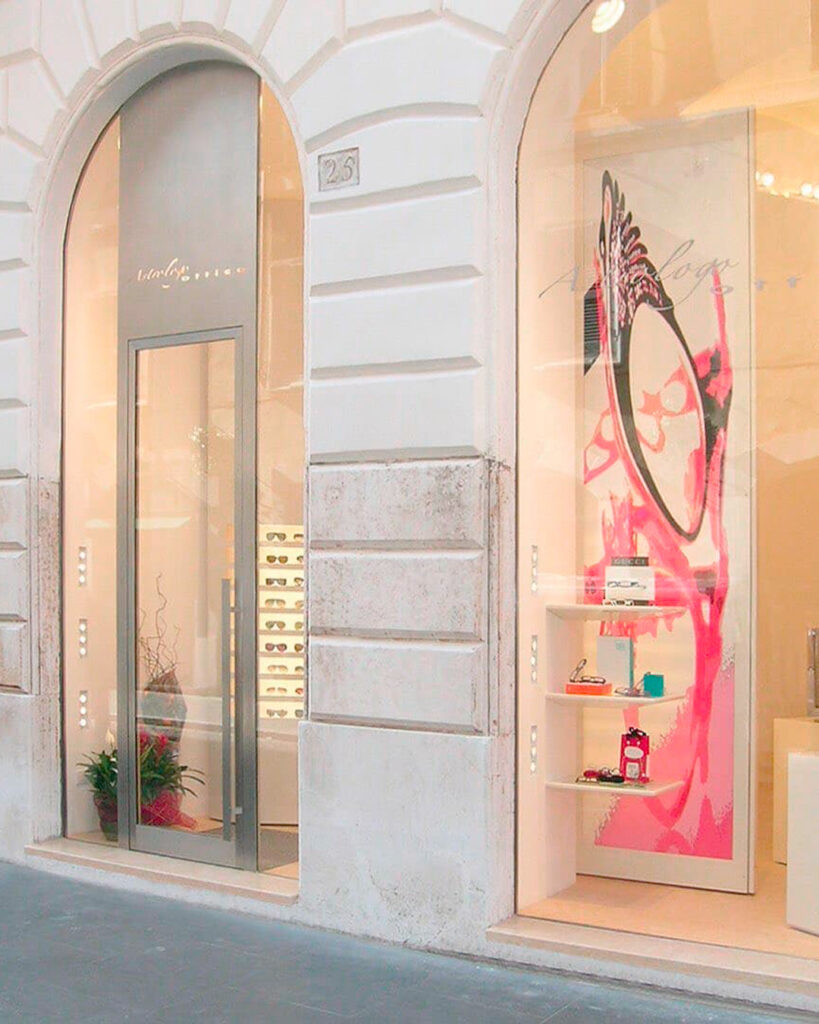
Many legacy retailers rely on heritage as a narrative. Here, heritage functions more as infrastructure a foundation that allows for continuous experimentation. The store has remained aligned with its original values while adapting its sourcing, aesthetic, and positioning to a changing market.
Rome, as a city, often negotiates between preservation and reinvention. Astrologo operates in exactly that tension: a 500-year-old architectural shell, a mid-20th-century business, and a contemporary approach to product discovery.
A quiet influence
Astrologo Ottica does not scale in the conventional sense. It does not aim to dominate distribution or expand aggressively. Its influence is quieter but arguably more significant within its niche.
It is the kind of place where brands appear before they are widely known, where customers are educated rather than persuaded, and where the act of buying eyewear becomes a conversation about material, craft, and identity.
In an industry increasingly defined by consolidation, that position independent, informed, and consistently early is not just rare.
It is structural.



 English
  French
  Italian
  Spanish
  Portuguese
  German
  Korean
  Japanese