


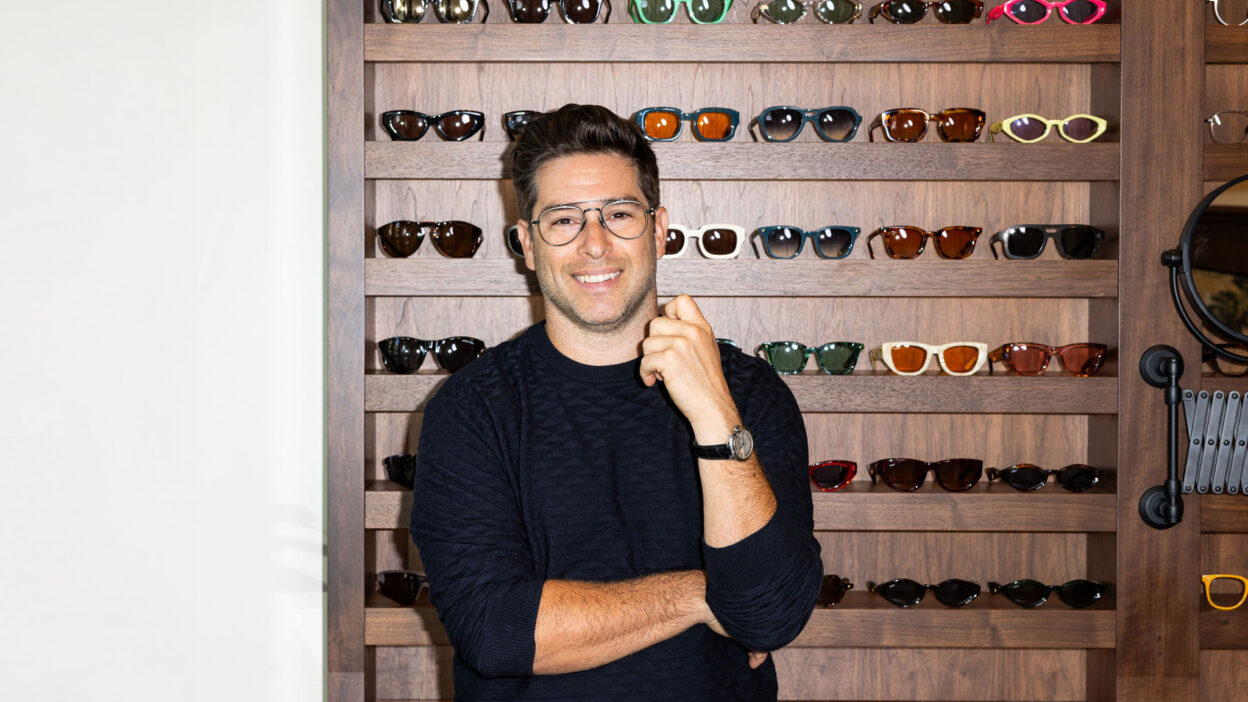
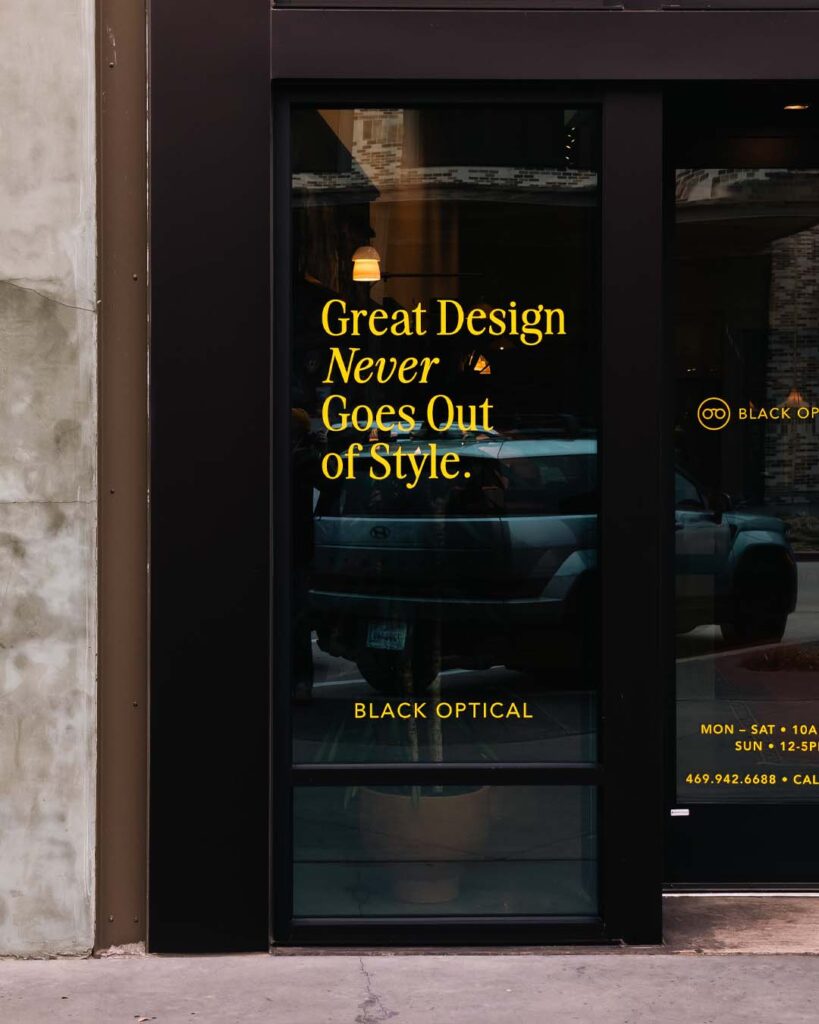
In Fort Worth, Texas, Black Optical does not immediately present itself as a typical optical store. The space feels considered, almost domestic more in line with a lived-in interior than a point of sale. It’s a deliberate choice, and one that reflects how Gary Black has approached eyewear from the beginning: not as product alone, but as part of a broader cultural and experiential framework.
That perspective was not formed overnight. It developed gradually, shaped by years spent observing not just frames, but the environments in which they are discovered, tried on, and ultimately understood. In an industry that often leans toward uniformity, Black’s work suggests a quieter alternative one grounded in point of view, restraint, and an insistence on experience over display
In the months ahead, we will be looking more closely at a series of retail concepts each distinct, each shaped by its own context and perspective. We begin in Fort Worth, where Black Optical enters a new phase of its evolution, rethinking what an optical space can feel like.
What follows is an unedited conversation with Gary Black on independence, retail, and the evolving language of eyewear.
How did Black Optical come to life, and what motivated you to enter the optical industry?
I fell into optical as a teenager, but really, I fell for eyewear first.
Long before I understood the business, I was obsessed with frames. I was hunting for them in vintage stores, buying sunglasses I couldn’t stop thinking about, and turning sunglass frames into optical frames for myself before that was common. I’ve been chasing that high ever since.
I never set out to become an optician, or even to sell eyewear. At the time, I thought my future might be in music or film. But my life took another direction. I used to spend time after school in a sunglass shop at the mall, mostly because I wanted to be around the product. Eventually, I was offered the chance to help a few evenings a week, and that small opening changed everything. What I discovered very quickly was that I had a real instinct for eyewear, but more importantly, for people. Early on, I learned lessons that still guide me now: how to genuinely take care of clients, how to create an environment people want to be in, and how to lead a team with intention.
Over the next eleven years, I grew teams, managed multiple stores, learned merchandising, and deepened my understanding of independent eyewear and prescription lenses. More than anything, that chapter taught me a truth I still believe deeply: people work for people. Not brands.
Eventually, I hit a ceiling and I needed to move on, even if I wasn’t entirely sure what I wanted to become. Around the same time, I met a developer/retailer in Tulsa who was building a new kind of lifestyle center. He believed in the idea of me creating my own concept before I fully did. Black Optical came from that moment, but also from years of curiosity, instinct, and a belief that eyewear retail could feel more like culture and hospitality than commerce.
How do you see the position of independent eyewear brands within the U.S. market today?
When I started in 2007, at least from my view point in Tulsa, it still felt like the Wild West. I was focused on brands I genuinely believed in, with a strong anti-logo point of view and an interest in independent and emerging collections. At the time, that still felt like a more unusual approach.
Now, to be transparent, too much of the U.S. feels like an echo chamber. Too many retailers are chasing the same brands, the same visual language, the same aesthetic signals, the same safe, pre-approved version of what “curated” is supposed to mean. Too much imitation dressed up as point of view. That sameness is exhausting and uninspiring. And once everything starts borrowing from everything else, real authority gets harder to find. I think that sameness is part of why we’re seeing more designers open mono-brand spaces. They want control over context, storytelling, and experience. They want their work to live inside a world that actually reflects their intention.
All said, I’m still optimistic. I do believe a new golden era of eyewear is beginning to take shape. There are younger and emerging brands launching with real energy, real ideas, and a point of view that doesn’t feel inherited. It’s been a breathe of fresh air. It reminds me of the spark I felt when I first fell in love with eyewear. I’m also encouraged that more of these emerging brands seem willing to support one another. In my early years with Black Optical, it often felt like everyone in optical was guarding territory and resisting each other’s success. I’ve never believed in that mindset. I’ve always believed a rising tide raises all ships.
Great brands need great retailers and operators. Great retailers and operators need great brands. It’s a mutually beneficial relationship, and Black Optical owes a great deal of its success to the brands that believed in me, supported me, and grew with us. For that, I’m eternally grateful.
How important is it to have a strong partner like New Look in this market, and what did they bring to the partnership?
Importance is always subjective. For me, the partnership gave me the ability to accelerate the vision for Black Optical without diluting what made it special in the first place. We were able to grow from three showrooms to six within the first two years while maintaining Black Optical’s identity. It also gave me the bandwidth to lean further into special projects, deepen collaborations, and influence more exclusive capsule collections. At the same time, I was able to launch Kuro Athletics, a performance eyewear brand made in Japan, while continuing to build Black Optical in a more intentional way.
More than anything, it gave me the ability to delegate parts of a scaling business so I could focus more fully on my strengths: people, place, and product. That kind of support matters. Shared knowledge matters too. Business is hard. Growing in a sustainable way without losing the original spirit is even harder.
A good partnership should create opportunity, not dilution.
Every partnership is different for sure, and every founder should be unapologetically honest about what they want from one. Is it capital? Infrastructure? Knowledge? Reach? Know exactly what you want, build a plan around it, and protect the vision that made the business worth investing in to begin with.
How important is store design and overall customer experience for the American consumer today?
It’s everything. We carry some of the best eyewear brands in the world, but first and foremost, we are Black Optical. We have always positioned Black Optical above any single brand in our stores, because our clients trust Black Optical. That currency of trust is where loyalty is built. Otherwise, a client can buy the same frame from countless other retailers or directly from a designer.
At Black Optical, we probably spend more time talking about guest experience than any other part of the business. Our core values have been shaped in part by hospitality and Michelin-level systems thinking. At the end of the day, glasses are still two circles and two sticks. Beautiful ones, hopefully. But product alone is not enough. How we make people feel is our most powerful form of marketing. That’s where store design matters. A handsome space quietly tells a client what to expect before anyone says a word. It creates value around the product, but it also creates a place our team wants to work in, grow in, and take pride in. It attracts a certain level of client and a certain kind of future team member. Your space should be a direct reflection of the quality, care, and intention behind what you sell. Especially now, when so many optical retailers are carrying variations of the same brands, service and store design become true differentiators. I want a client to say, “I love how Black Optical made me feel and how Black Optical helped me look and see,” not simply, “I bought Brand X at Black Optical.”
Brands come and go. Black Optical is the brand I can control. My hope is that it lives beyond me, never wavering from its purpose.
What is the story behind the concept of your Fort Worth location?
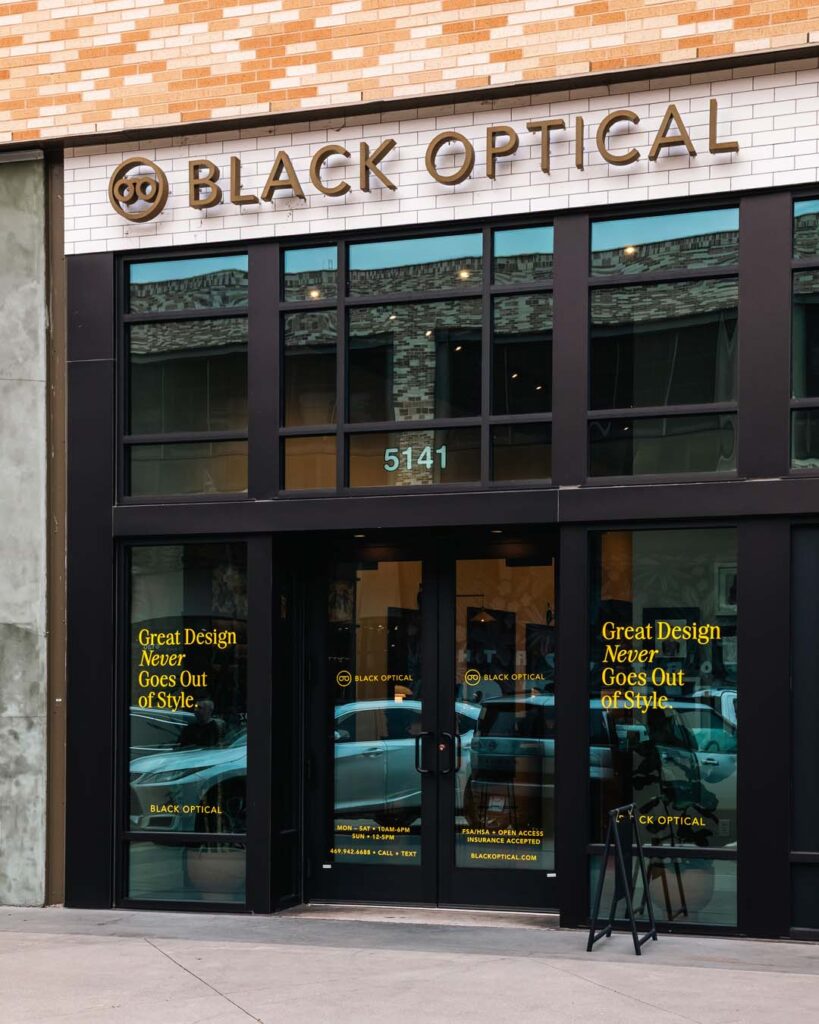
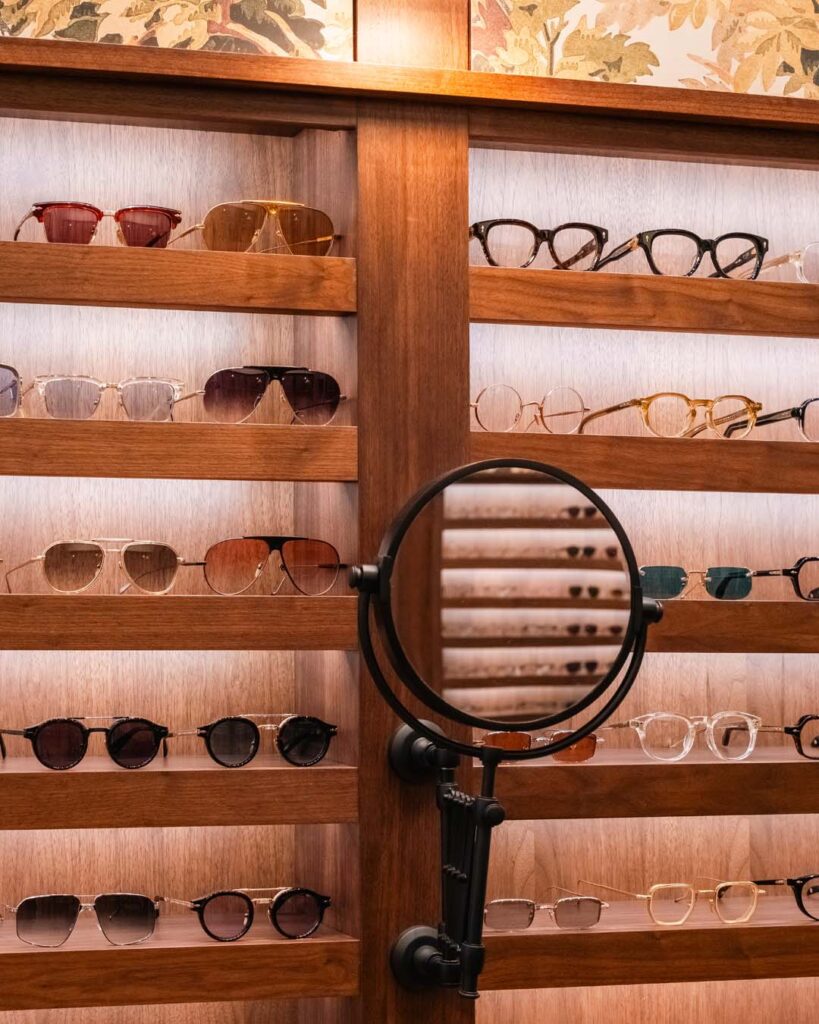
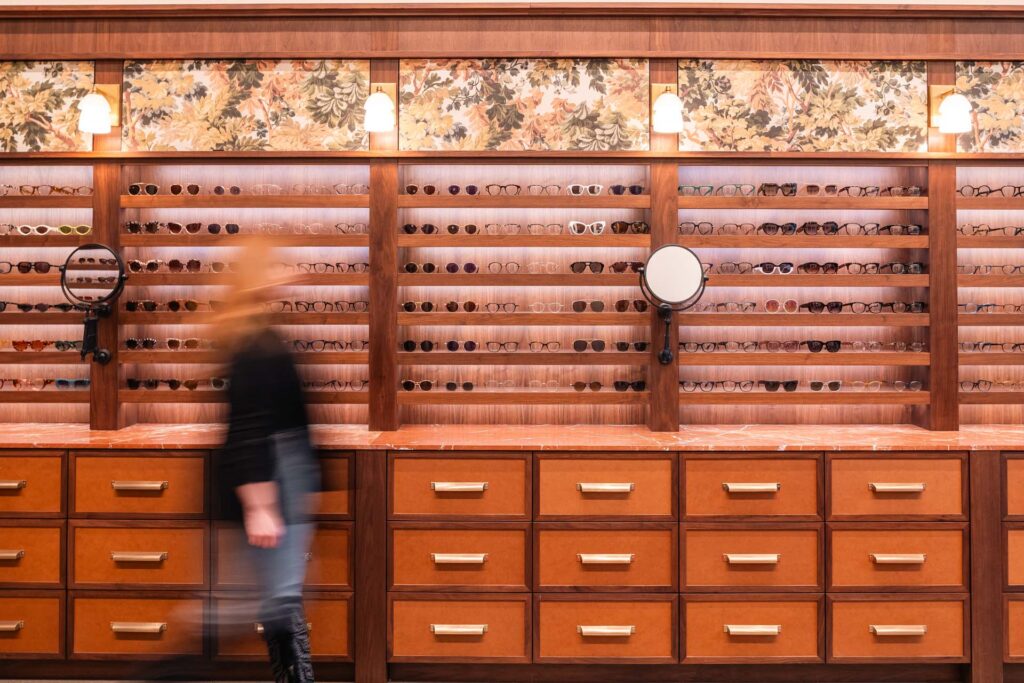
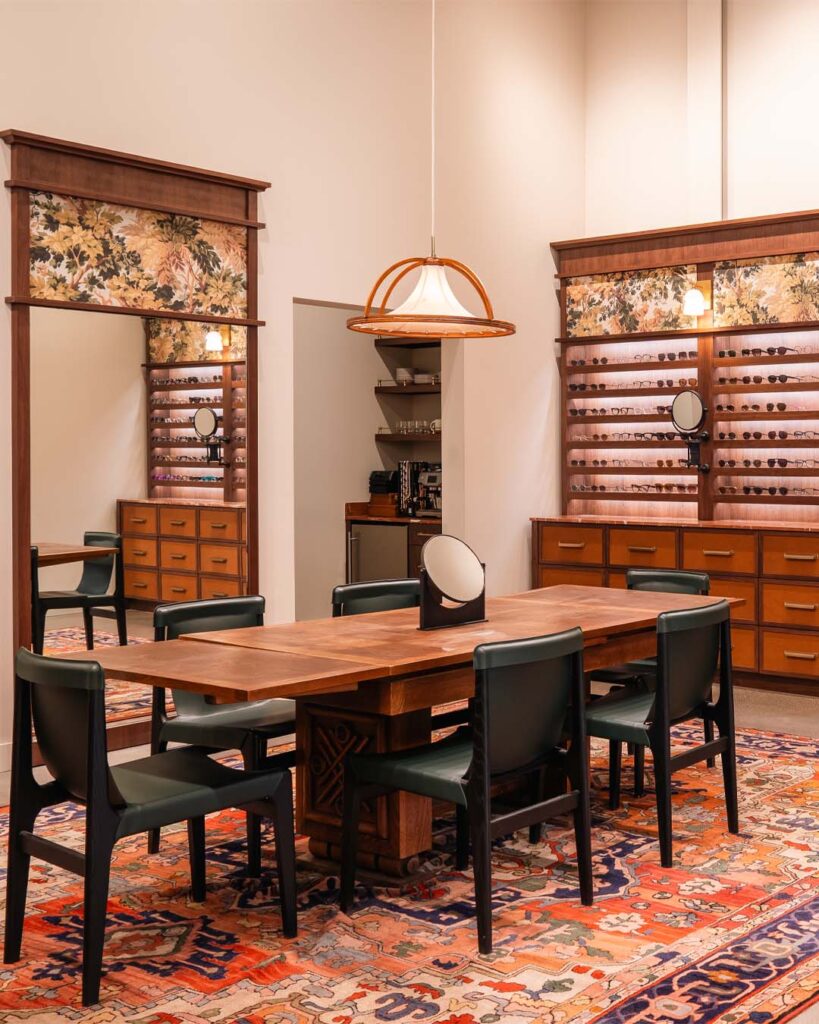
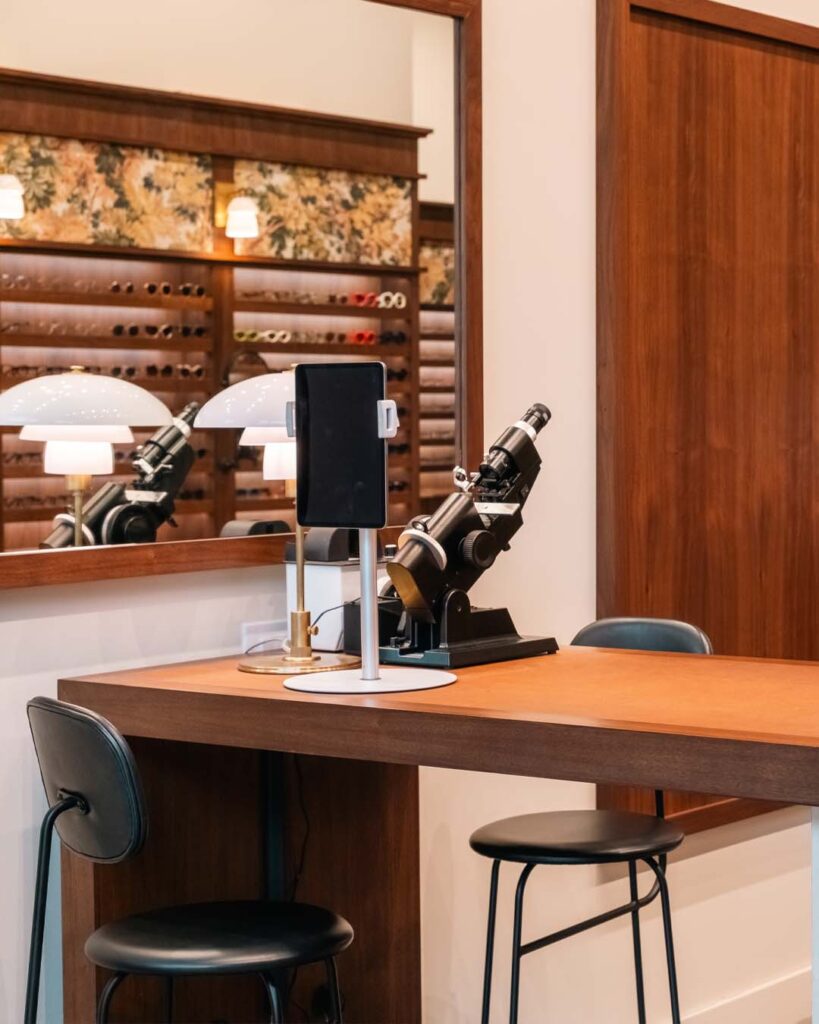
The original Black Optical showrooms were minimal by design, partly because of budget in the early days, and partly because I wanted them to feel like modern galleries for eyewear. I wanted the focus to stay on the product. The design language was clean and restrained: concrete floors, solid walnut, natural stones. Very pure and only the essentials.
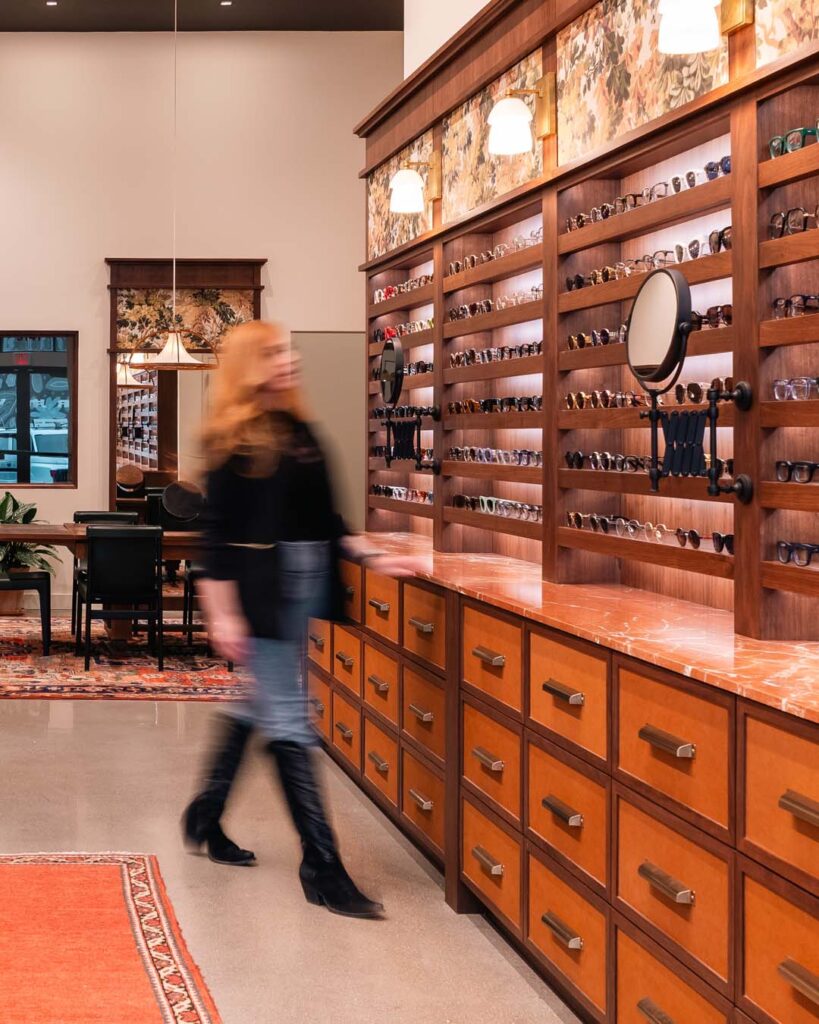
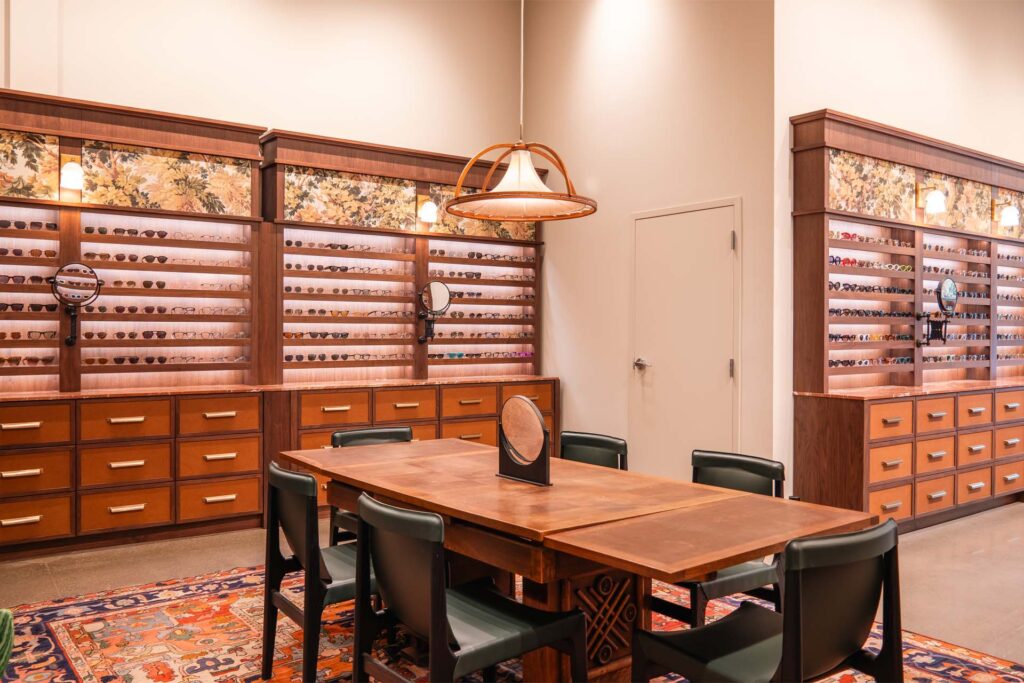
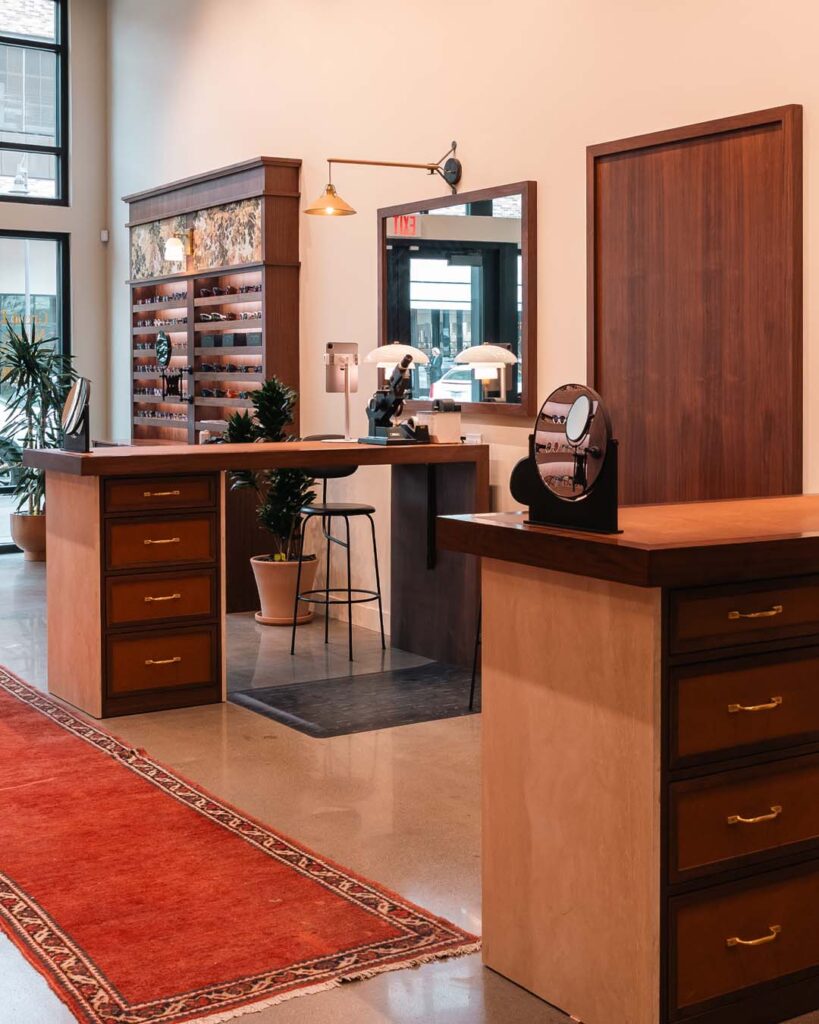
Fort Worth marked a new chapter for us. It was our first showroom in a premium center rather than a traditional street-front setting, and I knew I didn’t want it to feel like shopping-center retail. I wanted it to feel like a home. So I layered in more warmth, more texture, and more character. Vintage furniture and fixtures, Deco tables, mid-century rugs, warmer lighting, built-in cabinetry with leather-wrapped drawers. The idea was to create a space that felt collected rather than installed. I often say I wanted it to feel like the home of a very stylish, well-traveled aunt and uncle. That feeling has served us well. As more optical stores have embraced the clean-line aesthetic, Fort Worth still feels distinct because it has more softness, more humanity, and more lived-in character.
Looking ahead, how do you see the eyewear industry evolving in the coming years, and what are your plans for Black Optical? Are you considering further expansion?
My hope is that this next generation helps usher in a genuine golden era of eyewear, one with more agency, more courage, and more cross-disciplinary collaboration.
I’d love to see more designers from other industries influence eyewear in meaningful ways too. I’d love to see more fashion houses move away from licensing and invest in true in-house eyewear teams. The category still has so much room to grow beyond two sticks, two circles, and a logo.
As for Black Optical, yes, I absolutely see continued expansion ahead. But I’m less interested in growth for growth’s sake than I am in the right context. Expansion is not just about opening more doors. It’s about building the right team, protecting the culture, and making sure the experience still feels personal and precise.
I’m drawn to the idea of Black Optical living inside hospitality environments. Places where design, service, and memory already matter. That kind of setting feels aligned with how I’ve always seen the brand.
I also want to continue dreaming more collaborations and capsule projects that feel tailored to our clients and aligned with the brands we believe in. And I’ll continue building the world of Kuro Athletics. Sport is still an underdeveloped category in eyewear, and I believe there is real room to make an impact without becoming just another brand.
Conclusion
If there’s one thing that defines Gary Black’s approach, it’s clarity of vision. In a market increasingly crowded by sameness, he continues to double down on what cannot be replicated: perspective, experience, and human connection.
As the eyewear industry stands on the edge of a new era shaped by emerging brands, shifting consumer expectations, and the convergence of design and technology Black Optical offers a compelling blueprint. Not for scale at any cost, but for growth rooted in intention.
Because in the end, as Gary Black reminds us, the product may bring people in but it’s how you make them feel that defines whether they ever come back.


 English
  French
  Italian
  Spanish
  Portuguese
  German
  Korean
  Japanese