


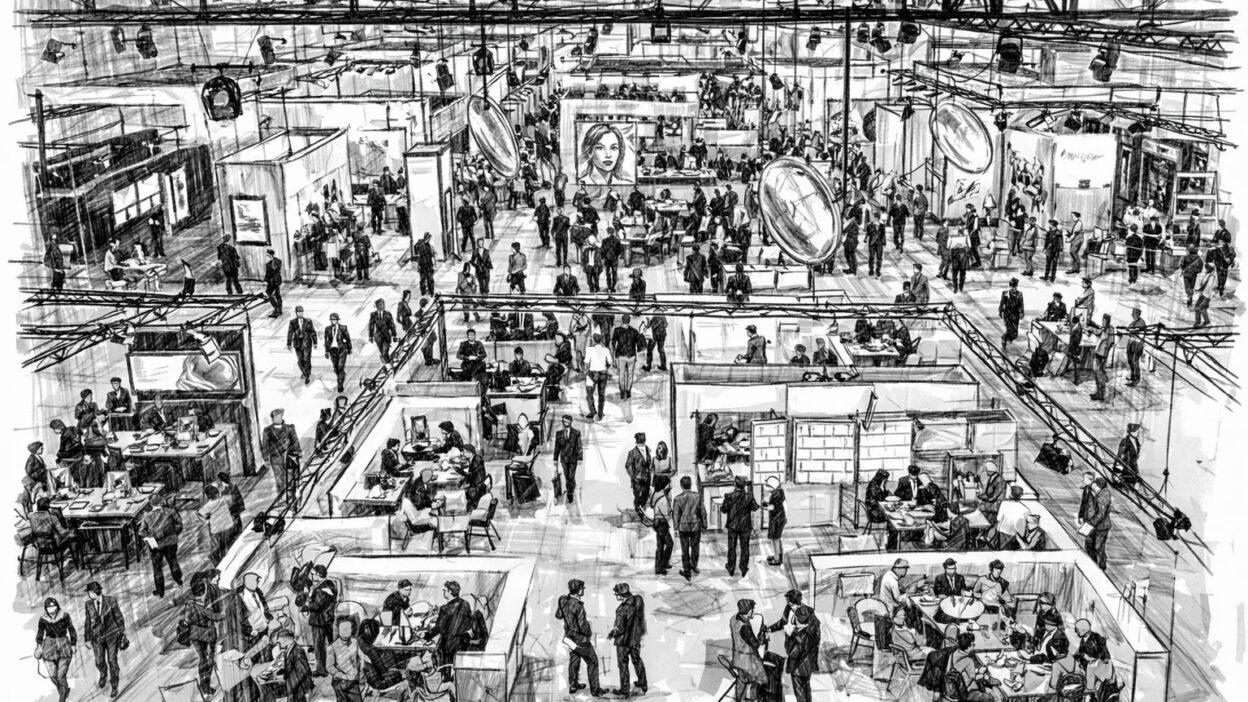
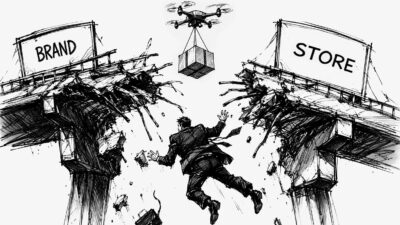
Let me put it simply. Imagine you’ve spent €500,000 building your brand, then another €50,000 just to show at a trade fair. You’re there for three intense days, doing everything, presenting, selling, pushing. And then there’s someone who takes 25% from every order you make. These are independent “sales” agents. They take on no risk or loss alongside you. At the same time, let’s say you’re on the other side, an optician, investing your own money. If your decisions are influenced or shaped by manipulation, you’re the one who ends up losing, tying up cash in dead stock or underperforming products. So you’re carrying the risk as well. The question is: who isn’t? Independent “sales” agents the gatekeepers.
Not because they built the brand, not because they invested, sometimes not even because they showed up, maybe they just called a few stores beforehand. And still, they get paid. How would that sit with you? Because this isn’t a rare situation, it happens all the time, and most people just accept it without questioning it. Below, we’ll walk you through how you end up in this situation.
For decades, events like SILMO Paris and MIDO Milano Eyewear Show have been framed as the epicenter of the eyewear industry where innovation meets retail, where brands grow, and where opticians discover what’s next.
But speak privately to independent founders and progressive retailers, and a different narrative emerges.
One that feels less like opportunity and more like a system designed to extract value.
The Great Lie: “Discovery”
Trade shows sell a simple promise: come, explore, discover.
In reality, discovery has been replaced by pre-scheduled choreography.
Appointments are locked weeks in advance. Agents build itineraries for buyers before they even arrive. Top agents in Europe represent anywhere between 5 and 20 brands, it’s effectively a monopoly. As a buyer, you already have at least 10 meetings scheduled in advance. And if, as a brand, you try to bring opticians to your stand, chances are they won’t have time or remaining budget. They’re already locked into the same stands and the same brands. Opticians move through halls like clockwork rushing from one meeting to the next, rarely stopping, rarely exploring and meeting same people.
You don’t wander anymore.
You execute.
The illusion of choice remains intact.
But the outcome is largely predetermined.
And the optician needs to understand that the sales agent is not their friend, nor their advisor, just an intermediary whose goal is to sell more in order to earn a higher commission.
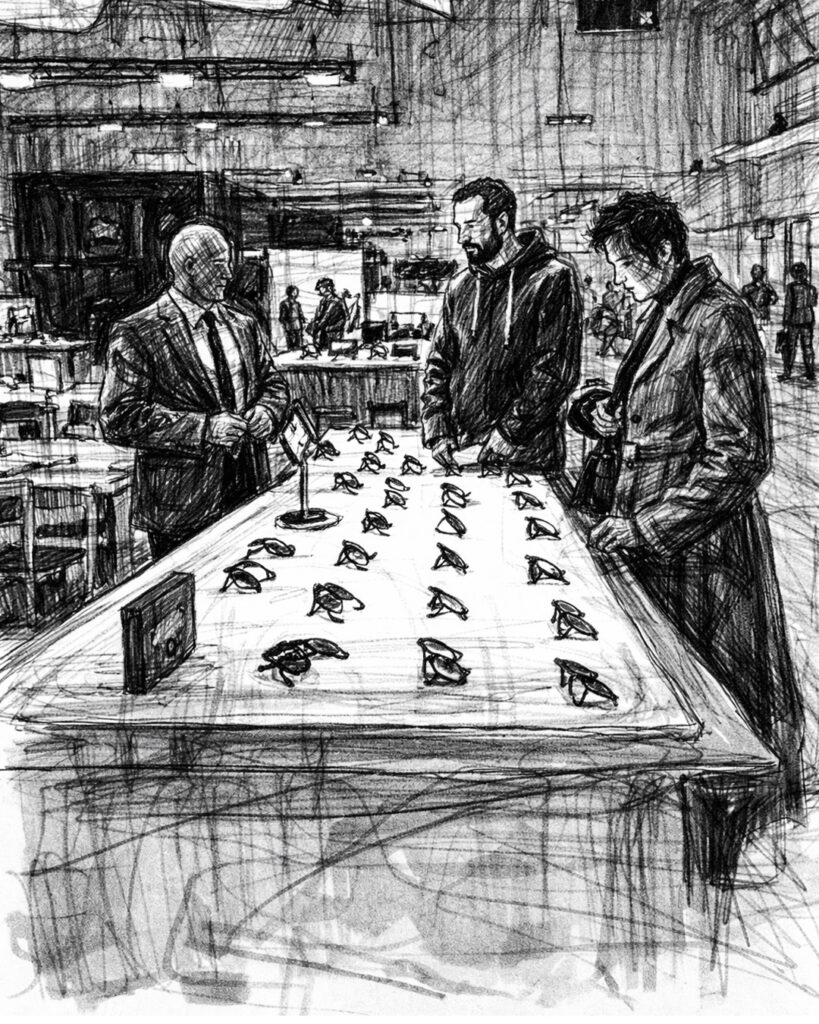
Follow the Money
The imbalance becomes impossible to ignore when you look at the numbers.
The brand pays:
- €30,000–€50,000 for a stand
- €5,000–€25,000 participation fees
- travel, team, logistics
- marketing and product development
- production
The agent pays:
- nothing
And yet collects 20–30% commission on every order.
Even more striking: agents often earn commission whether they actively sell or not.
For emerging brands, this creates a structural trap.
Sign exclusivity with an agent, and:
- they may prioritize bigger brands in their portfolio
- they may not show up at your stand
- they still collect commission on your territory
If you close orders yourself?
You may still receive an invoice for their percentage. Why? Because you’ve granted them that territory through a contract. Taking it back isn’t simple. But it can be challenged and there are already brands preparing to take action against it.
No investment.
Guaranteed upside.
A System Engineered for Intermediaries
Over the past 20 years, the eyewear ecosystem has been quietly engineered around dependency.
Agents consolidate demand.
Trade shows consolidate access.
Brands and opticians absorb the cost.
What was once justified by language and cultural barriers is now outdated. Today’s founders are global often speaking multiple languages, operating across markets, and backed by investors who expect direct growth.
And yet, the structure hasn’t evolved.
Because for one group, it works perfectly.
At the end of the day, when you draw the line, the biggest winners after a trade show are neither the brands nor the opticians, they are the intermediaries. The system allows them to generate income without being present in the territory, without traveling, and without investing anything. It is a fundamentally flawed structure that ultimately holds back real progress.
The Geography of Power
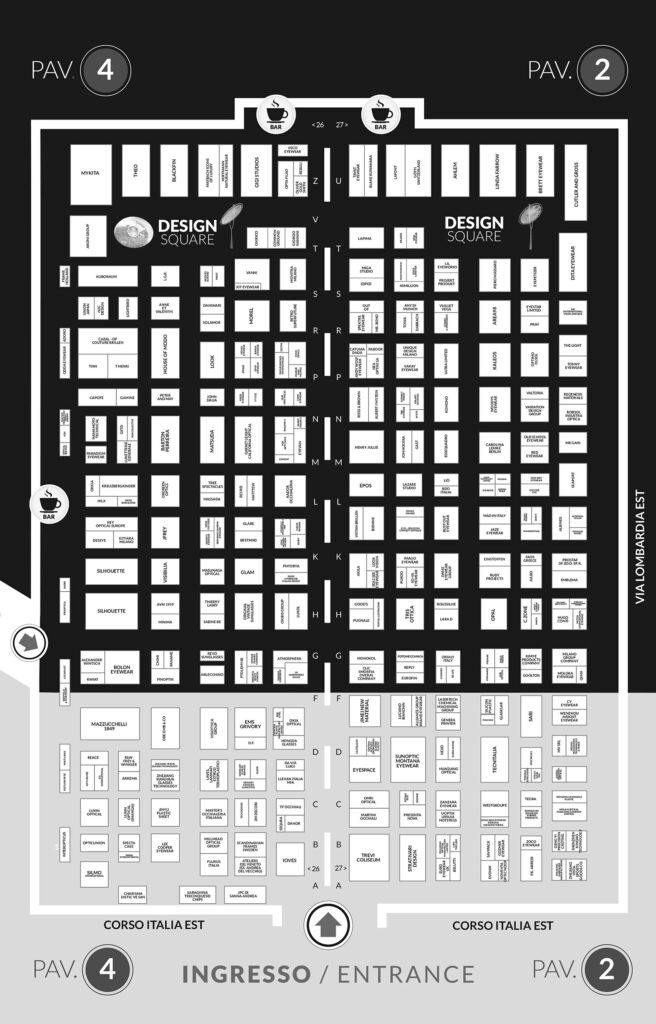
At MIDO Milano Eyewear Show and SILMO Paris, visibility is not neutral.
The best locations are secured by major players.
Independent brands are pushed to the margins physically and commercially.
Foot traffic follows hierarchy.
Proximity defines perception.
And if your neighboring booth underperforms, your own visibility suffers.
In theory, everyone is present.
In practice, not everyone is seen.
The Quiet Exit of the Industry’s Most Desirable Brands
Perhaps the most telling shift is happening outside the fairs.
Brands like Jacques Marie Mage, Sato and The Other Glasses are increasingly bypassing the official format.
Instead, they host private showrooms in hotels, apartments, even historic spaces during the same period.
Even groups like Kering Eyewear, following its acquisition of LINDBERG, have explored operating outside the traditional fair structure at MIDO.
Because outside:
- the brand controls access
- the experience is curated
- conversations are intentional
- identity is preserved
This is where meaningful business is increasingly happening.
FOMO, Manufactured
As returns from trade shows become harder to justify, brands have adapted not by leaving, but by gaming the system.
Exclusive collections.
Limited releases.
Trade-show-only drops.
The goal is clear: create urgency, force attendance, drive orders.
Fear of missing out becomes a sales strategy.
Because without that pressure, attendance and the entire agent-driven model would weaken.
One of the most common is creating “exclusive” collections for the fair usually just a few frames in different colorways. In reality, most of these pieces don’t sell. And six months later, the same sales agent shows up at your door with the familiar line: “I’ve got something special for you leftover pieces from the SILMO collection.” It’s all designed to push you to spend more.
The Retailer Caught in the Middle
Opticians, long considered the beneficiaries of trade shows, are increasingly constrained by them.
They face:
- pre-determined schedules
- limited time to evaluate products
- curated exposure via agents
- pressure to commit on the spot
The result is not discovery but selection within boundaries.
And crucially, many retailers are not buying for customers anymore.
They are buying for themselves for what feels safe, familiar, pre-approved.
The Emerging Alternative: Cut the Middle
A new model is quietly gaining traction.
Direct relationships between brand and retailer.
- curated collections built around real demand
- online ordering without physical dependency
- flexible return policies
- no intermediary commissions
Brands like Lunetterie Générale and The Other Glasses are already designing their collections this way, anticipating needs, simplifying decisions, fast delivery, easy return, reducing friction.
The internet is doing what it has done in every other industry: removing the middleman.
A Different Future — Already Visible
The alternative isn’t theoretical.
It’s already happening.
Imagine:
- a city-wide network of independent showrooms
- a shared calendar, not a shared hall
- €5,000–€7,000 budgets instead of €50,000+
- authentic environments instead of standardized booths
- Brands should stop giving exclusive territories to agents, especially around trade shows
- Build direct relationships with retailers (the internet makes this possible)
- Modern logistics and transport costs make this viable
A decentralized Eyewear Weekend, where buyers explore freely again.
Where discovery returns.
Where brands are experienced, not passed through.
Where the end customer is represented by artists, entrepreneurs, and iconic figures in society.
Opticians need to rethink long-held assumptions. The new generation of leading independent brands is built on trust, not manipulation. Orders can be returned if they don’t perform, delivery is fast, and communication is direct. The implication is clear: the future doesn’t rely on intermediaries, but on transparent, trust-based relationships between brand and retailer.
The Questions No One Is Asking (Yet)
Beneath the surface, deeper issues remain:
- the use of public and EU funds to finance participation
- the ownership and use of retailer data collected at fairs
- potential conflicts of interest when organizers are tied to eyewear companies like Morel or Blackfin
Who benefits from that data?
Who controls visibility?
And who decides what gets seen?
These questions are rarely addressed but increasingly relevant.
When Trade Shows Actually Work
Trade shows do work, but only under very specific conditions. If you’re a brand like Akoni or a conglomerate, backed by significant capital, operating multiple brands under one umbrella, and supported by in-house sales teams who manage client relationships without paying 25% commission on every order, the equation changes. If you can afford to build a large, visually striking stand that delivers a full brand experience, then yes, the trade show model can work.
The same applies to long-established names like Kuboraum, Cutler and Gross or DITA . These brands have been part of the system from the beginning. Their agents are fully aligned, their presence is dominant, and their positioning within the fairs is secure.
But the real question is: how many brands are actually Akoni?
The Bottom Line
Trade shows like SILMO Paris and MIDO Milano Eyewear Show still project power, scale, and prestige.
But behind the facade, the model is under strain.
For independent brands:
- high costs
- limited control
- structural disadvantage
For retailers:
- constrained discovery
- guided decision-making
For agents:
- maximum efficiency
- minimal risk
- consistent upside
In a market built on design and independence, the most urgent disruption may not come from a new frame, but from breaking the system that sells it.

 English
  French
  Italian
  Spanish
  Portuguese
  German
  Korean
  Japanese