

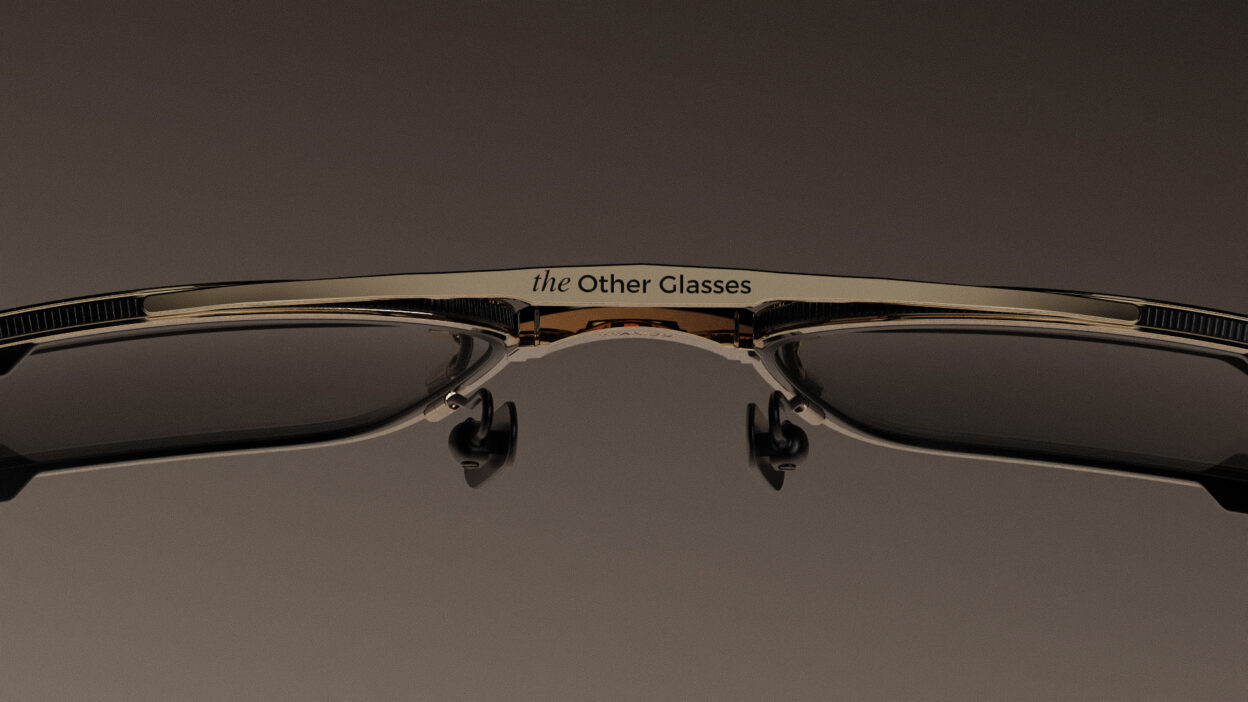
Once every 10–15 years, the market produces a brand that rewrites the rules. If ten years ago that brand was Jacques Marie Mage, following the wave initiated by Oliver Peoples, today a new player is redefining the landscape: The Other Glasses.
This brand combines uncompromising functionality long associated with brands such as Lindberg with the exclusivity, selective distribution, and cultural impact exemplified by Jacques Marie Mage. The result is a product positioned at the intersection of art, technology, and function.
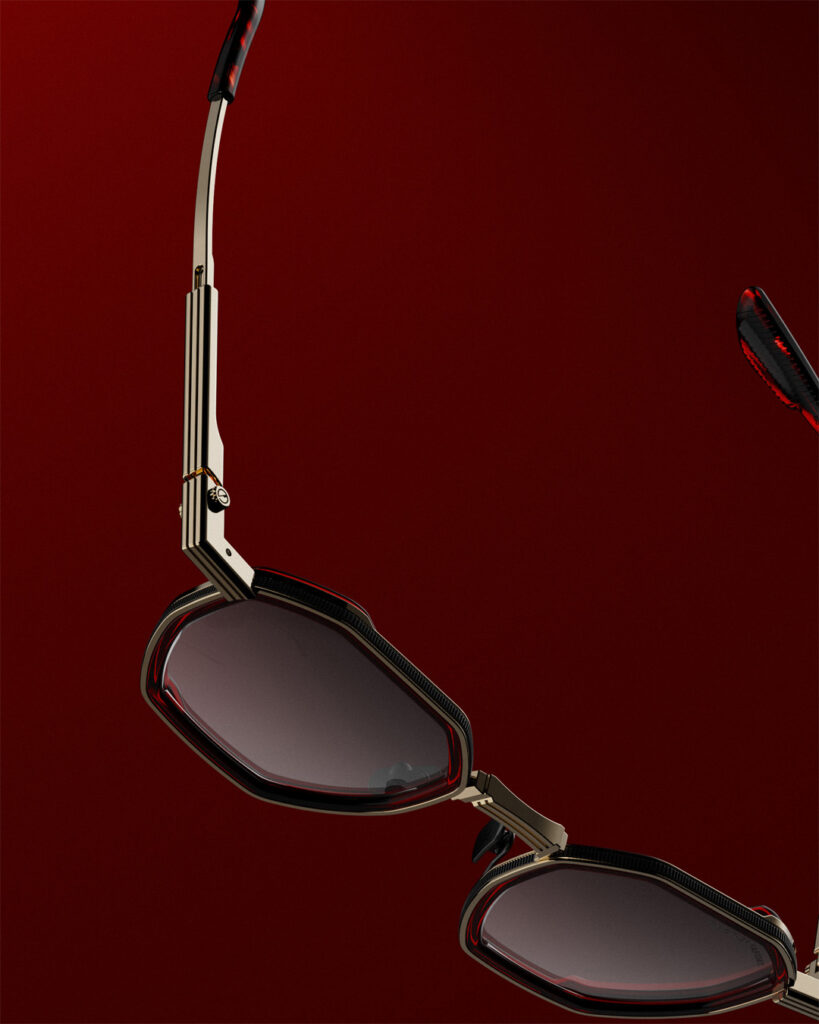
Just one year after its market debut, The Other Glasses has moved from promising newcomer to one of the most strategically interesting players in the global eyewear landscape. What began as a self-funded launch, later supported by a local investment fund, has rapidly evolved into a playground for international capital mirroring a wider industry shift: independent eyewear has become a serious point of interest for global investment funds.
“We started this brand out of a deep passion to innovate in a field that had clearly stagnated. Much of the eyewear on the market felt either purely functional or excessively artistic, with little room in between – no refined luxury line capable of addressing real-life needs in a balanced way. Many retailers may only be discovering us now, but established players in the industry are already aware of what we’re building and are following our evolution with interest.” explains founder Andra Simina.
The reason for this rapid rise is not scale. It is clarity.
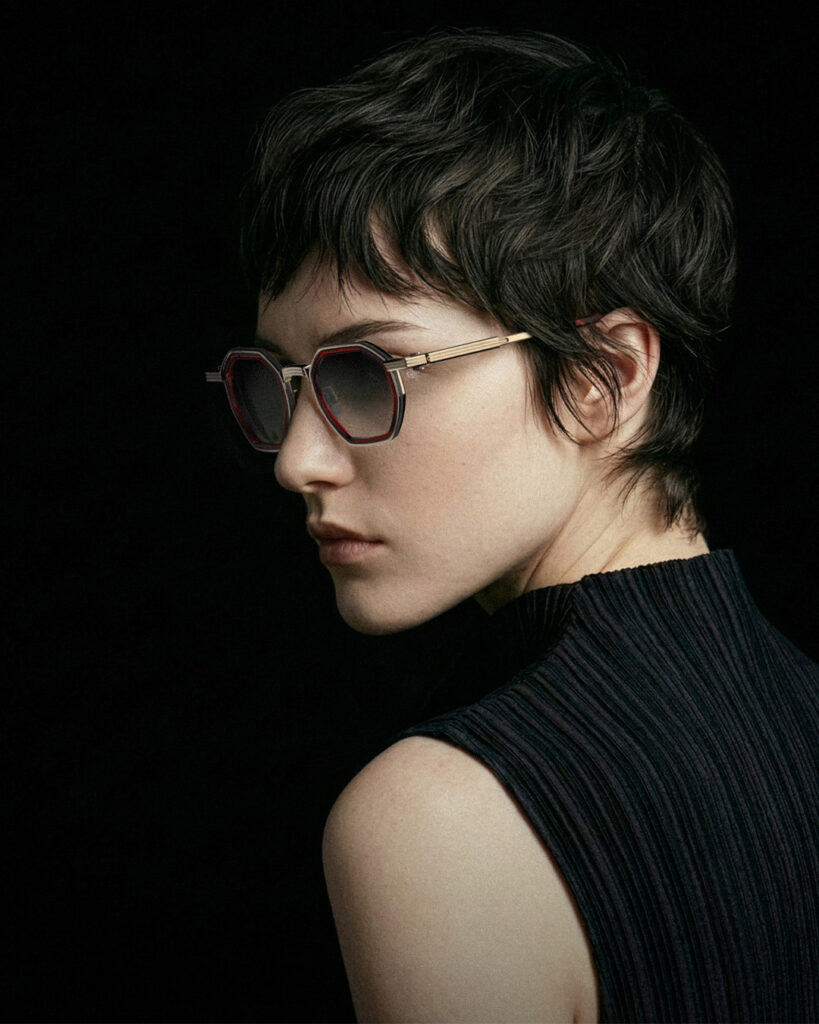
A Brand That Read the Market Before the Market Read Itself
From the outset, The Other Glasses entered the market with near-flawless visual execution and a rare ability to anticipate where luxury was heading. Long before quiet luxury became an overused industry shorthand, the brand embedded purpose and understatement into both product and communication setting a tone that has since influenced peers across the independent segment.
“Our background in luxury and our ability to build a strong, multidisciplinary team gave us the tools to anticipate where the market was heading. From the beginning, our ambition wasn’t simply to create a name, but to pursue the highest level of execution at every stage.” Andra notes.

Today, The Other Glasses is no longer perceived as “a new brand.” It represents a clearly articulated point of view one that positions it decisively in the top tier of the market.
“I don’t think we’re perceived as a new brand anymore, even after just one year. The creative direction of our first line resonated strongly within the industry. With Essence, we wanted to go further, not only to express a clear vision, but to reinforce a market position that only a handful of brands worldwide truly occupy, while defining our clear, recognizable DNA.” she adds.
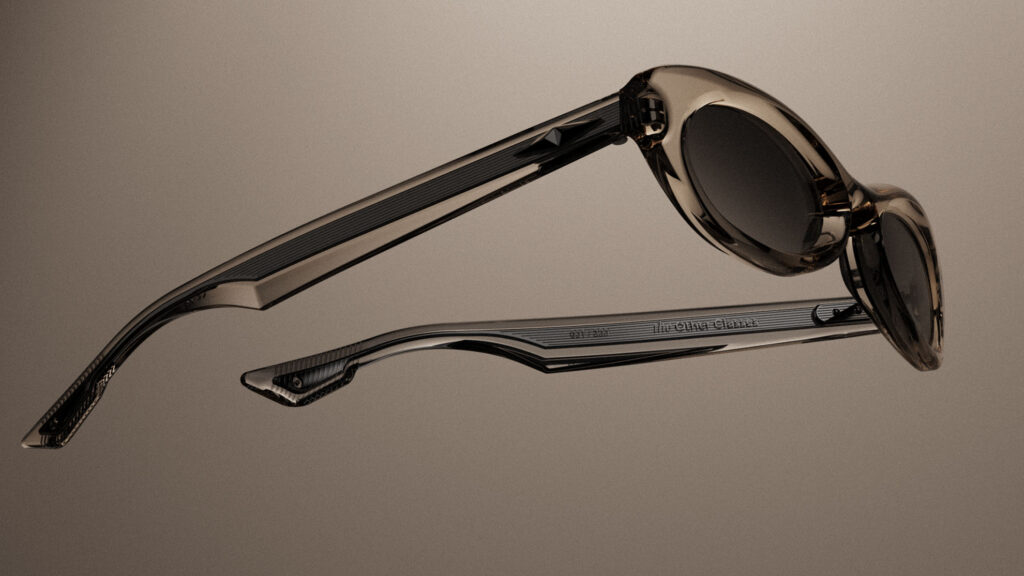
Precision Over Presence: A Radical Distribution Philosophy
Central to this rise is narrative control. Unlike brands chasing distribution volume or boasting about the number of doors they open, The Other Glasses has chosen the opposite path. The objective is not ubiquity it is precision.
One store per city. No redundancy. True exclusivity.
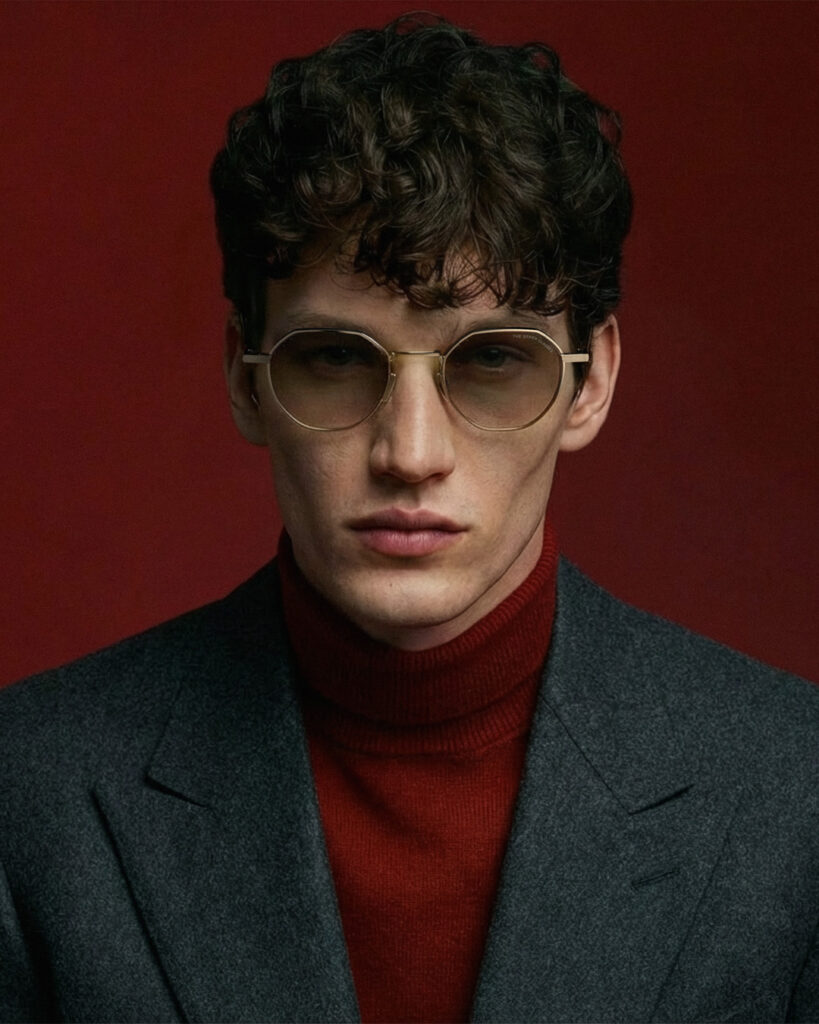
“When a message is repeated often enough, it slowly yet steadily begins to feel like an unquestionable truth. In many ways, this is what has happened in our industry, the narrative has become tightly framed and we’ve grown accustomed to operating within it rather than challenging its premises. We’ve come to the conclusion that the traditional distribution model simply isn’t an option for us. We focus on building long-term, meaningful partnerships with the stores that represent us – offering real support and sustainable margins few can provide, that are made possible by our ability to control the entire process. Rather than being present everywhere within a city, we choose to be present only where it truly matters. An excessive number of accounts would compromise that control, turning a carefully built product into a mass one.” Andra explains.
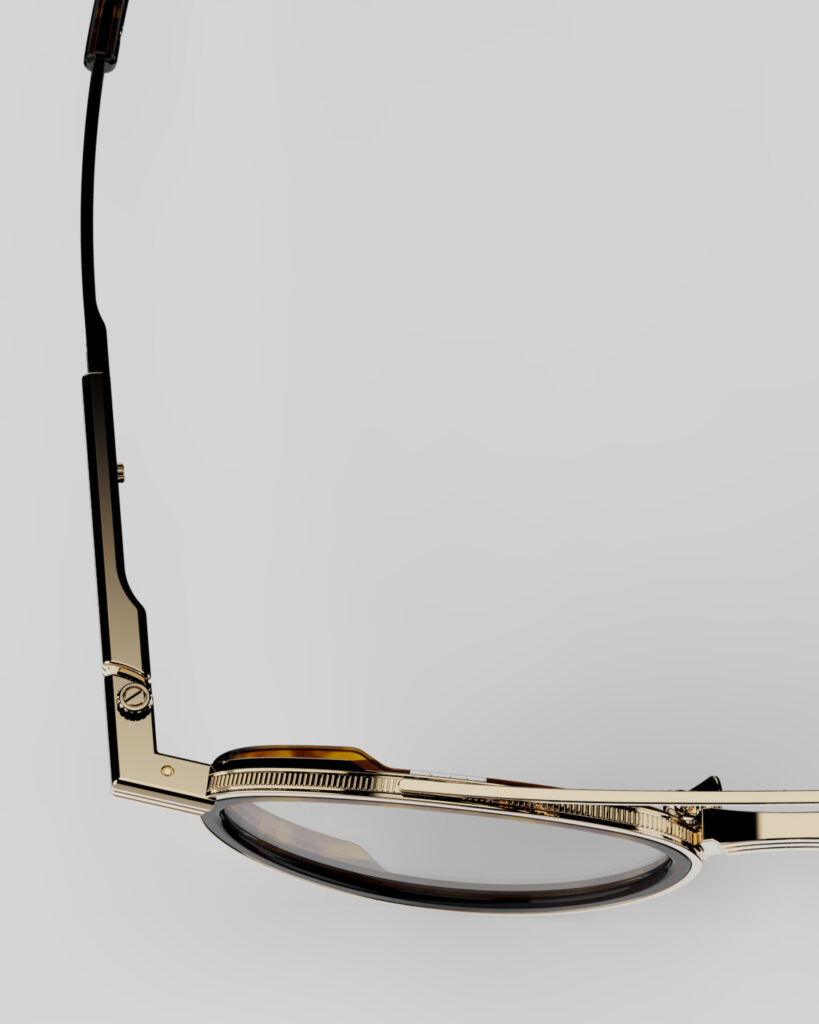
This approach allows the brand to control how it is sold, how it is perceived, and most importantly how relationships are built. By working closely with a limited number of partners, The Other Glasses creates direct, long-term collaborations rather than diluted presence.
“In the first phase, we defined our identity through the Origins line. With Essence, we’re reinforcing that position. Going forward, we want to maintain an element of mystery – launching frames continuously, like a true creative studio with its own infrastructure. We like to believe we’re different from brands that repeat the same frame in new colors season after season.” she adds.
Two Lines, One Strategy: Covering the Market Without Diluting the Brand
The strength of The Other Glasses lies in its dual-line architecture.
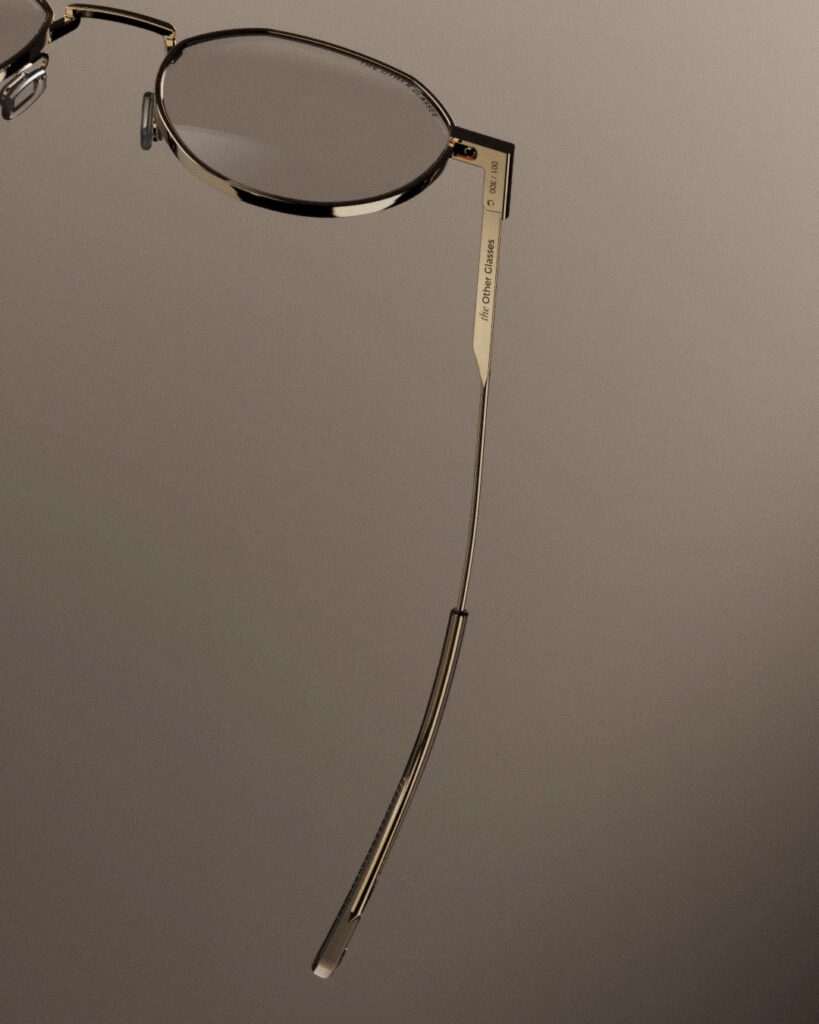
Origins serves as a refined alternative for clients accustomed to ultra-light, functional eyewear often compared to brands such as Lindberg. Designed for real life rather than display cases, it is built for people who wear glasses 12 to 15 hours a day.
Titanium frames weigh under 13 grams, placing them among the lightest in their category, while acetate models act as wearable sculptures engineered with a distinctive temple architecture that distributes weight evenly for all-day comfort.
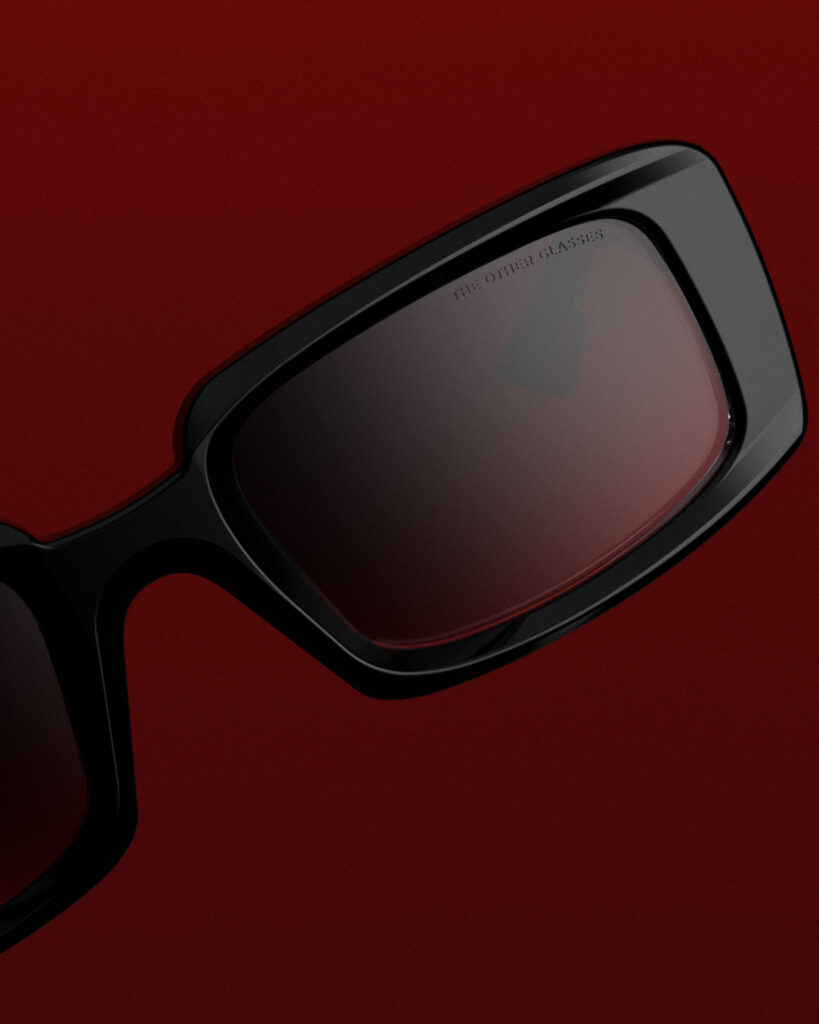
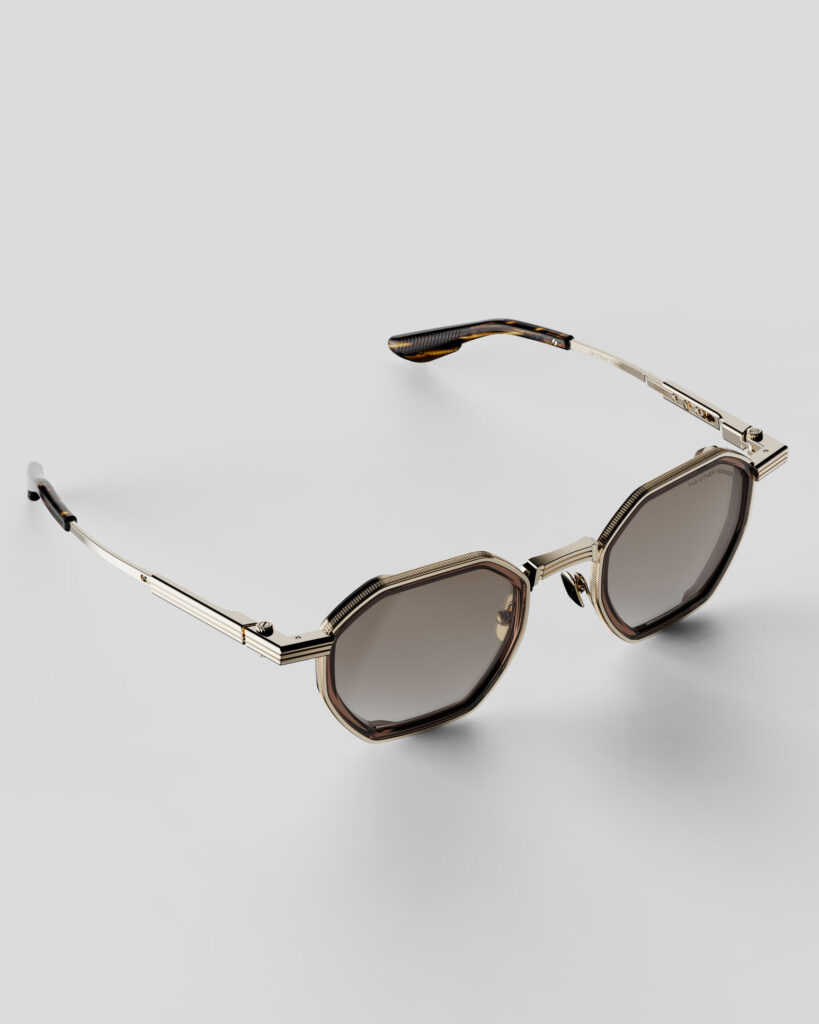
Essence, by contrast, elevates the brand into the high-end and ultra-high-end segment. This line repositions The Other Glasses as a serious competitor in luxury eyewear capable of delivering elements that very few brands can match after years on the market, both technically and aesthetically.
The comparison may seem ambitious, but it is far from exaggerated: if Origins plays the role of the Ellipse, Essence occupies the space of the Nautilus within the universe of Patek Philippe two icons, two philosophies, one house.
The Origins line consists of ten distinct shapes, expressed across 38 frames. The Essence line launches with eight shapes in 21 variations and will continue to evolve, with new frames introduced monthly. In its final form, the Essence line will exceed 40 frames.
Craftsmanship as Strategy, Not Storytelling
What truly distinguishes The Other Glasses is the speed and substance of its ascent. In an industry where credibility is usually earned over decades, the brand has achieved exceptional positioning in record time through craftsmanship, not hype.
“We introduced elements that were largely absent from the industry – the particular feeling you experience the moment you handle our frames. It’s hard to describe: a perfect fit, a distinct sensation. Eyewear is ultimately about design. We prototype extensively using 3D printing, we operate one of the most complex and modern prototyping systems available and we’re proud to have some of the best designers in the world as part of our team,” Andra explains.
Essence frames are engineered as objects of fine mechanics rather than accessories: CNC-machined titanium, patented systems, sculptural acetate fronts, and architectural weight distribution turn each frame into a precision instrument.
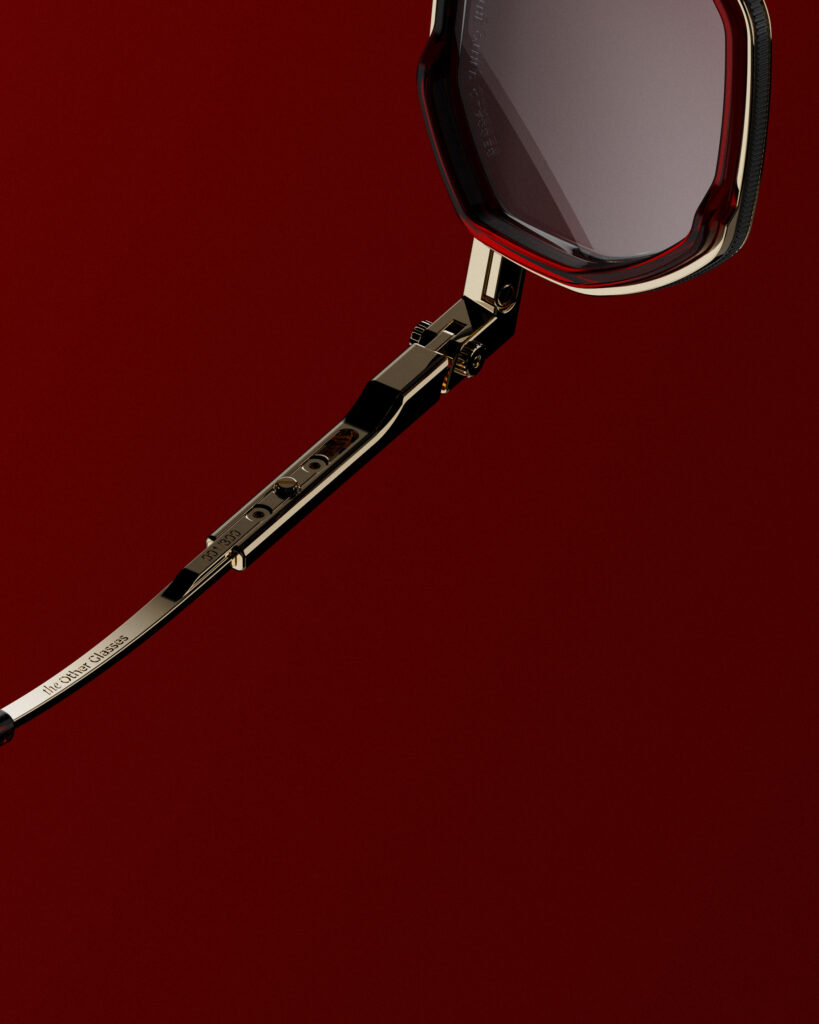
Meanwhile, Origins proves that extreme lightness and comfort do not require aesthetic compromise. Both lines reflect a level of execution that feels increasingly rare in a market driven by licensing and volume.
The Fastest Rise and a Signal of What Comes Next
The Other Glasses’ trajectory is one of the fastest ascents seen in independent eyewear in recent years not because it tried to grow quickly, but because it chose to grow correctly.

“We’re not in a rush, and we’re certainly not trying to appeal to everyone – there’s enough space under the sun for everybody. As per our advertising, we speak to the 1% who don’t follow the 99%. We believe in building a durable, well-structured business supported by our own infrastructure. This game is to be played as a team so it should be a shared ambition – of brands and opticians alike – to collaborate in creating real value in a market that has long been saturated with similar offerings. Being different is not a flaw, muted luxury is not boring and a carefully defined collection, where each model has a clear purpose, is not too small – it is intentional. With Essence perfectly completing Origins, like two sides of the same coin, our positioning becomes clear. We’re here to build a lasting legacy while engaging the market with a fresh perspective.” Andra concludes.
By combining disciplined distribution, narrative control, technical innovation, and a dual-line strategy inspired by haute horlogerie, The Other Glasses positions itself not as a moment but as a signal.
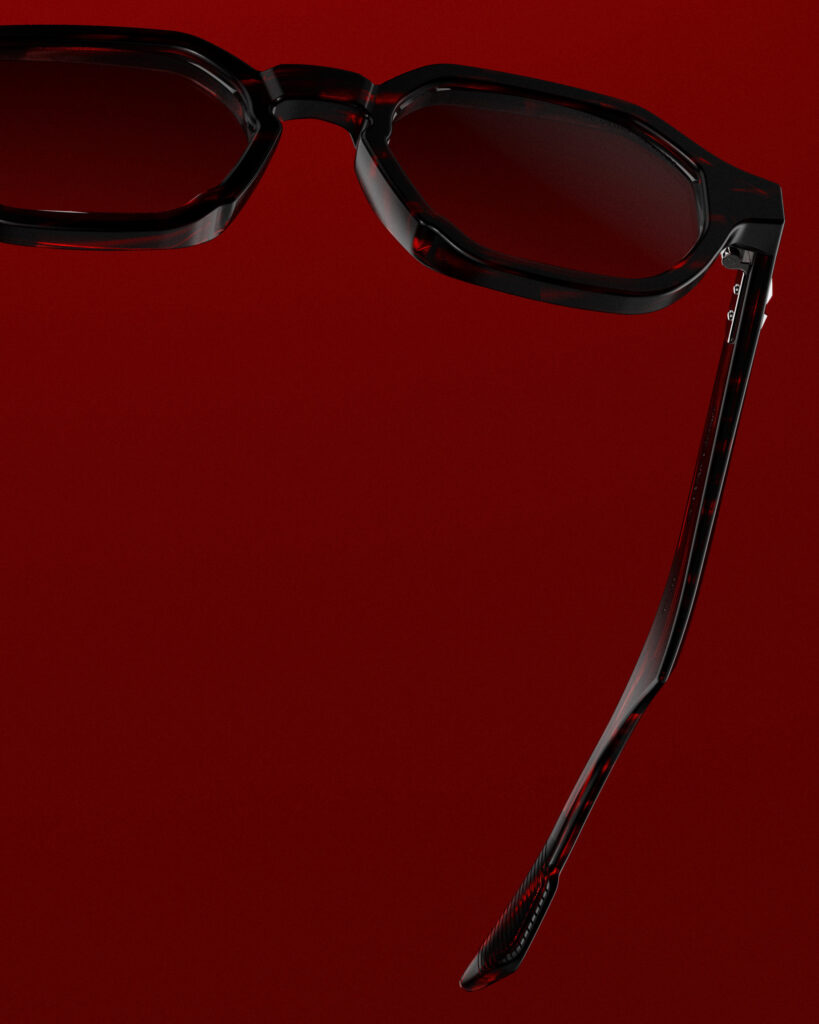
In a category shaped by scale and repetition, The Other Glasses stands apart by choosing restraint. Its rise is less about rapid expansion and more about control of product, distribution, and narrative. By prioritizing precision over presence and long-term value over visibility, the brand positions itself not as a trend, but as a signal of where the upper tier of independent eyewear is heading next.



 English
  French
  Italian
  Spanish
  Portuguese
  German
  Korean
  Japanese
[…] The Other Glasses […]
[…] independents, being present would actively damage brand perception. For newer players like The Other Glasses, the refusal comes from a different place: a rejection of volume in favor of 1:1 […]