


In the wave of new eyewear brands launched over the past five years from VOA and The Other Glasses to Akoni and Sato, one name has stood apart by challenging the category from an entirely different angle: ALPAGOTA.
What makes the brand so compelling is that it does not sell eyewear at all. Instead, it has reimagined a product every glasses wearer needs, transforming eyewear care into a luxury proposition with a highly distinctive creative language. In a market long dominated by forgettable merchandising and low-cost utility, ALPAGOTA elevates lens care into an object of design, ritual and value positioning it not as an afterthought, but as an essential extension of the optical experience.

1. What inspired you to launch ALPAGOTA?
We are on a mission to radically change the eyewear and consumer industry for the better. For too long, eyewear care has been defined by low-quality merchandising, aggressive ingredients, single-use products and plastic containers. Every year, over a billion disposable wet wipes for lens cleaning are thrown away and only 9% of the world’s plastic lens cleaning sprays is recycled. We want to challenge that paradigm.
We believe the category has been undervalued by professionals and, consequently, by consumers. Eyewear care products should be an integral part of the optical experience, not just considered a mere accessory. The impact of a tiny speck of dust on your lenses is greater than one might think. Your eyes constantly autofocus (like a camera does) on the slightest bit of dirt, whether you see it or not. This tires and strains your eyes, which impacts their health and can also lead to migraines. That’s why at ALPAGOTA we talk about eyes, even more than eyewear. What matters to us is to promote eye health.

2. Why did you see potential in redefining eyewear care as a premium category?
The fact that we are a premium brand is not a marketing positioning, it is first and foremost the result of the innovation and quality of our products. Research and development plays a major part in our strategy. The USP of our formulations is the protection they provide. The lenses are protected and stay clean 30% longer. Silktech, our patented Japanese fabric, is much gentler on lenses while being more effective at absorbing dirt through capillary action.
We target premium optical stores because, like us, they emphasise the quality of their products and services. They spend more time with customers. They educate them. That is why I am always surprised to visit high-end opticians with low-end merchandising as their eyewear care offering. This puts eyewear care on the same level as a personalised key ring. It is therefore not surprising that people do not take care of their glasses enough.
Too often, the optical experience is seen as complete once the customer leaves the store with new frames and lenses. In reality, that moment is only the starting point. Eyewear is used every day and requires proper care to maintain both visual clarity and wellbeing. ALPAGOTA fills this gap by extending the optical experience beyond the point of sale. Our products accompany the customer in their daily routine, helping them protect their lenses, care for their eyes, and fully preserve the quality of their eyewear over time.

3. How do you differentiate ALPAGOTA from traditional cleaning products?
Efficacy, sensorialty and sustainability. Those are our 3 area of differentiation.
Our formulations are optimized for user experience and performance. While all other lens cleaners focus on instant results, we focus on long-lasting effect. There are three active mechanisms at work to keep lenses clean longer:
- Anti-static ingredients reduce surface electrical charge and prevent dust attraction.
- Anti-stain ingredients create an hydrophobic top coat and prevent oil from “breaking” into visible smears while making future cleaning easier.
- The formulations slow evaporation and remain on the surface long enough to condition it, resulting in a longer-lasting protective effect.
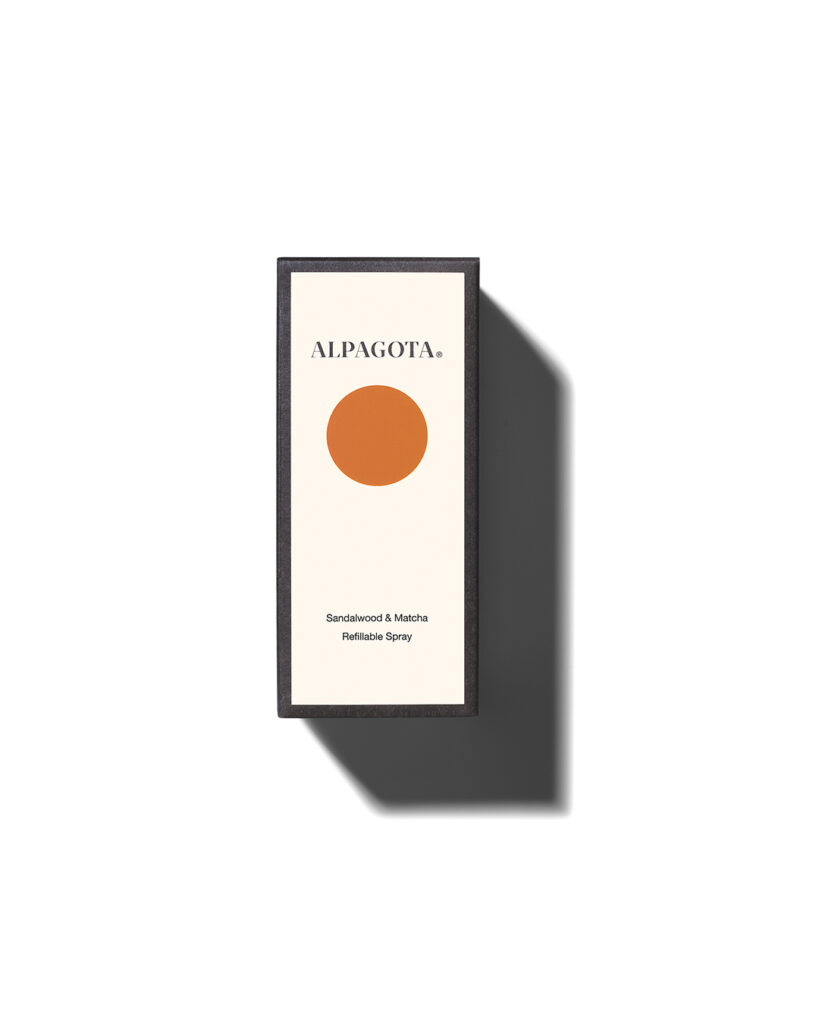
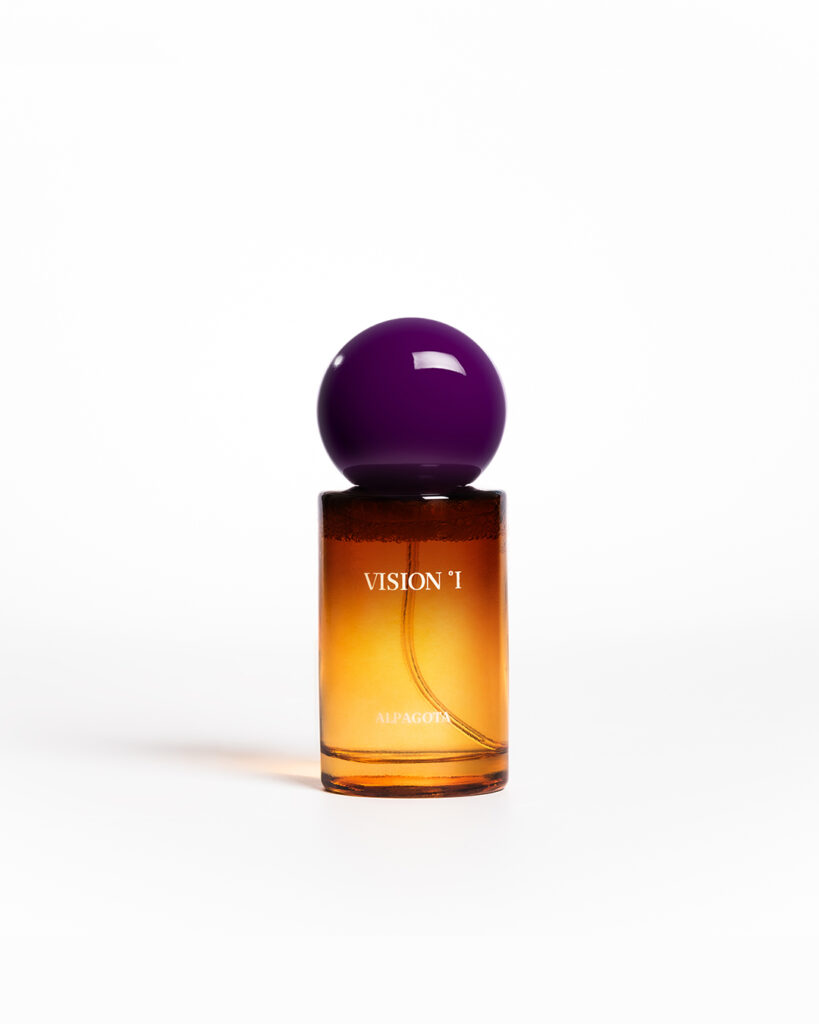
Next to performance we have worked on the ritualisation. We are transforming the mundane act of cleaning into a multi-sensory experience. It needs to become a pleasure if you want people to use a product more often. Our aromatic formulas engage customers with their sophisticated scents developed with perfumers in France. 74% of our users reported cleaning their lenses daily due to the olfactory boost. The design of our bottle is inspired by the work of Kaj Franck, finish designer whose mid-century modern philosophy emphasized clarity, balance, and honest form. Franck’s approach to reducing objects to their essential shapes influenced our bottle’s clean silhouette and carefully considered proportions.
Sustainability is also a key aspect. Our spray bottles and refill bottles are made from glass and designed to be refillable, encouraging long-term use and reducing waste. Our cleaning cloths are machine washable and reusable without losing their efficiency, offering a durable alternative to disposable wipes. In addition, all of our packaging is FSC® (Forest Stewardship Council) certified, ensuring that the paper materials we use come from responsibly managed forests. Through thoughtful materials and design, we aim to create products that care for both the lenses and the environment.

4. Is ALPAGOTA a product brand or a lifestyle brand?
ALPAGOTA is both. Our products are developed to the highest standards of quality and performance, but the brand stands for more than what we make. At the heart of ALPAGOTA is a set of values expressed through our “Open Your Eyes” manifesto. We encourage people not only to look, but truly to see — to stay curious about the world around them. Curiosity makes life richer and more exciting. Choosing ALPAGOTA means caring for your eyes, but it also reflects a mindset.

5. How important is design and fragrance in your development process?
Very important. At ALPAGOTA, we believe in thoughtfully designed products that consider the entire user experience. Of course, a product must be highly efficient, but it should also be something people genuinely want to use and want to use often. If a product works well but stays in a drawer because the experience is uninspiring, it misses its purpose. The subtle fragrance in our formulations is not intended to perfume your glasses, much like the aroma of a hand soap is not meant to perfume your hands; rather, it enhances the ritual of use. Similarly, the design of our bottles is meant to bring the product out of drawers and into everyday life. They are meant as objects.

6. How has the market responded so far?
The market response has been amazing. Since launching at SILMO Paris in September 2023, ALPAGOTA has expanded to more than 25 countries across Europe, Asia and the United States, and we achieved triple-digit growth from FY24 to FY25. Much of this growth has happened very organically, with new prospects reaching out to us almost daily. In addition to optical retailers, we are now also present in premium beauty stores in Poland. As the brand grows, we increasingly rely on agents to support our international expansion, while our direct-to-consumer channel continues to develop strongly, particularly in the United States which has become our main e-commerce market. Being featured in leading international publications such as Wallpaper*, Monocle, and the Financial Times has also played an important role in building awareness and credibility.

7. What challenges did you face entering the optical industry?
One of the main barrier is challenging long-established habits and mindsets. As an outsider, we naturally look at the category from a different perspective, often benchmarking practices from other industries. However, when a sector has operated in a certain way for decades, shifting viewpoints takes time. It requires patience, commitment, and continuous explanation from our side to present our new ideas.
The second challenge is educating both our retail partners and the end customer. Our retail partners need to understand the depth of the brand and the products well enough to communicate it clearly in store, while we must ensure that our message remains simple and accessible for consumers. Helping retailers convey our story and the value of our products in a straightforward way is therefore an essential part of our work.

8. Do independent opticians understand the value of premium care products?
Some immediately understand the value of premium care products, while others need more time. In many cases, it comes down again to education, explaining why we approach the category differently and what it can bring to their business. Our goal is not only to offer a better product, but also to help independent opticians create additional revenue while differentiating themselves from mass-market chains and e-commerce platforms.
One of the issue with selling low-end care products is that the exact same items or even brands can be found in supermarkets, discount stores, or online marketplaces like Amazon. Over time, this has slowly taken part of the business away from independent opticians. It is a consequence of the devaluation of the category. If we look at independent shoe stores, for example, they often take pride in offering premium shoe care brands, not only because the products are better, but because they increase the average basket and create an easy cross-selling opportunity. We believe the optical industry can benefit from the same approach. By developing high-value care products, we want to help optical stores reclaim a revenue stream that rightfully belongs to them.
At the same time, we believe the category needs to move away from merchandising. Putting a store’s name on a product rarely elevates its value; if anything, it often diminishes it. Customers are willing to pay for strong brands and well-designed products. When they discover something they truly appreciate, they remember where they bought it and they come back for it.
9. How do you see the eyewear care segment evolving in the next 5 years?
The eyewear care category is only at the beginning of its transformation. For decades, it has been treated as a purely functional afterthought, with very little attention given to quality, design, or the overall user experience. With ALPAGOTA, we were the first to challenge this status quo and rethink the category entirely, approaching eyewear care with the same level of consideration that people expect from beauty, wellness, or luxury products. In many ways, this helped initiate a broader conversation within the industry about the role these products can play.
Over the next five years, we believe the segment will continue to gain relevance as brands and retailers realize that eyewear care is not just an accessory, but an essential part of the eyewear experience.
10. What is your long-term vision for ALPAGOTA?
I have a clear long-term vision for ALPAGOTA, but I prefer to let it unfold step by step rather than reveal everything now. What I can say is that we are still in the very first phase of the journey and it is already progressing better than we initially expected. Behind the scenes, we have developed a ten-year roadmap for both product development and the business as a whole. What people see today is only the tip of the iceberg. Exciting times are ahead!
As the eyewear industry continues to evolve beyond frames alone, ALPAGOTA is making a persuasive case for why care should no longer sit at the margins of the category. By merging performance, sustainability, design and brand storytelling, it is redefining what was once considered a simple accessory into a premium, experience-led segment in its own right. If the next chapter of optical retail is about creating deeper, more enduring relationships with customers, ALPAGOTA may well be pointing to where that future begins.



 English
  French
  Italian
  Spanish
  Portuguese
  German
  Korean
  Japanese