


Over the past few years, a practice has quietly spread across the independent optical retail landscape one that, while often justified as “private label,” risks undermining the credibility of the entire eyewear ecosystem.
More and more stores are creating so-called proprietary brands by sourcing generic white-label frames from Asia at extremely low cost, adding their store name, and merchandising these products alongside on same shelf established designer and luxury eyewear brands. In many cases, these frames are priced and presented in a way that suggests a comparable level of design, craftsmanship, and narrative.
The problem is not private label itself. The problem is what private label has come to mean.
When anonymous products are rebranded and positioned next to authentic design-driven brands, the customer is misled. Trust erodes. And once trust is lost, it is nearly impossible to rebuild.
Yet private label does not have to be deceptive, generic, or opportunistic. When approached correctly, it can become one of the most powerful tools for differentiation, storytelling, and long-term value creation.
A growing number of forward-thinking retailers are proving this by abandoning white label altogether and instead developing exclusive frames in collaboration with the brands they already represent.
One of the most compelling examples of this shift is the collaboration model developed by JOHN DALIA.
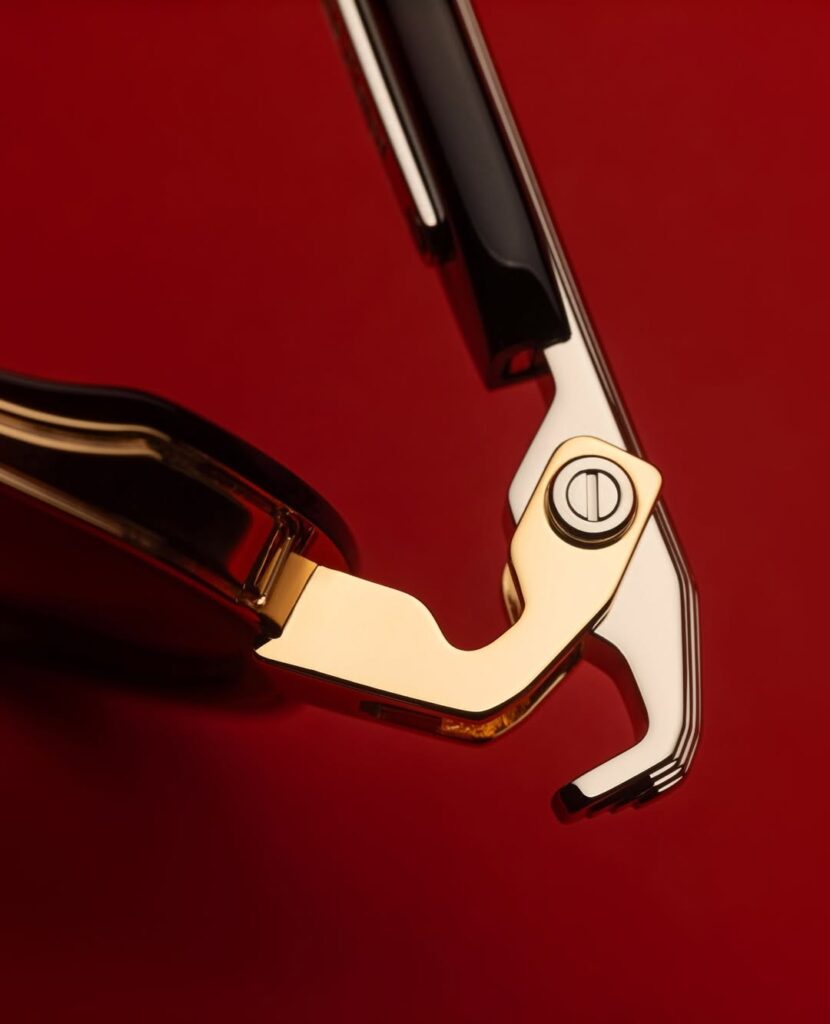
Moving Away from White Label: A Question of Integrity
White label is appealing because it is simple: low MOQs, fast turnaround, high margins. But simplicity often comes at a cost.
Generic frames have no origin story, no design rationale, no creative responsibility. They are interchangeable by nature. When such products are presented as proprietary creations, customers are no longer buying eyewear they are buying a narrative that does not exist.
Increasingly, customers sense this. Today’s eyewear consumer is well-informed, visually literate, and sensitive to authenticity. They can recognize when a product lacks intention. As a result, many are beginning to question not only the product, but the credibility of the retailer offering it.
This is where collaboration-based private label fundamentally differs.

JOHN DALIA’s Vision: Private Label Through Collaboration, Not Rebranding
At JOHN DALIA, the idea of developing exclusive frames with retail partners is not new but it is deliberately selective.
The brand has chosen to work only with a small number of long-term partners with whom it shares a common vision of product, quality, and storytelling. Rather than producing frames from scratch under a retailer’s name, JOHN DALIA builds exclusivity through targeted adaptations of existing, proven designs.
In practical terms, this means starting from a JOHN DALIA frame that has already demonstrated strong relevance in-store. Exclusivity is then introduced through elements such as:
- bespoke colorways
- lens shapes or sizing adjustments
- specific metal galvanization
- acetate selections
- custom lens tints
- individual numbering or store engraving
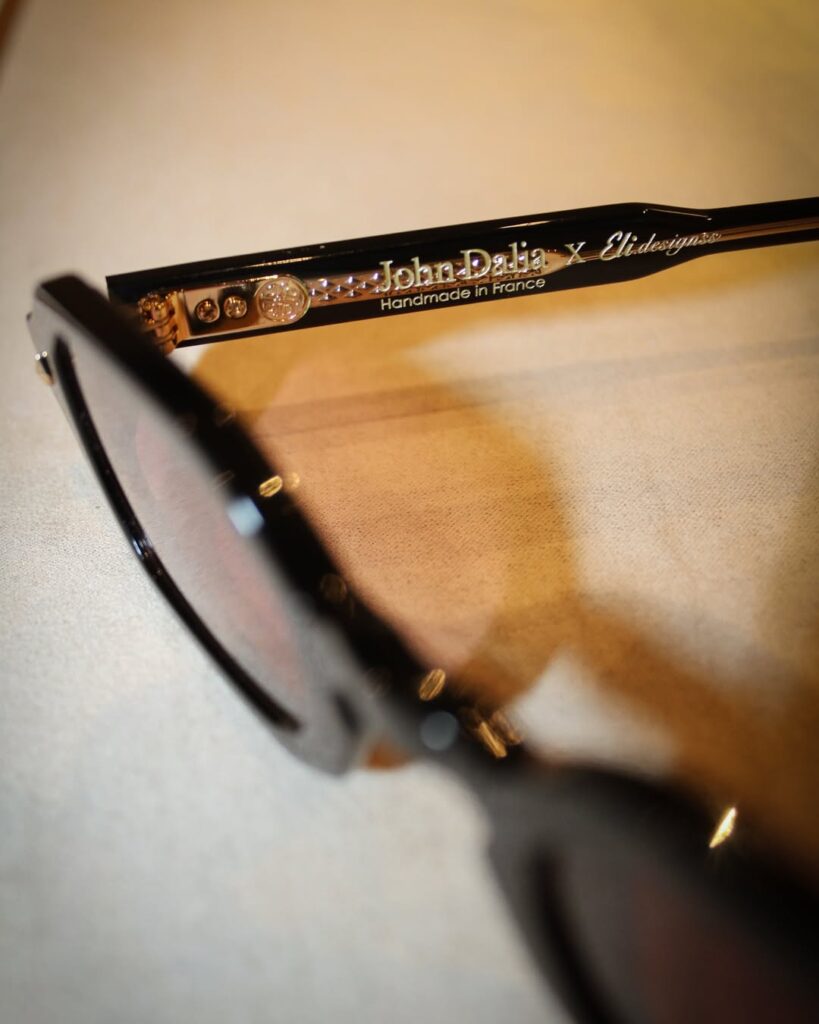
This method ensures that every exclusive project remains coherent with the brand’s DNA while allowing the retailer’s identity to be clearly expressed.
From the brand’s perspective, this approach offers several decisive advantages:
- product credibility from day one
- efficient and reliable development
- realistic MOQs suitable for a single store
- full control over quality and creative standards
Because JOHN DALIA designs and manufactures internally, the brand retains flexibility that is rarely possible with outsourced, large-scale production. This allows exclusives to be meaningful rather than superficial.
Most importantly, this model preserves what white label fundamentally lacks: authenticity, authorship, and accountability.

Retailer Perspectives: Why Collaboration Matters
The impact of these collaborations becomes even clearer when viewed through the lens of the retailers themselves.
Trust, History, and Shared Vision
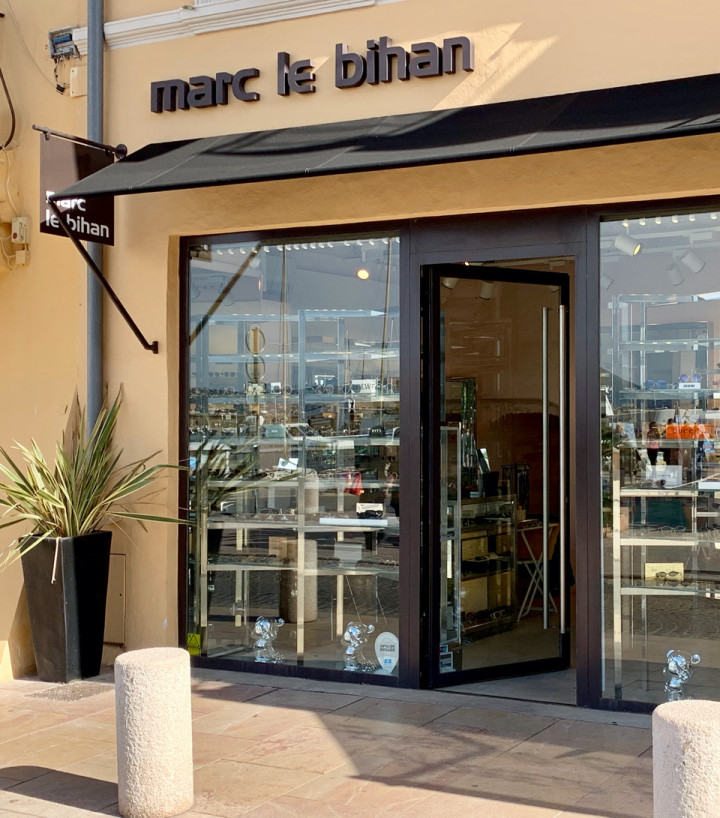
For Marc Le Bihan, exclusivity is deeply personal and inseparable from long-term relationships. Franck, co-owner and manager, describes the collaboration with JOHN DALIA as the continuation of a shared history rather than a strategic initiative. “I chose John Dalia because I have worked with John for many years, always for the same reasons and never with disappointment,” he explains, emphasizing the brand’s consistent ability to listen and adapt.
Beyond professional alignment, the collaboration is rooted in trust and friendship: “John is a long-time friend. I welcomed him during his very first job at Marc Le Bihan, where I trained him as an optician.” For Marc Le Bihan’s international clientele who already perceive JOHN DALIA frames as jewelry exclusivity is not a marketing argument, but a meaningful expression of identity.
“An exclusive product reinforces the feeling of rarity, intention, and authenticity,” Franck notes, adding that such collaborations transform a frame into a statement piece, created for a specific audience and place. In this context, exclusivity strengthens both the store’s curatorial role and the brand’s savoir-faire in equal measure.
Differentiation in a Saturated Market
At Akkermaan Meent, exclusivity is viewed as a strategic tool for differentiation in an increasingly competitive market. Demal & Romain explain that their decision to collaborate with JOHN DALIA was driven by both history and performance. “We were the very first JD retail partner outside of France, and it has since become our best-performing brand in-store,” they note, making the choice of partner feel entirely natural.
Creative freedom also played a decisive role: “We were inspired by the creative opportunities JD offers, which encouraged us to move forward with this exclusive project.” Ahead of the launch, Akkermaan Meent deliberately built anticipation by teasing the frame and highlighting its unique character. “Emphasizing its exclusivity significantly increased our customers’ desire for it,” they explain.
Exclusivity with Integrity
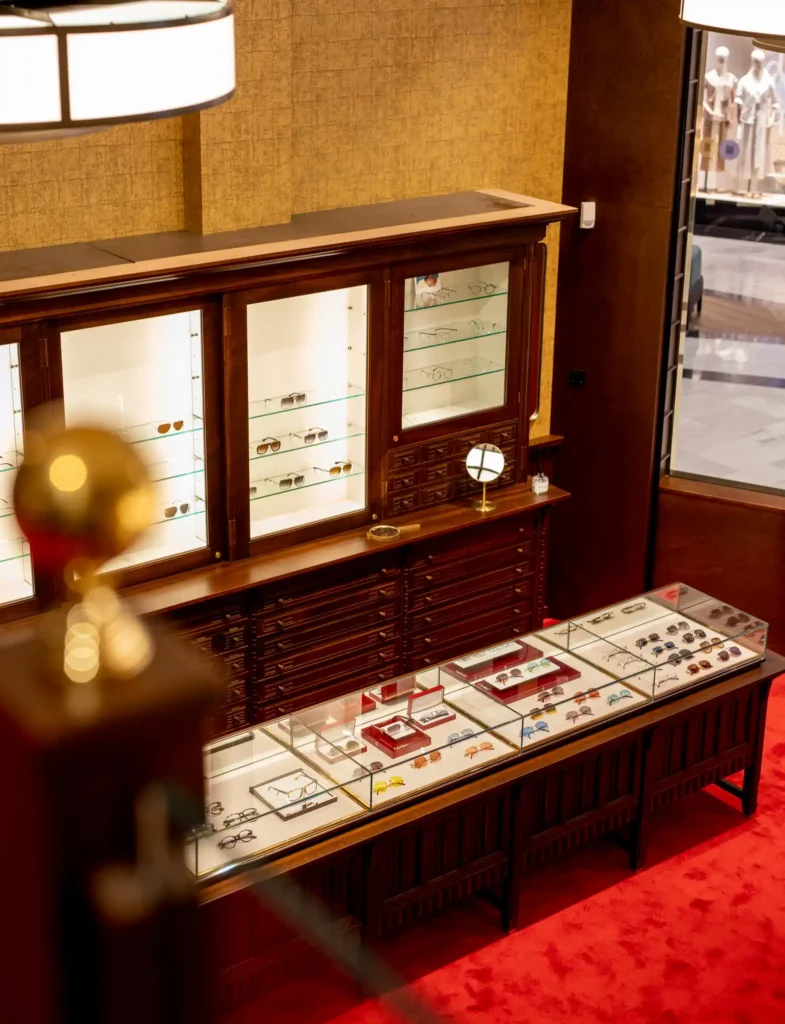
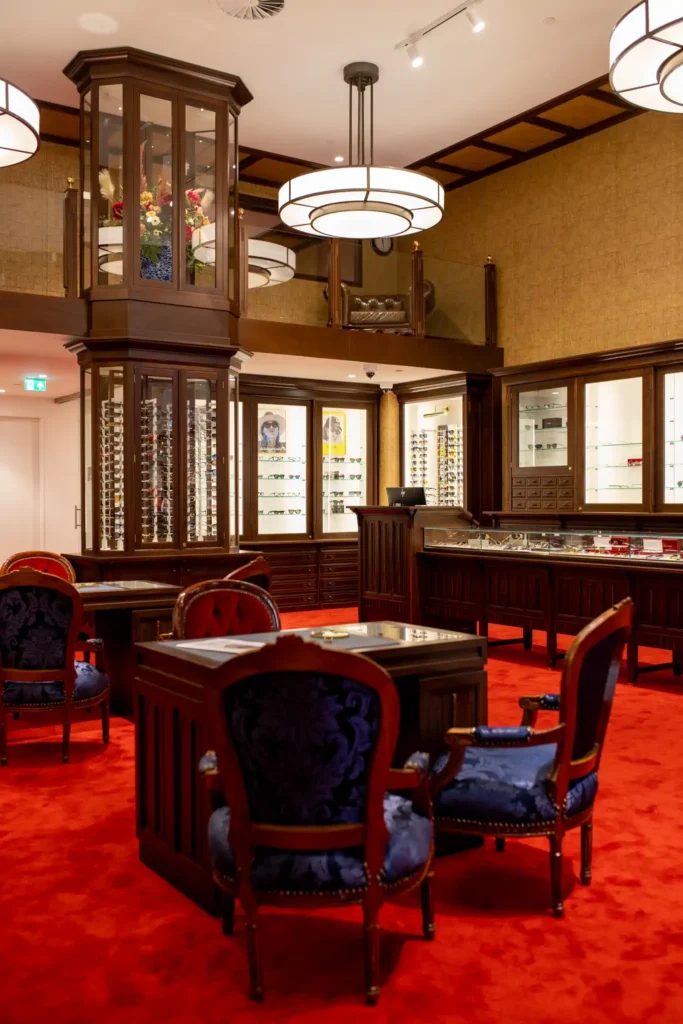
For Schmidt Optiek, exclusivity is not treated as a marketing shortcut, but as a disciplined extension of a broader assortment strategy. As Jesse Van Dijk explains, the decision to collaborate with JOHN DALIA was rooted in a strong alignment of values: “We chose John Dalia because the brand perfectly aligns with our values of craftsmanship, timeless design, and attention to detail.”
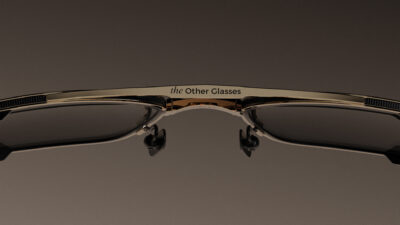
Rather than starting from a blank page, Schmidt Optiek deliberately selected a model that had already demonstrated consistent demand in-store, ensuring immediate relevance for their clientele. “We selected a model that had consistently shown strong demand among our customers, allowing us to build the collaboration around a frame we knew would resonate,” Jesse notes. Exclusivity was then introduced with restraint: the frame was individually numbered, limited to just 45 pieces, and engraved with the store’s name—choices intended to reinforce intention rather than spectacle.
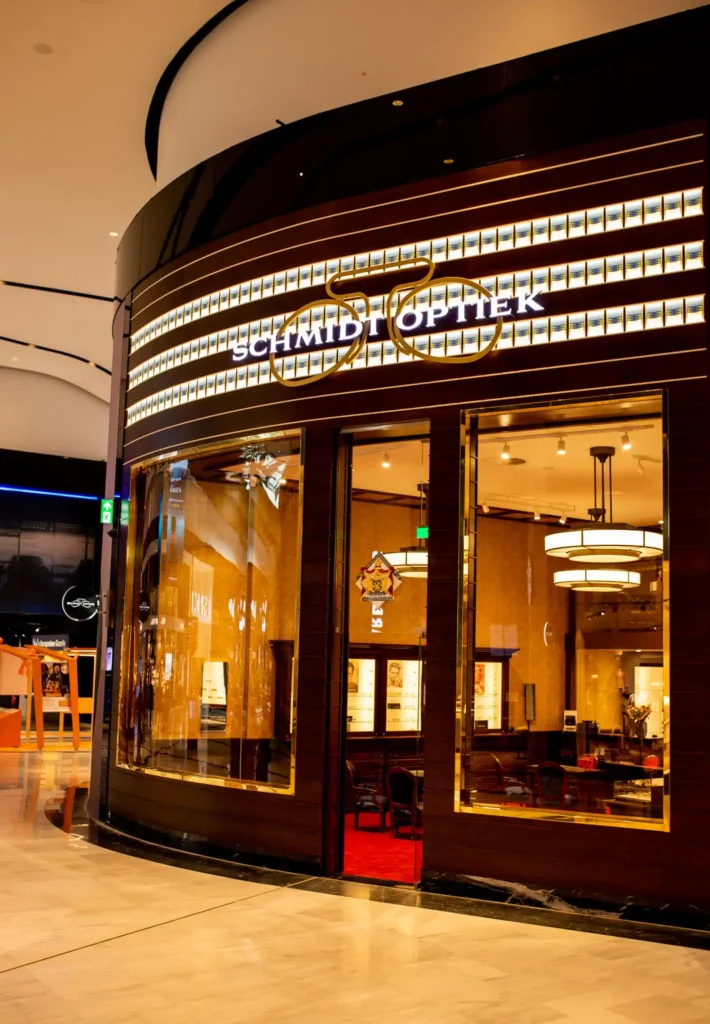
Importantly, Schmidt Optiek maintains a realistic view of exclusivity’s commercial role. “Exclusivity alone does not guarantee higher sales,” Jesse acknowledges, emphasizing that while some customers are drawn to rarity and limited editions, others prioritize familiarity and proven models. In this sense, the collaboration is not positioned as a universal solution, but as a meaningful addition to a carefully curated offer—one that strengthens both the store’s identity and the brand’s DNA without compromising either.
Why Customers Value True Exclusivity
When customers learn that a frame cannot be found anywhere else, the reaction is almost always emotional:
- Excitement
- A sense of rarity
- A feeling of making a considered, unique purchase
Unlike white-label products, these frames come with a story that can be clearly explained and confidently defended. They are not “private label” in name only they are co-authored products.
Importantly, these exclusive projects also benefit the standard collection. They elevate brand perception, drive traffic, and reinforce the retailer’s role as a curator rather than a reseller.
The Industry at a Crossroads
The eyewear industry is at a turning point.
Independent retailers must decide whether they want to compete on short-term margins or long-term credibility. White-label frames may offer immediate profit, but they erode trust, blur positioning, and weaken the industry as a whole.
True collaboration, on the other hand, strengthens everyone involved:
- Brands protect their DNA
- Retailers reinforce their identity
- Consumers receive honest, meaningful products
Private label should never mean anonymous product. It should mean shared vision, shared responsibility, and shared storytelling.
The future of independent optical retail will not be built on cheaper frames with louder logos but on deeper partnerships, clearer narratives, and products that deserve to exist.


 English
  French
  Italian
  Spanish
  Portuguese
  German
  Korean
  Japanese