

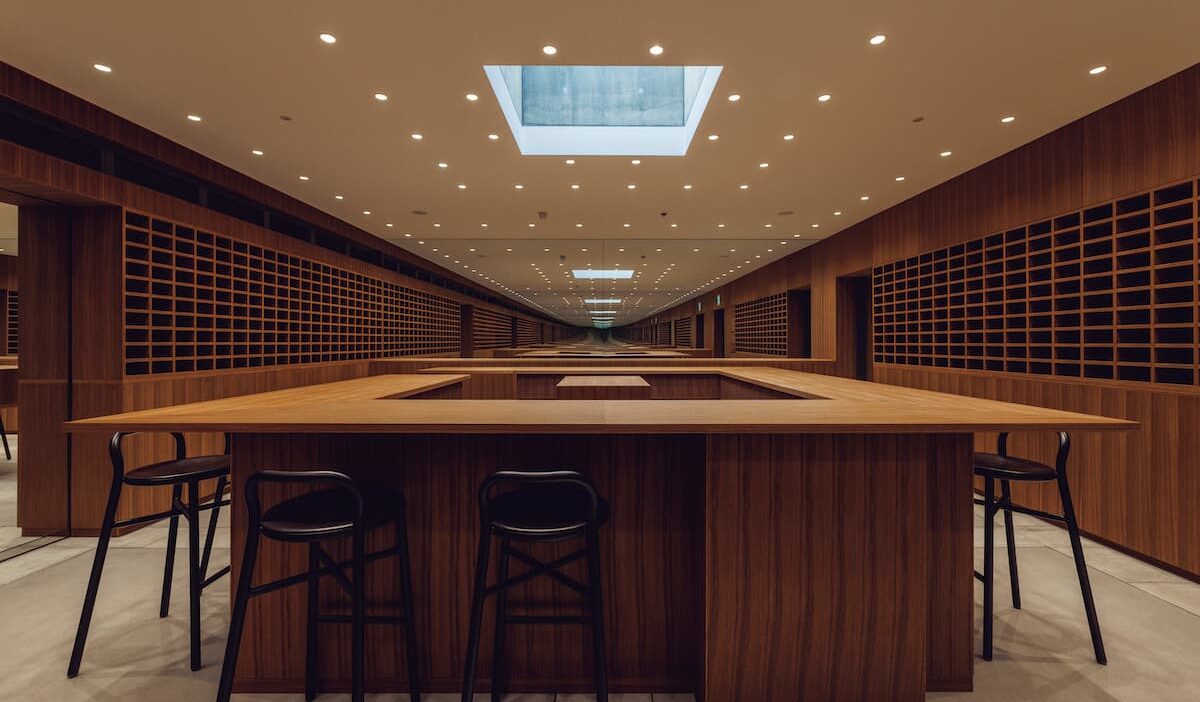
KUMAMOTO, JAPAN — At a time when eyewear retail is increasingly defined by scale, speed, and visibility, Kamachi Gankyouten offers a sharply different model: one built on reduction, control, and clarity.
Rather than competing through assortment or price, the store positions itself through experience. The result is closer to a curated environment than a conventional optical shop.
Retail Built on Editing, Not Volume
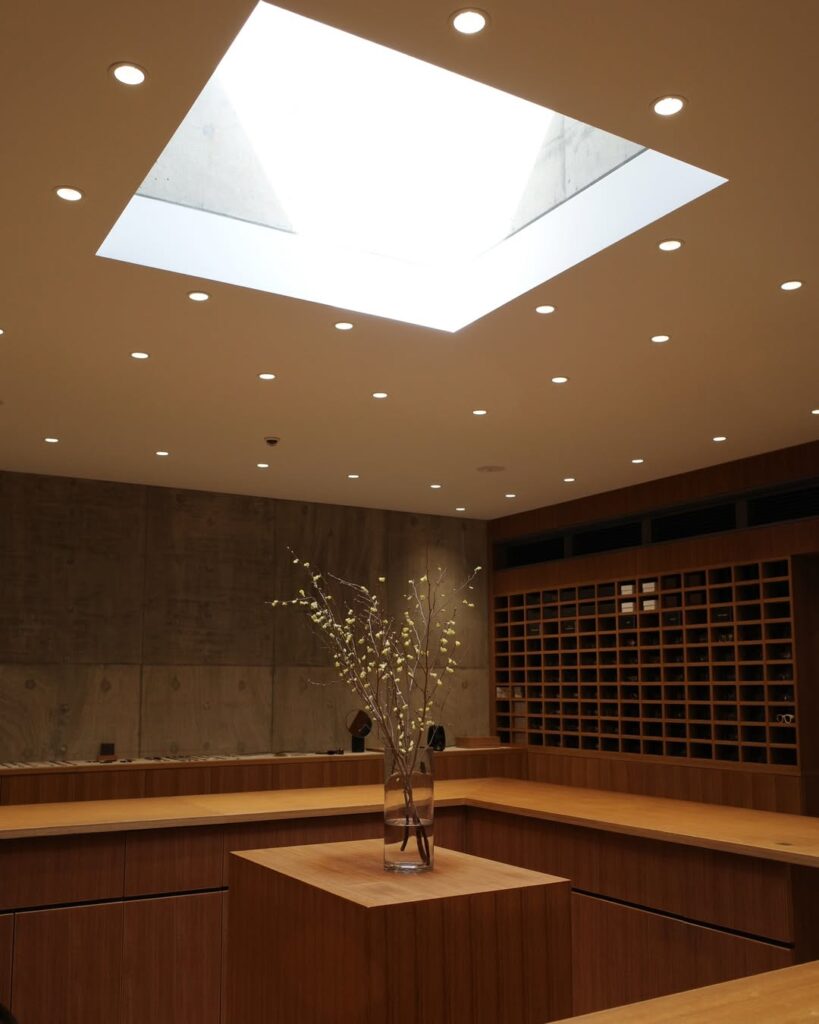
Kamachi operates with a tightly controlled selection of frames sourced from independent designers and established manufacturers. The emphasis is not on brand recognition, but on consistency of design language.
This approach reframes the role of the retailer:
- Selection becomes a form of authorship
- The store acts as a filter, not a marketplace
- Product is secondary to perspective
In contrast to multi-brand optical chains, where quantity signals value, Kamachi communicates value through restraint.
Space as a Strategic Tool
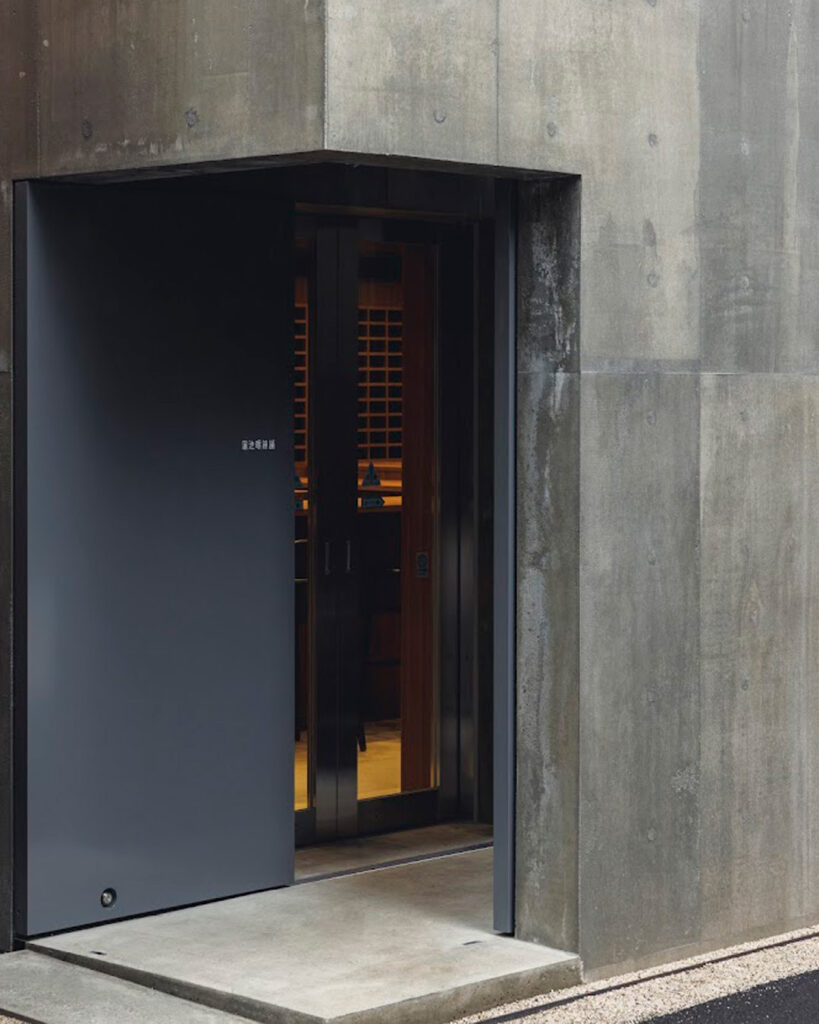
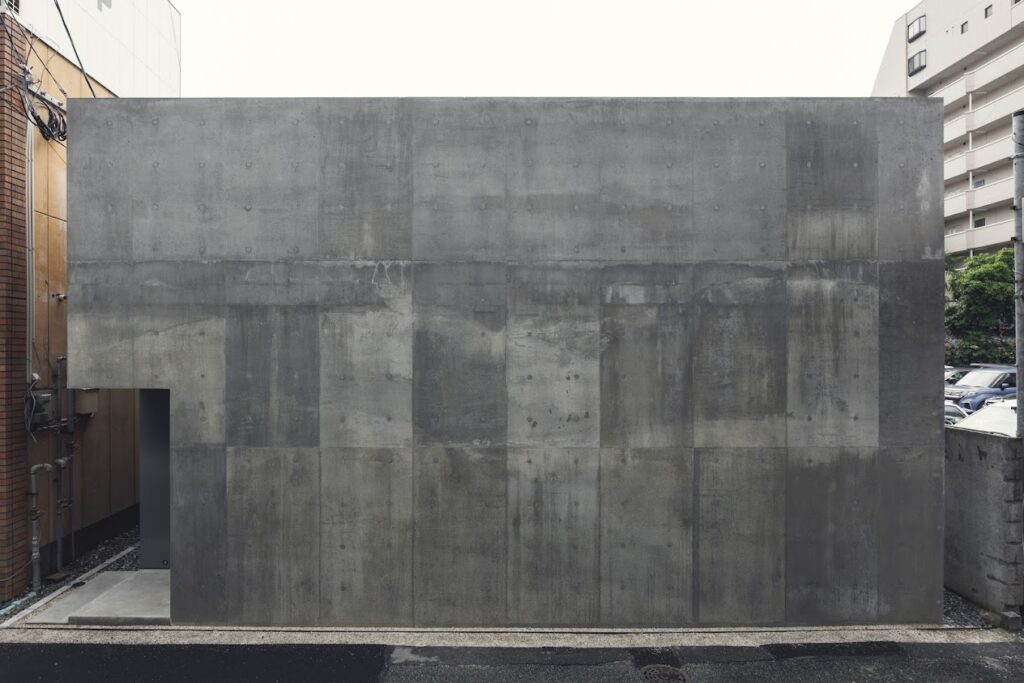
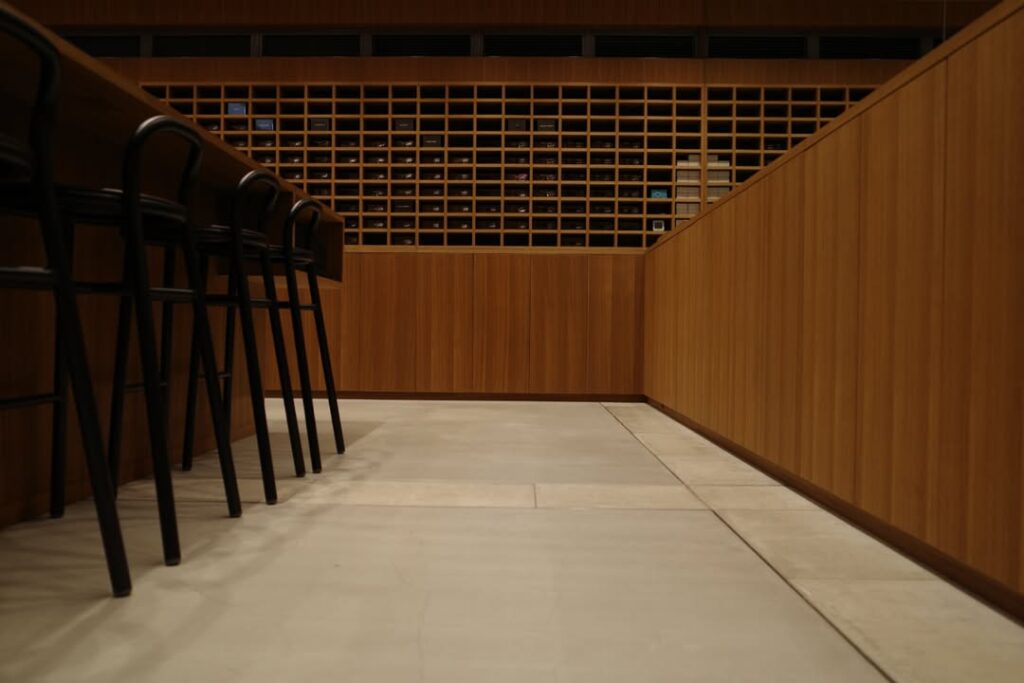
The store’s interior is defined by minimalism, but not as a stylistic choice. It functions as a tool to direct attention.
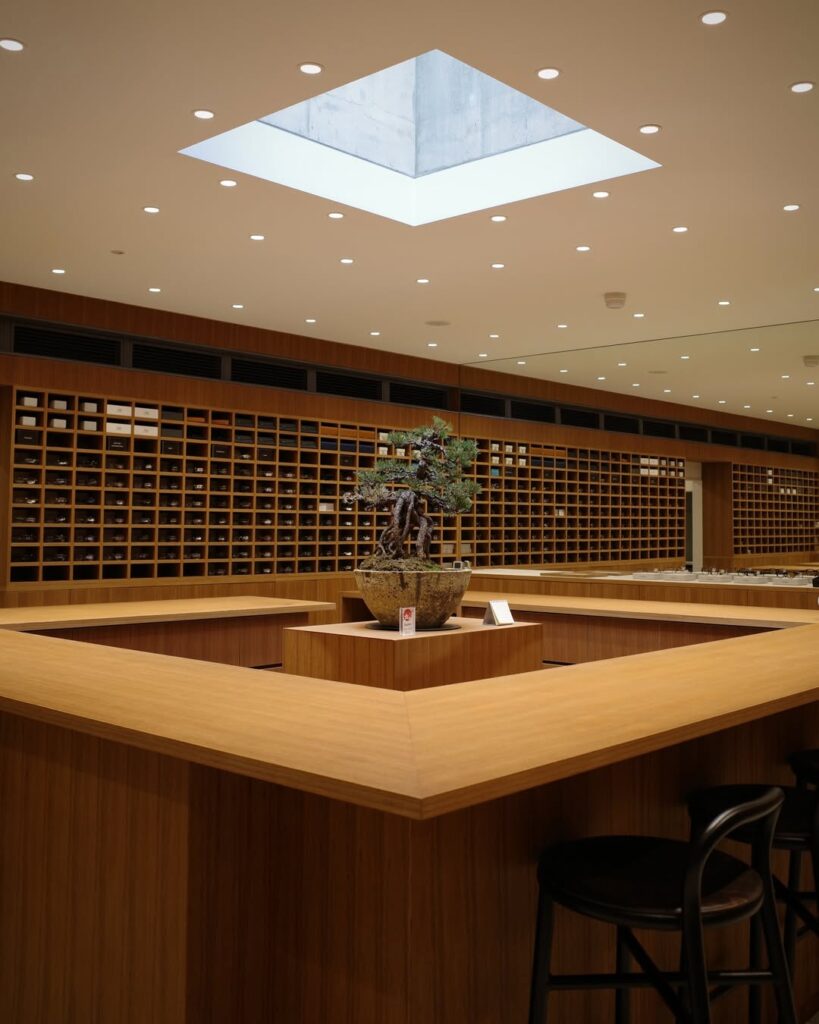
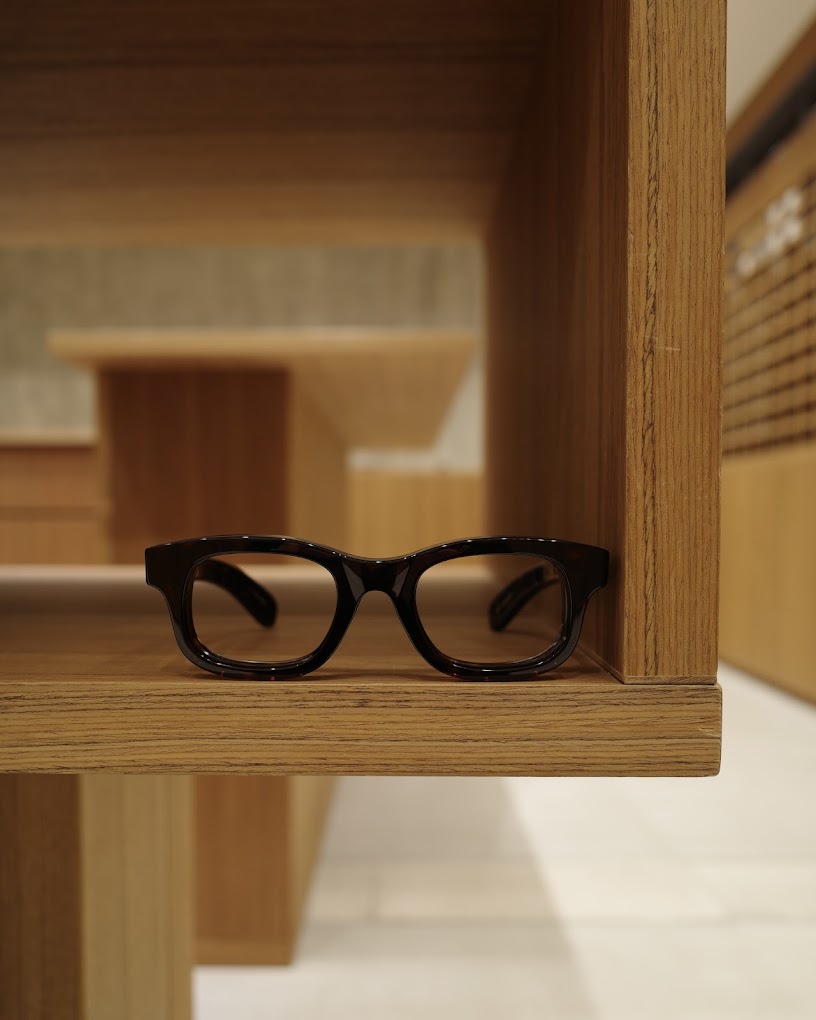
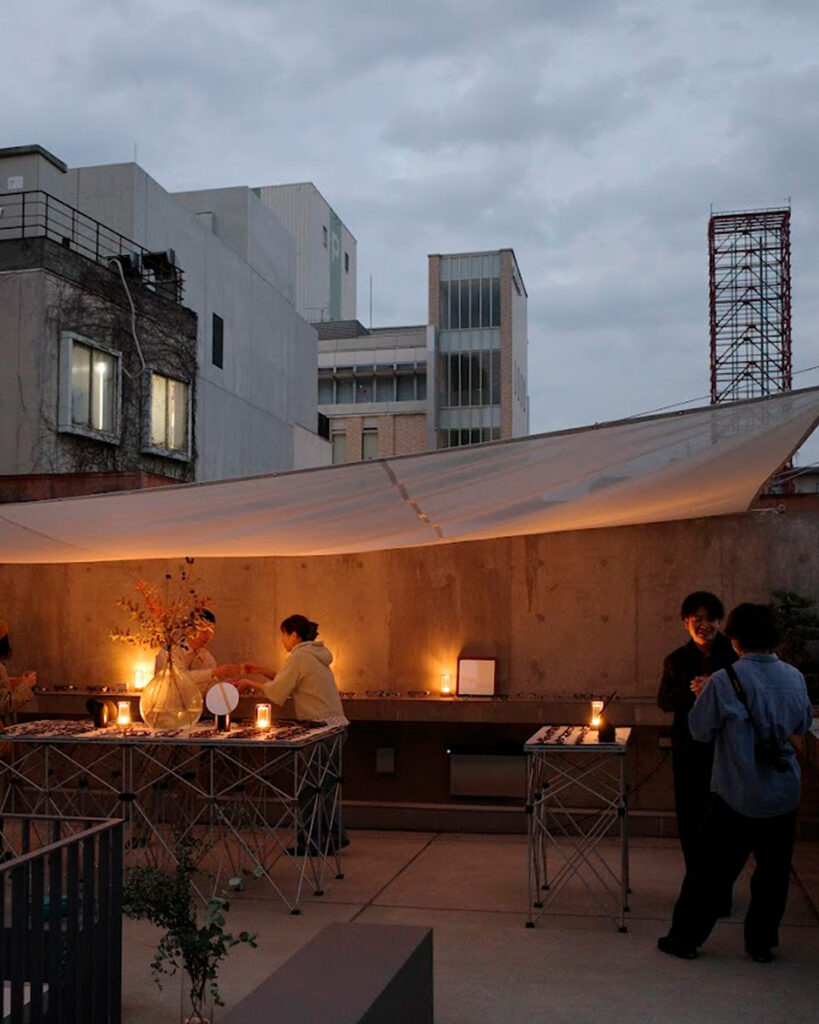
Frames are spaced widely, often displayed individually. Visual noise is reduced to a minimum. Materials and lighting are neutral, allowing the product to stand in isolation.
This has a direct commercial effect:
- Customers focus longer on each piece
- Decision-making becomes more deliberate
- Perceived value increases through presentation
The space operates almost like a gallery—where each object is given context and importance.
Slowing Down the Buying Process
Kamachi deliberately removes urgency from the retail experience.
There is no visible pressure to purchase, no overload of options, and no aggressive sales approach. Instead, the process is paced:
- Customers try fewer frames, but with more attention
- Interaction is guided rather than transactional
- Selection becomes a process of refinement
This slower rhythm aligns with a broader shift in luxury retail, where time and attention are becoming key differentiators.

A Different Definition of Luxury
Kamachi’s positioning reflects a distinctly Japanese interpretation of luxury—one that avoids logos, excess, or overt branding.
Instead, value is communicated through:
- Proportion and fit
- Material quality
- Subtle design details
This aligns with the growing global demand for “quiet luxury,” particularly within eyewear, where differentiation increasingly comes from nuance rather than visibility.
The Business Implication
Kamachi Gankyouten represents a model that is difficult to scale but highly effective in positioning.
Its strength lies in:
- Strong point of view
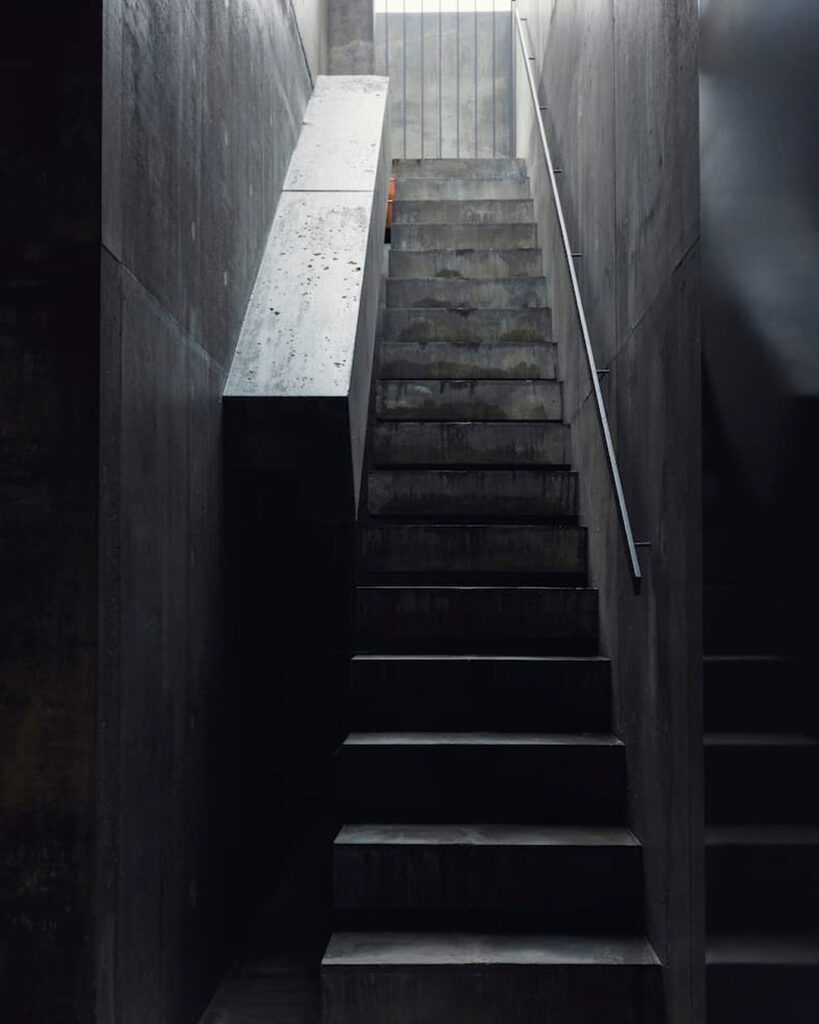
- Controlled environment
- Consistent curation
As eyewear becomes more commoditized through online channels and direct-to-consumer brands, physical retail spaces like Kamachi suggest an alternative strategy: competing not on product alone, but on how that product is experienced.
Conclusion
Kamachi Gankyouten is not redefining eyewear itself, but the conditions in which it is discovered and chosen.
By removing excess of space, product, and noise the store creates a sharper, more focused interaction between customer and object.
In a crowded market, that clarity becomes its strongest asset.


 English
  French
  Italian
  Spanish
  Portuguese
  German
  Korean
  Japanese