


Founded on selective distribution, strong design narratives and long-term partnerships, Revolutionary Eyewear represents some of the most research-driven names in independent eyewear today, serving opticians who value differentiation over volume.
Its founder, Michele Saladino, began his journey long before the current wave of “independent eyewear” entered the global conversation.

“I’ve been an optician since 1987. In the late ’90s I started experimenting with new business models,” he says. “By 2001, when we opened a city-centre store with a very forward-thinking concept, I realised there was a real gap between the container we were building the ambition, the identity and the content available if we relied only on mainstream eyewear.”
That gap became the catalyst for a shift toward exclusive, design-led brands long before the category was widely recognised as a commercial opportunity.

From Early Risk to Curated Growth
One of the first decisive moments came with the discovery of Blinde, encountered during the height of the Matrix era.
“I met the team at Vision Expo in New York and started distributing the brand in Italy. I travelled constantly and invested heavily sometimes even at a loss because I believed there was space for a different kind of story: authentic products, strong design identity, and a more ethical approach to production and distribution.”

From there, the portfolio evolved incrementally. Brands such as Paul Frank and Etnia Barcelona helped shape a more structured national sales network. In 2005, the agency took on a portfolio that included Chrome Hearts, which would go on to become one of its defining pillars.
Another turning point followed in 2008 with Ørgreen, when the founder began working closely with Antonio Prestinenza now a partner in the agency.
“That’s when we truly clarified our mission: to build a curated portfolio of distinctive brands, grounded in craftsmanship, authenticity and above all protected distribution. As a retailer, I had seen how mainstream distribution eliminates differentiation and leaves price as the only lever.”
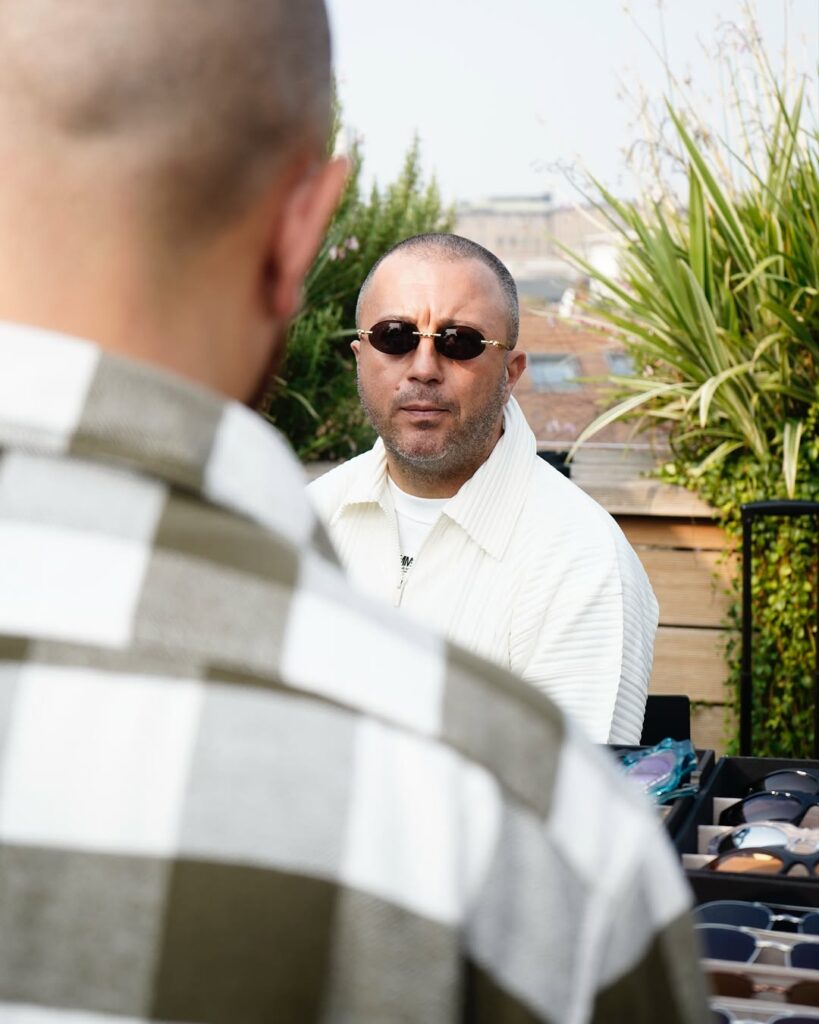
No Internal Competition, Only Proportional Growth
Despite representing multiple brands, Revolutionary Eyewear does not manage its portfolio through internal competition models.
“The idea that collections ‘overlap’ doesn’t really apply. Yes, eyewear is structurally a front and two temples but beyond that, identities are not interchangeable. None of the brands we represent shares the same design language or material expression.”
Instead, the focus is on proportional, organic development.
“It makes no sense for a startup brand to open 100 accounts in Italy if it can’t produce and deliver at that scale. There is no commercial priority only the right interpretation for each brand.”

Small Numbers, Intentional Scale
In a sector accustomed to measuring success through volume, Revolutionary Eyewear’s numbers are intentionally modest.
“Since the post-COVID rebound which we actually anticipated we’ve been around 45,000 units per year across the portfolio,” he says. “That could be less than a single model in one region for a mainstream system. But for us, it’s a number we’re proud of.”
The figure reflects a complex reality orders fluctuate, deliveries shift but it aligns with the agency’s positioning.

Brand Communities, Not Bestsellers
Each brand in the portfolio plays a specific narrative role.
“Kuboraum has a defined tribe. Chrome Hearts has cult energy and iconic pieces. Jacques Marie Mage has extraordinary storytelling power. But every brand has dignity and weight—they all contribute meaningfully to the agency’s identity.
A Deliberate Distance from the Giants
Revolutionary Eyewear does not position itself in opposition to Italy’s major eyewear groups—such as Luxottica, Safilo, Kering Eyewear, Marcolin, Marchon or De Rigo—but it operates on a fundamentally different logic.
“We respect them, absolutely. But we exist for opticians who want to differentiate and for consumers who want something genuinely unique.”

Italy’s Design Sensibility and the Post-COVID Shift
Italy’s cultural relationship with design plays a central role in this ecosystem.
“Italy is naturally educated to beauty, luxury, fashion, architecture, craft. After COVID, people began putting the self back at the centre. Personal taste became more important than being homogenised by big brands.”
Opticians, he notes, are increasingly refining their selections often combining mainstream brands with research-driven collections.
Distribution as a Strategic Asset
Protected distribution remains one of the strongest differentiators for independent eyewear.
“Mainstream brands end up everywhere outlets, online and offline discounters. Design brands are generally more protected, and opticians who understand this purchase more consciously and articulate their offering better.”
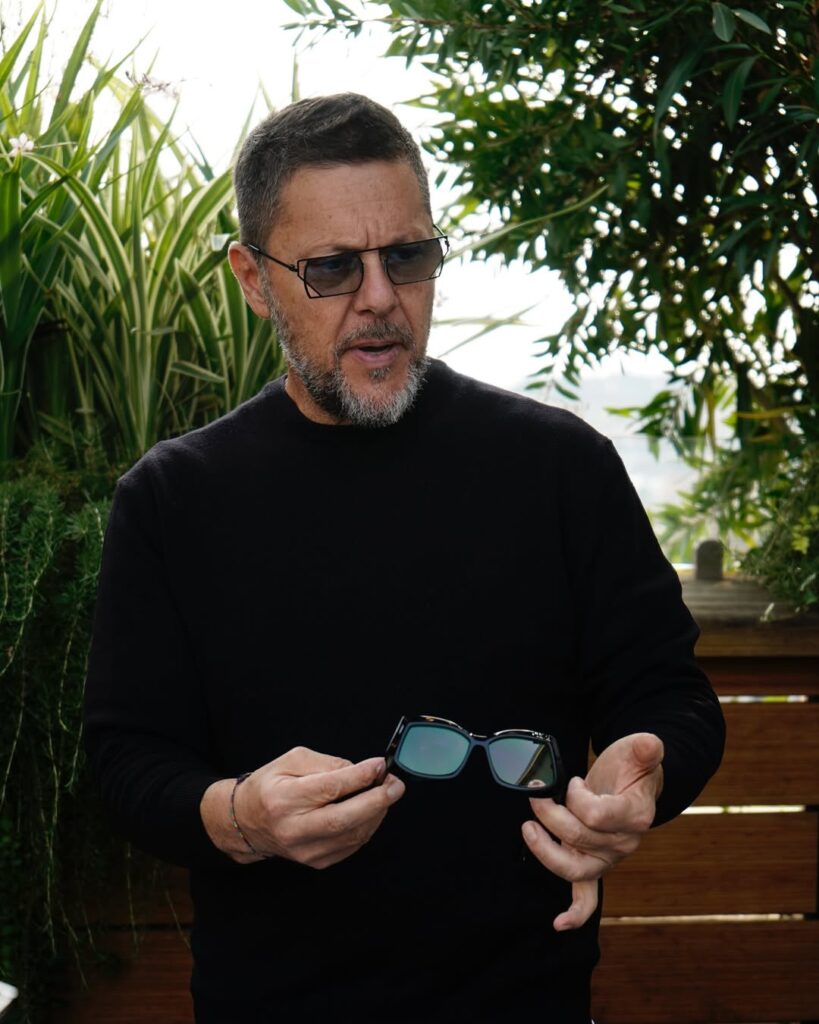
Choosing Brands Through Emotion, Not Metrics
Traditional corporate KPIs are secondary in the agency’s evaluation process.
“We stand by brands through all phases. The first requirement is simple: the brand must create emotion. Then we know how to wait. Innovation matters, communication matters—but ultimately, sell-out and retailer feedback are the market’s answer.”
The Enduring Value of Physical Experience
Despite technological advances, the tactile experience of eyewear remains central.
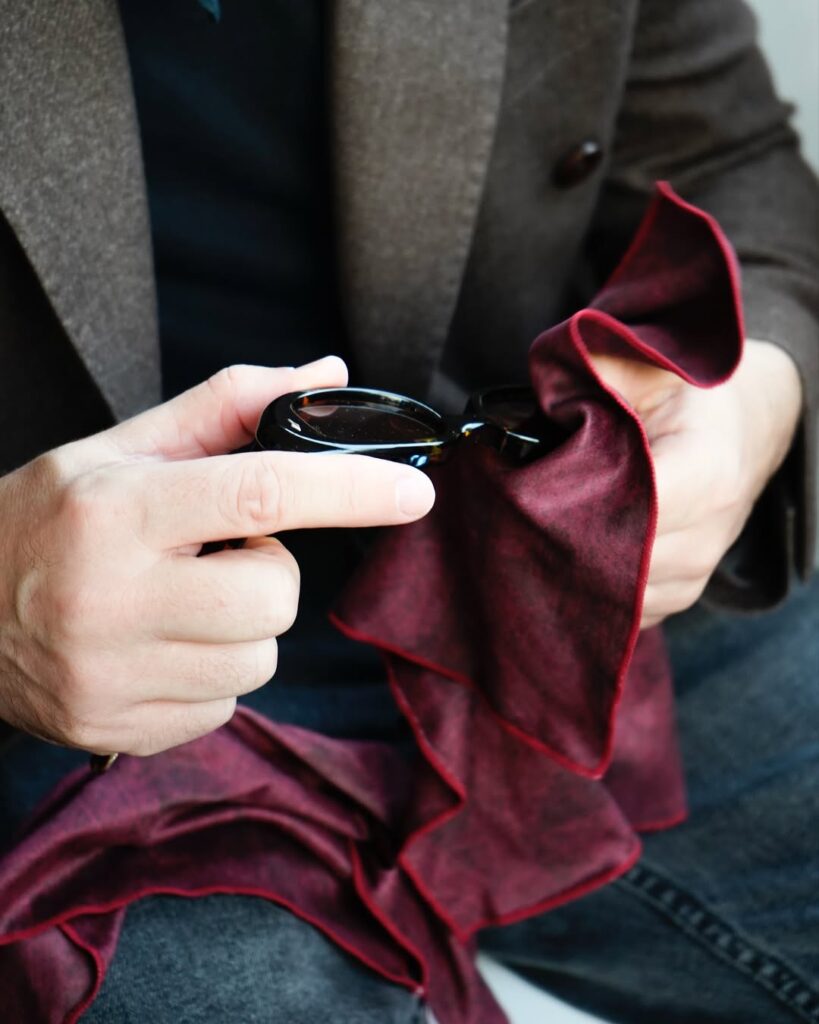
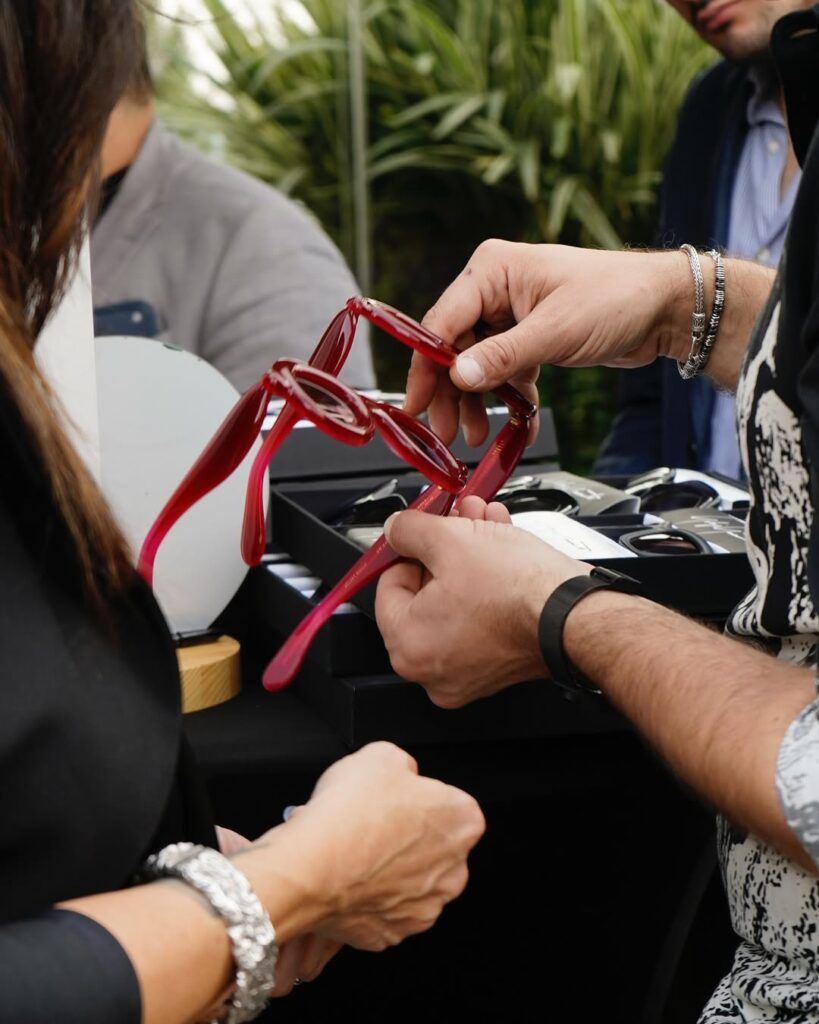
“A good optician still enjoys holding a collection, trying it on, letting the team and selected clients experience the materials. Even today, I still enjoy the smell of acetate when a case is first opened.”
In this context, the role of the agent remains essential—not transactional, but relational.
Online: A Channel, Not a Revolution
On e-commerce, the view is pragmatic.
“Online moves in cycles. Right now, it struggles to become a true sales experience comparable to in-store. None of our partners are celebrating extraordinary online results.”
Building a successful digital business, he adds, is effectively a separate profession—requiring investment, narrative depth and experience design.
Looking Ahead: Quality as the Constant
As for the future, Revolutionary Eyewear sees continuity rather than rupture.
“I don’t see a rigid split—fashion versus individuality, function versus aesthetics. The common denominator is quality. That’s our core lens.”
Rather than chasing scale, the agency remains focused on small, loyal communities.
“We don’t try to make everyone happy. Through opticians, we speak to solid niches that value what we represent. Today, that kind of focus is a key to longevity.”
In an industry increasingly shaped by consolidation, Revolutionary Eyewear’s strategy suggests that restraint, clarity and conviction can still be powerful competitive advantages


 English
  French
  Italian
  Spanish
  Portuguese
  German
  Korean
  Japanese