


When Jacques Marie Mage launched quietly in 2015, few would have predicted the scale of its long-term impact. The brand did not arrive with mass distribution, celebrity endorsements, or technical superiority in frame construction. Instead, it entered the market with something far rarer: an uncompromising vision of cultural value, obsessive attention to detail, and a radically different idea of how eyewear could be positioned, sold, and desired.
In doing so, Jacques Marie Mage did not simply build a successful brand. It changed the economic and cultural mechanics of an entire industry.

A Timid Launch, Executed With Precision
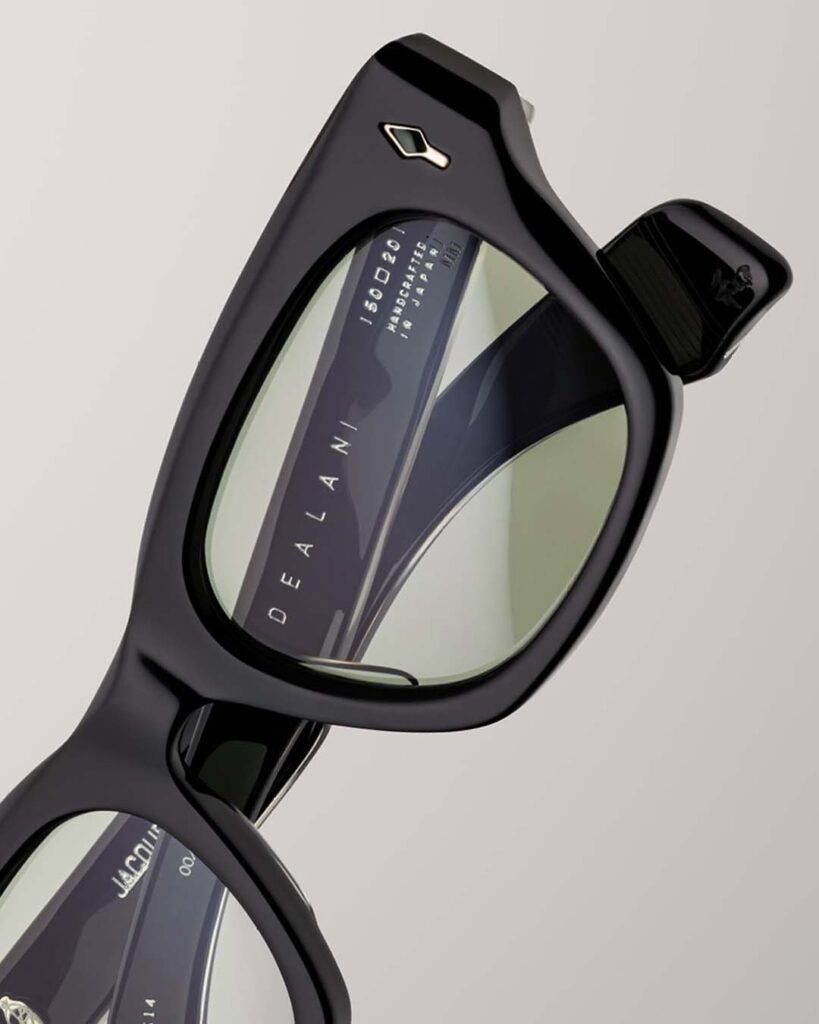
From the outset, Jacques Marie Mage distinguished itself through presentation. At a time when most eyewear brands treated packaging as an afterthought, JMM approached it as a central narrative tool. The brand’s early packaging rich, archival, almost ceremonial felt closer to high watchmaking or rare book collecting than optical retail. In 2015, this was quietly revolutionary.
Technically, the frames themselves were not without criticism. Many early designs were heavy, sometimes difficult to wear, and not ergonomically refined. But that was never the core proposition. Jacques Marie Mage was not selling comfort first; it was selling meaning, scarcity, and identity. Construction was secondary to storytelling, and marketing was elevated to an art form.
Creating a New Audience for Independent Eyewear
Perhaps the brand’s most significant achievement lies in audience creation. For decades, independent eyewear largely circulated within a closed ecosystem: opticians, designers, and a small group of informed consumers. Jacques Marie Mage expanded that universe dramatically.
It introduced independent eyewear to a public that did not know such frames existed collectors, creatives, cultural tastemakers, and luxury consumers accustomed to limited-edition objects in fashion, art, and design. By doing so, JMM reframed eyewear not as a medical accessory or seasonal fashion item, but as a collectible cultural object.
This shift alone reshaped demand across the sector.

Limited Editions as an Economic Model
The concept of limited editions existed in eyewear before Jacques Marie Mage, but never at this scale, and never with this level of conviction. JMM did not treat scarcity as a marketing gimmick; it made it the foundation of its business model.
By embedding true limitation, serialisation, and narrative depth into each release, the brand legitimised exclusivity in a category where few believed it could thrive. This created a new economy one where value was driven not by volume, but by cultural relevance and controlled distribution.
In effect, Jacques Marie Mage built a blueprint that at least 15 other independent brands would later adapt, refine, or openly emulate.

Fewer Stores, Better Representation
While much of the eyewear industry chased scale opening accounts aggressively and prioritising numerical growth Jacques Marie Mage took the opposite approach. The brand pursued restraint.
It chose to be represented in fewer stores, but represented correctly. This insistence on alignment over expansion changed the conversation between brands and opticians. Suddenly, distribution was no longer about how many doors you could open, but about whether those doors understood how to sell cultural value, not just frames.
As a result, JMM indirectly reshaped optical retail itself raising expectations around store design, atmosphere, storytelling, and the overall “vibe” of eyewear spaces.

Attracting Capital From Outside the Industry
Another clear signal of transformation was the type of capital Jacques Marie Mage attracted. The brand helped bring major investment attention from technology and fashion circles into luxury eyewear most notably firms like Felix Capital.
This was not just a financial milestone; it was symbolic. Eyewear, long viewed as a functional or mid-luxury category, was suddenly positioned as a credible cultural and investment-grade sector. That shift opened doors for other independent brands to be taken seriously by global capital.
Beyond Oliver Peoples: A New Era, Not a Continuation
It is often said that marketing for independent eyewear was revolutionised by Oliver Peoples and historically, that is true. But Jacques Marie Mage did not extend that revolution; it created a parallel one.
Where Oliver Peoples refined taste and elevated minimalism, Jacques Marie Mage constructed an entirely new value system. One based on collectibility, narrative density, cultural symbolism, and controlled scarcity. It was not an evolution of the old model, but the foundation of a new one.
Hollywood, Culture, and the Power of Visibility
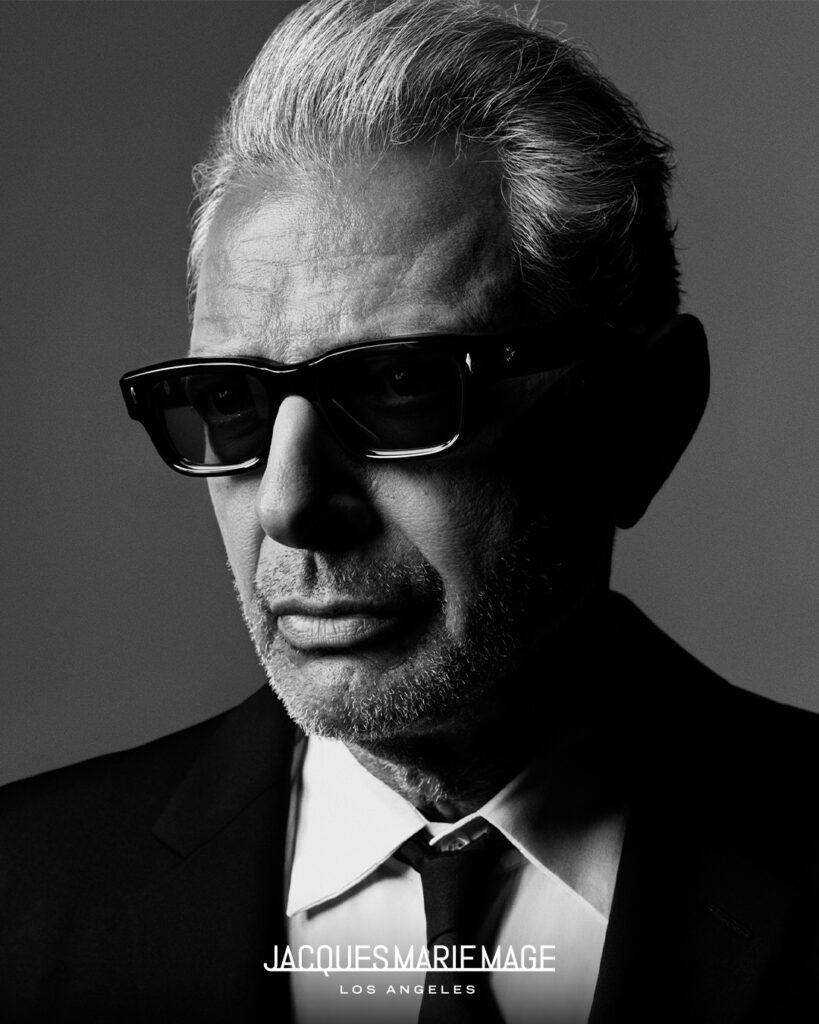
One of JMM’s most extraordinary achievements has been its penetration into Hollywood, television, and film. For the first time at this scale, an independent eyewear brand not backed by a global conglomerate became visible across screens, worn by characters and personalities that shape cultural imagination.
This visibility did not just elevate the brand; it elevated the entire independent eyewear category. It proved that cultural relevance and independent positioning could coexist with mainstream influence, without dilution.
Redefining Value and Clearing the Market
In parallel, Jacques Marie Mage altered the competitive landscape. Brands that relied heavily on artificial momentum pushed by agents rather than pulled by genuine demand found themselves exposed. Some were forced out of relevance; others disappeared entirely. The market became more honest, more demanding, and more culturally driven.
More Than Frames
Ultimately, Jacques Marie Mage’s impact cannot be measured solely in sales, stores, or social reach. Its true legacy lies in changing how eyewear is understood. It taught the industry that you do not sell a frame you sell a point of view. You do not sell comfort alone you sell culture. And you do not build scale first you build meaning.
In doing so, Jacques Marie Mage did not just change an industry. It gave it a future.


 English
  French
  Italian
  Spanish
  Portuguese
  German
  Korean
  Japanese
[…] years, the market produces a brand that rewrites the rules. If ten years ago that brand was Jacques Marie Mage, following the wave initiated by Oliver Peoples, today a new player is redefining the […]
[…] Jacques Marie Mage […]
[…] refuse to participate. Brands such as Thom Browne, Chrome Hearts, True Vintage Revival, Sato, Jacques Marie Mage, and the newly arrived The Other […]
[…] Bar à Lunettes in Liège. The store holds exclusivity for Jacques Marie Mage in the city an extraordinary achievement, and a perfect illustration of what modern […]
[…] such as Ahlem, Jacques Marie Mage, Rigards, Akoni, Anne et Valentin and Chrome Hearts consistently feature among our top-performing […]
[…] luxury independent brands have relied on carefully engineered cultural pipelines. Jacques Marie Mage, for instance, built much of its early momentum by seeding frames through Hollywood stylists, […]