

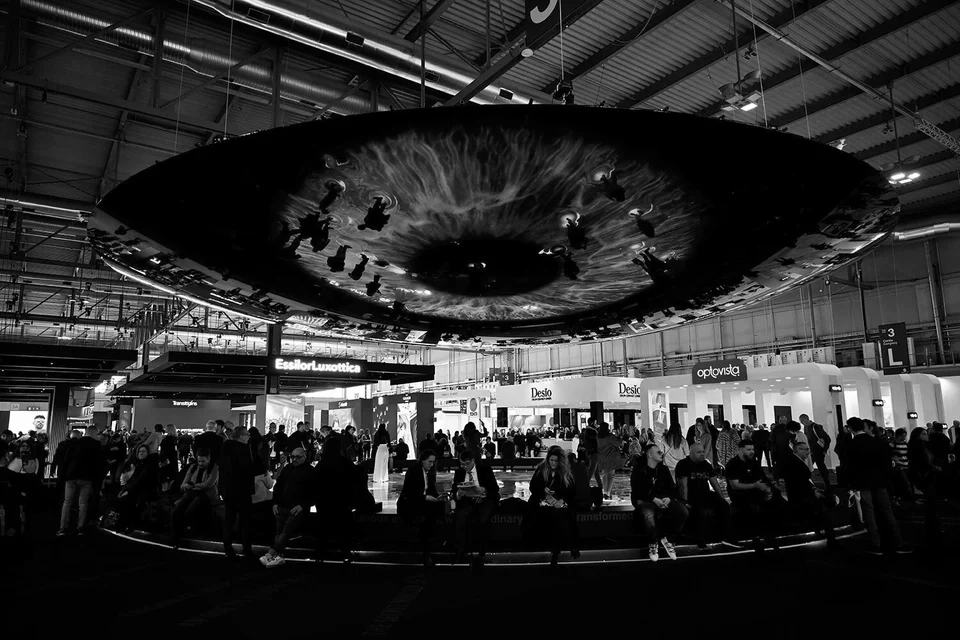
A shift that was barely perceptible a few years ago has now become impossible to ignore: eyewear trade fairs are steadily losing their relevance. As the market becomes more sophisticated, both professionals and consumers are increasingly aware that the most meaningful brands, ideas, and conversations are no longer found within the traditional fair format.
If retailers are already investing in admission fees, travel, and time away from their businesses, a more pertinent question emerges. Why continue to focus on the same brands, mediated by the same agents, when the real opportunity lies in discovering labels outside established circuits and forming direct relationships with them?
This question points to a deeper, structural issue that has been reshaping the independent eyewear sector for over a decade. It is not a crisis of creativity or consumer interest, but one rooted in outdated frameworks, insufficient education, and the concentration of narrative power. At the center of this imbalance sits an institution long treated as indispensable: the eyewear trade fair.
Increasingly, retailers are being forced to reconsider the value of pre-scheduled, pressure-driven meetings and repetitive brand presentations. The future lies in fewer intermediaries and more intentional, direct connections between retailers and brands, built on shared values rather than volume targets.
Ultimately, eyewear is no longer defined by the experience offered within the boutique alone. Its true value is shaped by the experience delivered to the end client, and by the clarity of vision behind the brands that retailers choose to represent.
How Trade Fairs Turned “Access” Into Chaos
Over the past twenty years, eyewear fairs have made a critical strategic decision: to place everyone in the “same room“.
- Global conglomerates with billion-euro balance sheets
- Chinese volume manufacturers competing almost exclusively on price
- Independent brands with a strong and clearly defined design DNA
- So-called “independent” brands lacking identity or long-term vision
- Early-stage startups struggling to survive their first seasons
- Low-cost brands, likely to disappear in the near future as smart glasses and connected eyewear reshape the entry-level market
On paper, this looked inclusive. In reality, it flattened the market.
Eyewear is not a fast-moving consumer good. It is a knowledge-driven category, where the role of the optician is closer to that of a fashion buyer or cultural curator than a reseller. Education is not a “nice to have”; it is fundamental to survival. Yet fairs systematically failed to recognize this.
By removing hierarchy, context, and storytelling, they created noise instead of meaning. And noise always benefits the biggest players.
Why This Worked Perfectly for the Conglomerates
For large groups, this environment was ideal.
When everything is presented side by side luxury, mid-market, entry-level, private label, and mass production the safest decision for an optician under time pressure becomes obvious: choose the name you already know.
For years, opticians were trained implicitly, repeatedly, and structurally to believe that if a frame carried a famous logo, it would “sell itself.” Education was replaced by recognition. Curation was replaced by convenience.
Trade fairs didn’t just allow this behavior; they designed for it.
The result? Independent optical stores gradually filled their walls with the same brands, the same stories, the same silhouettes. Differentiation disappeared. Margins followed.
The Illusion of Coexistence
By placing luxury independents next to low and mid-tier products, fairs created the illusion that all brands could peacefully coexist. But markets don’t work like that.
Luxury relies on distance, not proximity. On scarcity, not volume. On narrative coherence, not visual overload.
When a high-end independent brand is shown three aisles away from mass-produced frames, the perceived value is diluted not because the product changed, but because the context did.
Over time, this dilution destroyed businesses. Many independent optical stores failed not because they chose the wrong brands, but because they were never given the tools to understand why certain brands mattered more than others.
The “Fair Collections” Problem: A Symptom of Desperation
As attendance slowed and ROI declined, fairs raised prices. Booths became more expensive. Travel costs increased. Pressure mounted.
To justify those costs, brands began creating so-called “fair collections”: six to ten new frames, new colors, often rushed, often disconnected from long-term design strategy.
Most of these collections didn’t sell. The market was already saturated. Then, three to six months later, agents returned with the familiar pitch: “Here’s something special, just for you.” This is not innovation. It is survival mode.
The brands that truly understand where the market is heading are actively moving away from this cycle.

Why the Most Influential Independent Brands Are No Longer There
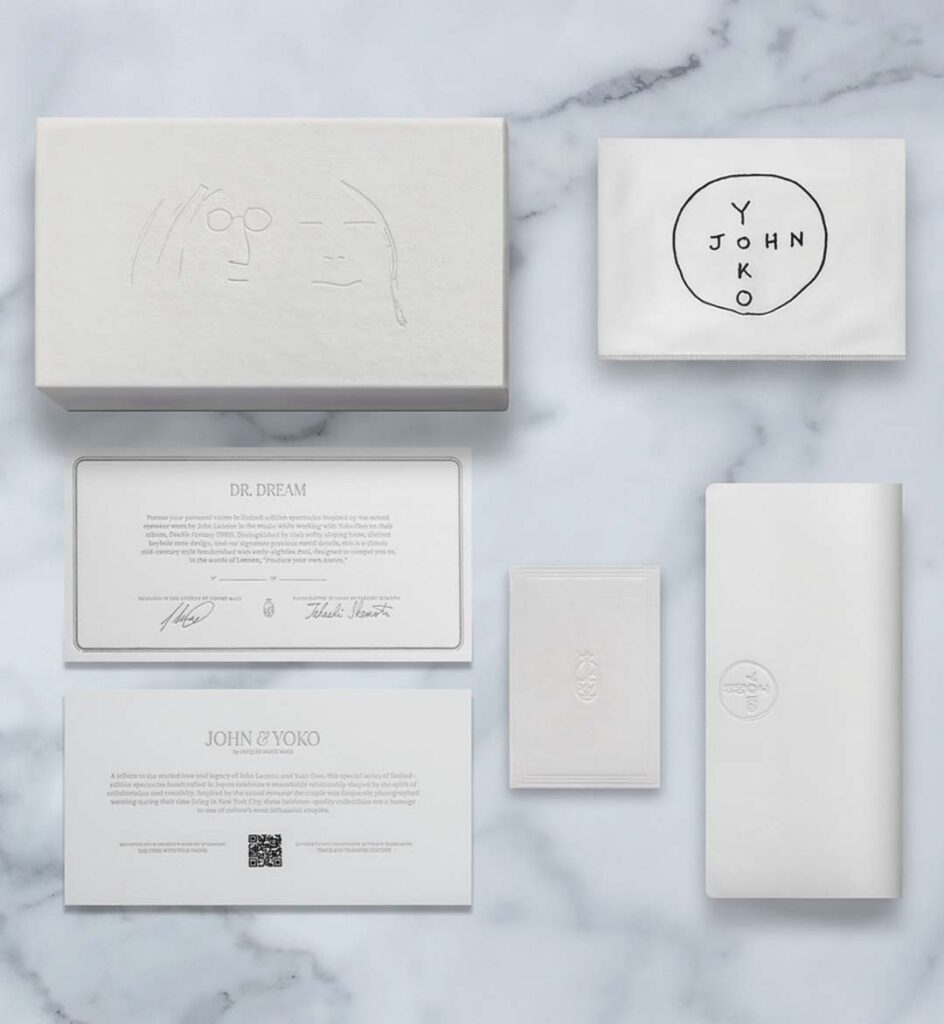
Some of the most important independent eyewear brands shaping today’s market have made a clear decision: they refuse to participate. Brands such as Thom Browne, Chrome Hearts, True Vintage Revival, Sato, Jacques Marie Mage, and the newly arrived The Other Glasses.
Not out of arrogance, but out of clarity. They no longer identify with the narrative these fairs promote. For established luxury independents, being present would actively damage brand perception. For newer players like The Other Glasses, the refusal comes from a different place: a rejection of volume in favor of 1:1 relationships.
The logic is simple: If your goal is to build long-term cultural value, you cannot do it in an environment optimized for speed, scale, and superficial discovery.
Social Media Changed the Rules — Fairs Didn’t
The assumption that “famous names sell themselves” is no longer valid.
Social media, cultural relevance, and community-driven storytelling have fundamentally changed how consumers discover and trust brands. Celebrities no longer belong exclusively to conglomerates. Influence is fragmented, decentralized, and fast-moving.
Yet trade fairs are still organized as if nothing has changed. Same halls. Same booths. Same locations.
Same brands in the same places because they invested in the stand ten years ago and simply reinstall it every season.
Nothing new. No surprise. No emotion.
A Different Model: The Eyewear Fashion Week
There is an alternative and parts of the industry are already moving toward it.
Instead of massive trade fairs, imagine an Eyewear Fashion Week:
- 25–30 brands that truly matter.
- Twice a year.
- In cities like Milan or Paris.
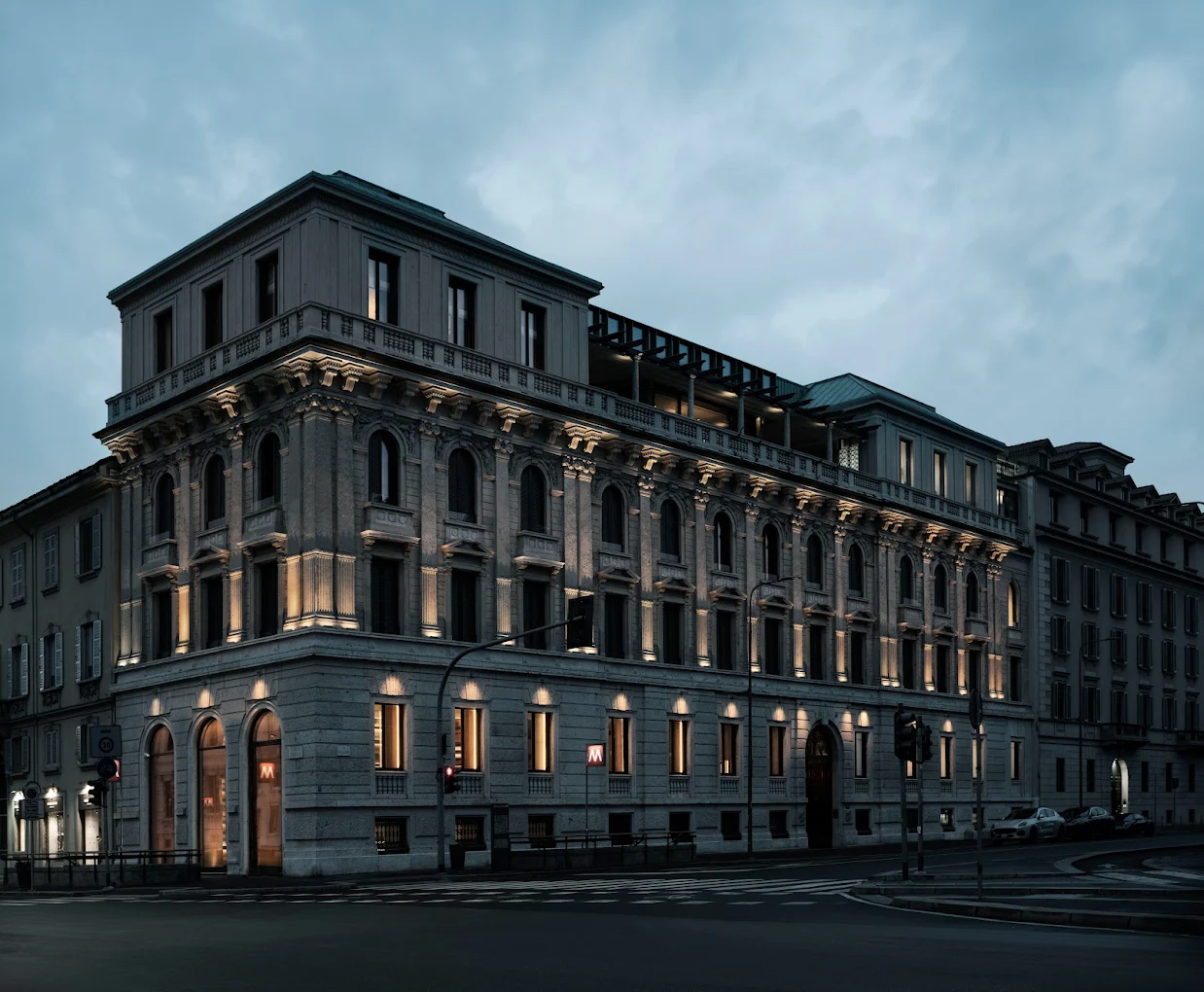
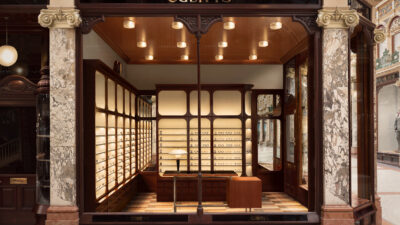
- Hosted in châteaux, hotels, industrial spaces, or flagship stores.
Each brand controls its environment. Its light. Its story. Its pace.
Buyers move through the city using a curated map. They discover brands and places. They are not overwhelmed by information but guided by intent.
This model doesn’t just sell products it rebuilds education, desire, and connection.
Why Opticians Must Change First
Trade fairs will continue to exist. For other industries, they still make sense. Even in eyewear, they won’t disappear overnight.
But the responsibility now lies with opticians.
If you are already investing time and money to attend a fair, stop repeating the same meetings. Stop seeing the same agents. Stop trying the same frames you already know.
Explore outside the fair. Look for brands that can reposition your store. Brands that offer exclusivity. Brands that help you tell a new story.
Education is no longer optional. It is survival.
A Quiet, Undeclared Crisis
In markets like the UK, Ireland, and the Netherlands among the most developed optical markets in Europe independent practices are being acquired one by one. Many owners celebrate quick exits. Few consider the long-term cost.
What disappears is not just ownership, but culture.
The current downturn in the market, the widespread struggle to survive, the race to discounts and volume these are not isolated events. They are symptoms of a structural failure that has been building for years.
Trade fairs didn’t create the crisis alone. But they accelerated it, normalized it, and profited from it.
The brands and opticians that matter now are the ones willing to step outside that room and build something quieter, slower, and far more intentional.
 English
  French
  Italian
  Spanish
  Portuguese
  German
  Korean
  Japanese