

Over the past five years, a quiet but meaningful shift has been taking place inside the eyewear industry. While fashion and optics have always intersected through licensing deals and collaborations, a new pattern has emerged: fashion capital and fashion investors are increasingly entering the optical sector, not merely through partnerships but by building entirely new independent brands. A market that may seem small and difficult to assess at first glance, due to its fragmentation, is beginning to create some of the most powerful brands of tomorrow.
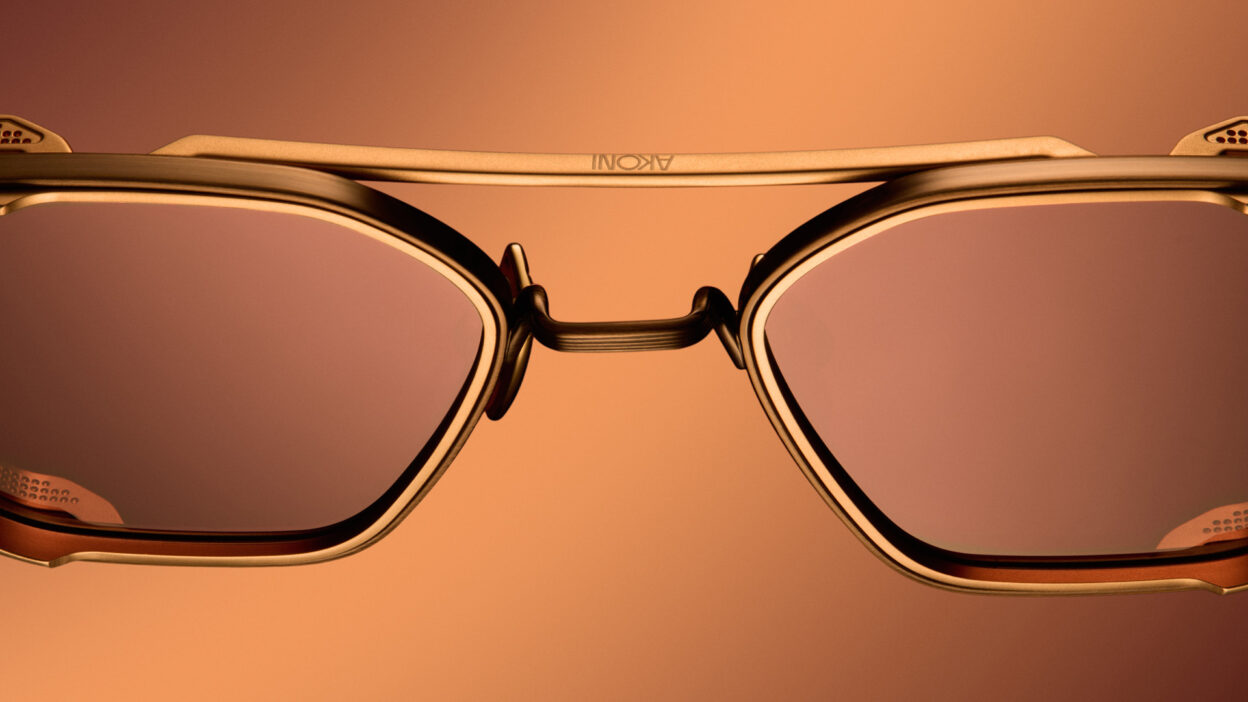
If that convergence accelerates, the eyewear industry we know today may look very different within the next five to ten years. Recent campaigns from brands such as Akoni already hint at this future. Their latest visual direction suggests a world where eyewear sits at the intersection of luxury design, technological sophistication and cultural relevance.
In other words, eyewear is no longer simply an accessory.
From Optical Heritage to Fashion-Led Investment
Historically, eyewear brands grew from within the optical ecosystem itself manufacturers, distributors and optical specialists expanding into design-led labels. But the recent wave looks different. Investors and entrepreneurs with backgrounds in fashion are now financing projects led by people deeply rooted in the optical industry.
The result is the birth of a new generation of eyewear companies that combine fashion sensibility with optical expertise.
Beyond Collaborations: The Rise of Independent Brands
Some collaborations between fashion and eyewear have already captured attention. Partnerships such as The Row with Eyevan or Yuichi Toyama with Armani demonstrate how fashion houses increasingly value the craftsmanship and credibility of established optical players.
Yet beyond collaborations, entirely new brands are being formed through this cross-industry dynamic.
Projects like Akoni and The Other Glasses illustrate the shift: investors coming from fashion ecosystems backing founders with strong optical backgrounds. At the same time, fashion-focused venture capital is flowing into existing eyewear brands as well. Investment firm Felix Capital, known for its involvement in fashion and consumer brands, has invested in Jacques Marie Mage, reinforcing the idea that eyewear is no longer seen as a niche accessory category but as a strategic luxury segment.
A Liberalised Market Driven by Creativity
This inflow of fashion capital is gradually liberalising a market long dominated by legacy structures and entrenched distribution networks. Instead of relying on behind-the-scenes industry politics, the new wave of brands competes through design, product quality, storytelling, marketing and innovation.
For consumers, that means a more dynamic and creative eyewear landscape. For the industry, it represents a shift toward higher standards in branding, communication and product development.
The Tech Factor: Eyewear as the Next Interface
Another force is beginning to influence this evolution: technology.
Both the fashion and eyewear industries are attracting attention from major technology players. Silicon Valley figures are increasingly visible within fashion culture itself. Mark Zuckerberg, once synonymous with the minimalist grey T-shirt, now appears at events such as the Prada runway shows. Meanwhile Jeff Bezos has also entered the fashion conversation through investments and cultural presence.
The implication is clear: the next decade will likely see a deeper convergence between fashion, technology and eyewear.
Smart Glasses and Strategic Investments
The eyewear category is increasingly seen as the most natural interface for wearable tech, and major players are positioning themselves accordingly. Last year, Google reportedly invested $100 million in Gentle Monster, a move widely interpreted as a strategic step toward accelerating the development of smart glasses with strong fashion credibility. The logic is clear: technology companies understand that without design, culture and desirability, wearable devices rarely gain mass adoption.
At the same time, smaller startups such as Sesame ($200 million investment from Sequoia Capital) are trying to better understand the market by hiring people from companies like Dita and Akoni, attempting to navigate what remains a complex and often deceptive industry. Whether they will succeed remains to be seen.
Smart materials, augmented reality, wearable interfaces and advanced manufacturing could reshape how eyewear is designed, produced and experienced. Glasses already one of the most intimate objects people wear are uniquely positioned to become a central platform where style, technology and personal identity meet.
It is becoming a frontier where fashion, optics and technology are beginning to merge and the next generation of brands is being built precisely for that moment.
A New Go-to-Market Strategy: Removing Intermediaries
At the same time, these new brands have introduced a more innovative approach. In many territories, they have removed intermediaries and instead hired internal brand ambassadors to represent the brand more directly on the ground.
Building Brands, Not Just Selling Frames
According to CEO and Sales Director Rosario Toscano, internal ambassadors are better positioned to translate and communicate the brand authentically within each market:
“At Akoni, we believe that sales is no longer just about product placement—it is about brand building. That belief shapes how we structure our teams, how we work with our partners, and how we engage the final customer.
Our internal sales agents play a dual role. Beyond commercial performance, they are deeply involved in brand development and brand exposure, working hand in hand with our marketing team. This strong internal partnership allows us to ensure that every market activation is aligned with Akoni’s global vision while remaining relevant at a local level.
On the ground, our sales teams actively support window displays, in-store setups, and a wide range of events across global markets. These activations are not simply visual merchandising exercises they are moments of storytelling. Each window, each installation, and each event is an opportunity to communicate who we are, what we stand for, and why Akoni exists.
A crucial part of this strategy is education. We firmly believe that opticians should be empowered to sell the story, not just the frame. A beautifully designed product is only one part of the equation. When opticians truly understand the brand’s DNA, its craftsmanship, its values, and its purpose, they can translate that narrative authentically to the consumer.
This approach fundamentally changes the retail experience. Instead of a transactional sale, we create a meaningful interaction.
The optician becomes a brand ambassador, and the customer becomes part of the story. This is how we contribute to a richer, more memorable experience for the final customer.
Ultimately, brand identity must be felt at every touchpoint from the first visual impression in the window to the conversation at the counter and the moment the frame is worn. At Akoni, our mission is to ensure that these moments are consistent, intentional, and emotionally engaging.
In a competitive market, products can be replicated. Stories, values, and identity cannot. That is why we focus on building brands, not just selling frames.“
From Transaction to Experience
As the industry evolves, the role of the optician is also being redefined. No longer limited to transactional retail, the optical space is increasingly becoming an environment of storytelling and brand immersion.
This shift reflects a broader transformation in consumer expectations. Today’s customer is not simply purchasing a frame they are buying into a narrative, a set of values, and a carefully constructed identity. In this context, product alone is no longer sufficient. Experience, education and emotional connection are becoming central to the sale.
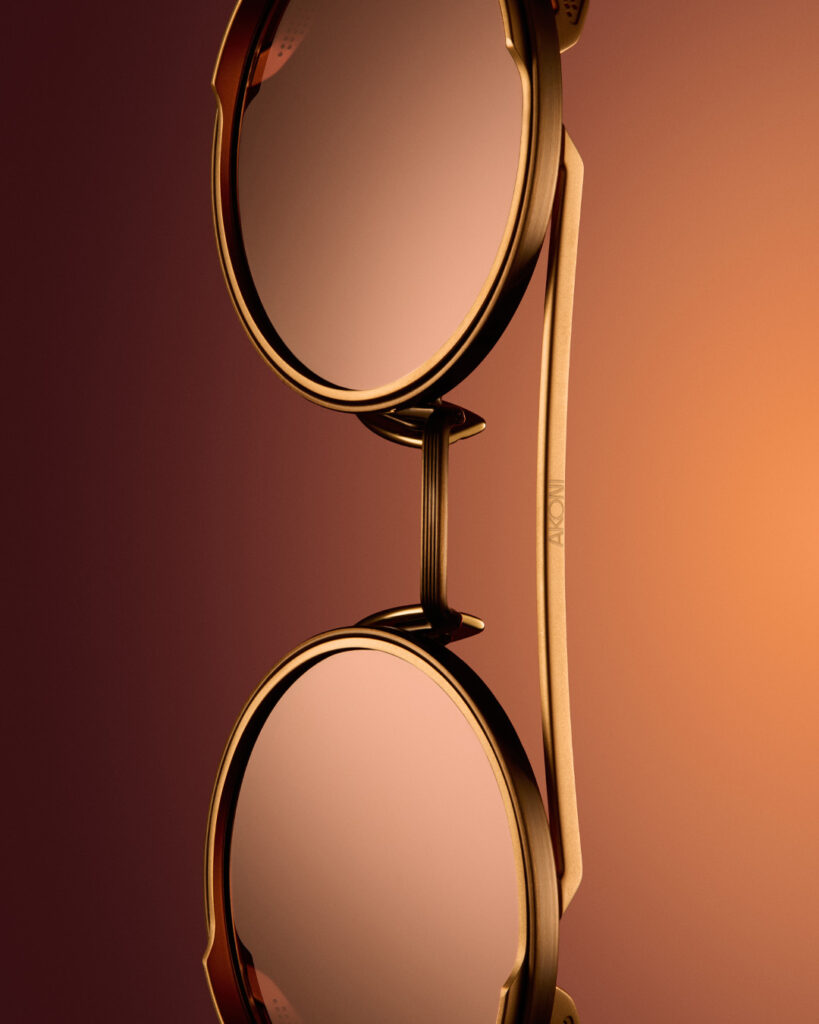
Brands like Akoni are at the forefront of this transition, reimagining how eyewear is presented and understood at the retail level. Through a combination of internal brand ambassadors, curated in-store activations and a strong emphasis on storytelling, the optician becomes an extension of the brand itself translating its DNA directly to the end consumer.
Precision as Narrative: The Eris Anniversary Edition
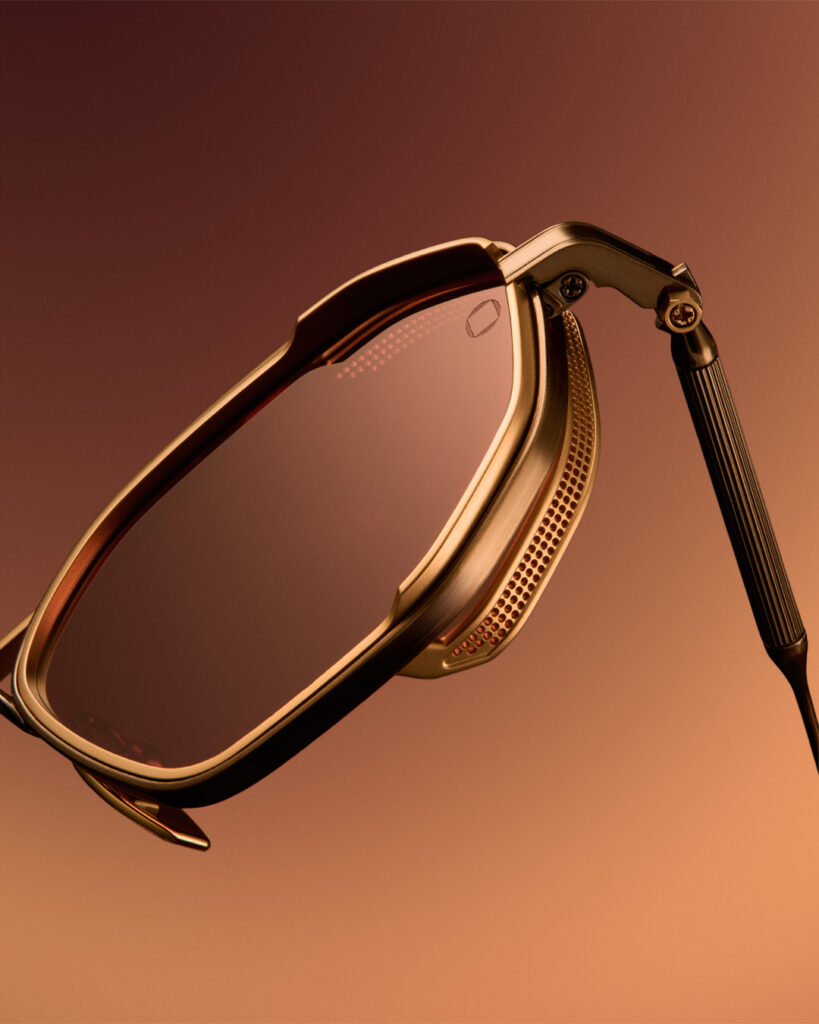
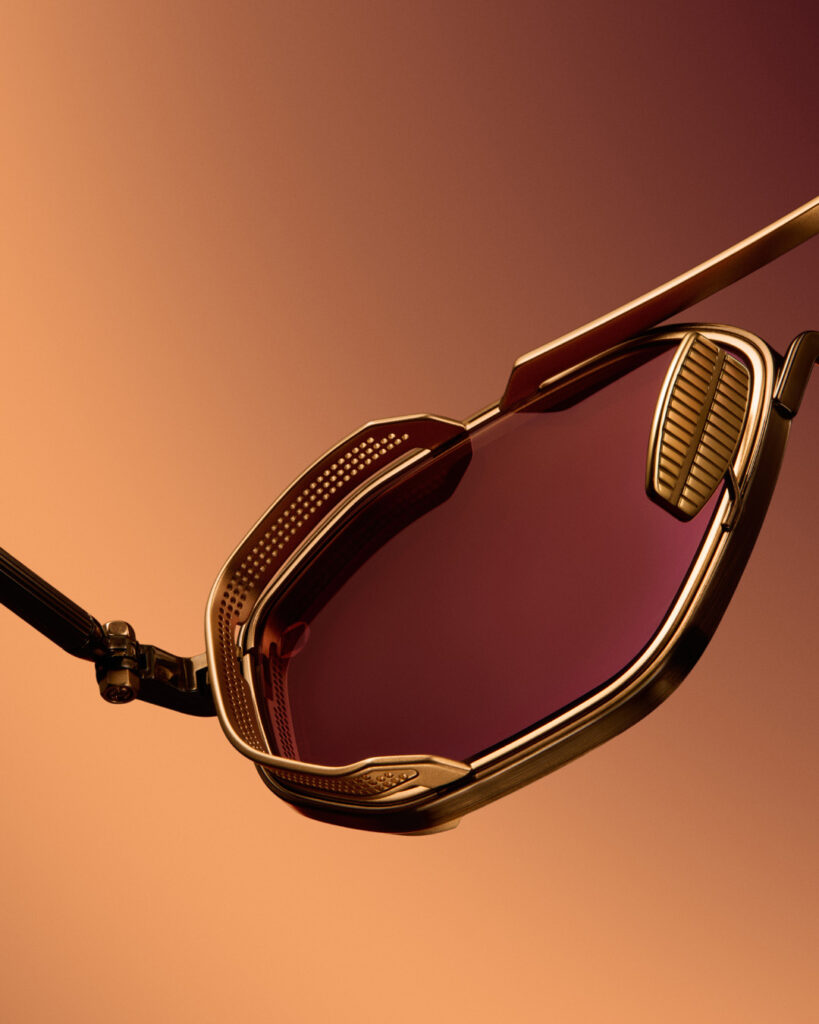
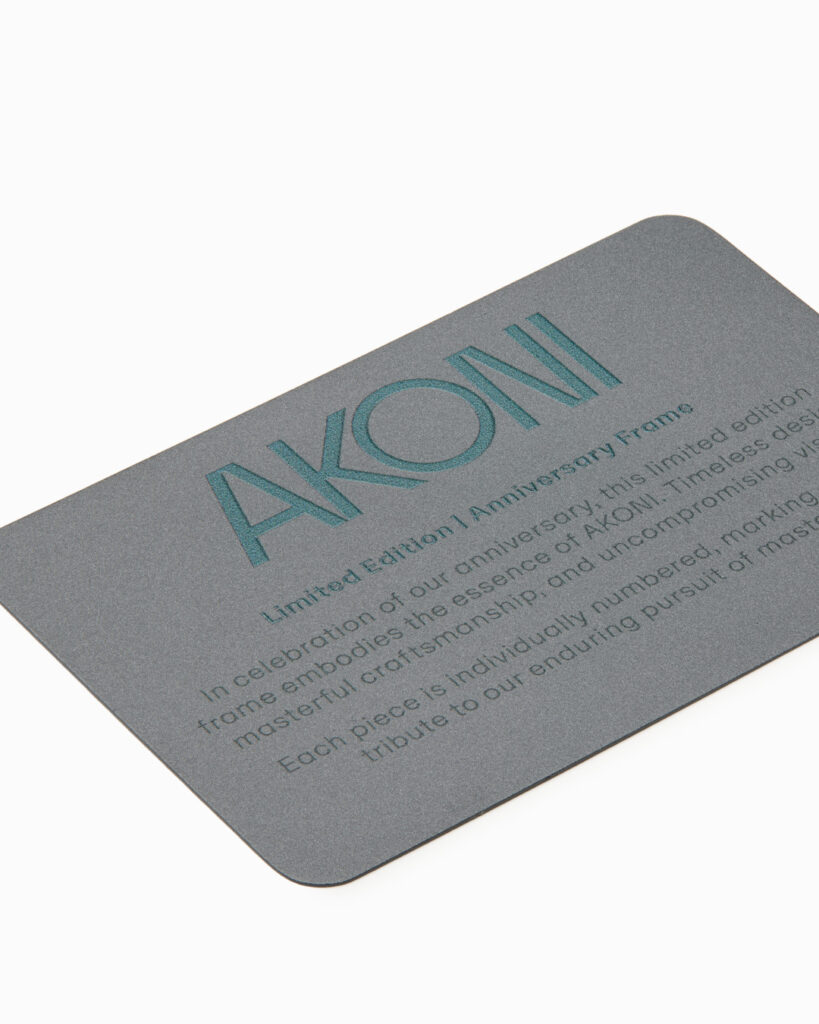
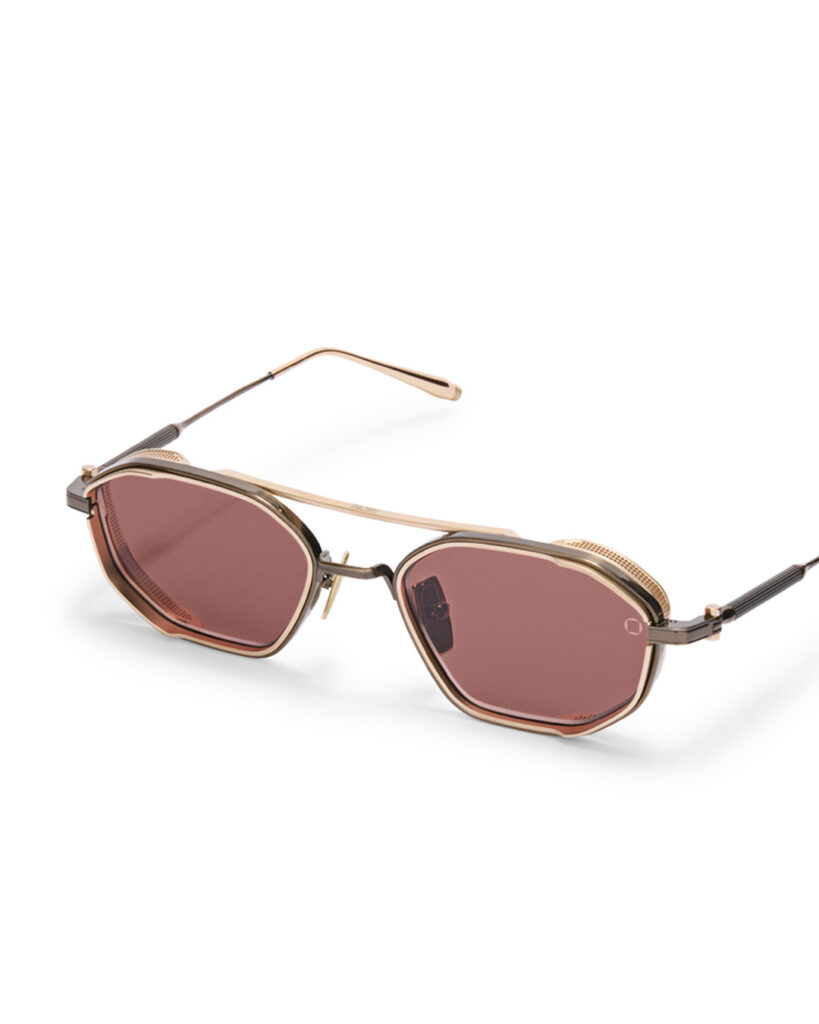
To mark its fifth anniversary, Akoni introduces a limited-edition interpretation of two of its most distinctive designs — Eris and Eris-Two — conceived as complementary expressions of a singular design philosophy rooted in precision, innovation and disciplined aesthetics.
Crafted from lightweight Japanese titanium and paired with specially developed Mars lenses, the anniversary models embody a balance between technical performance and refined design. The structural clarity of Eris and the more compact geometry of Eris-Two reflect Akoni’s architectural approach to eyewear, where proportion, detail and engineering precision define the final form.
Produced in strictly limited quantities and individually numbered, each piece reinforces the brand’s commitment to craftsmanship and long-term value. From finely milled titanium components to carefully calibrated lenses, the collection illustrates an ongoing dialogue between innovation and tradition.
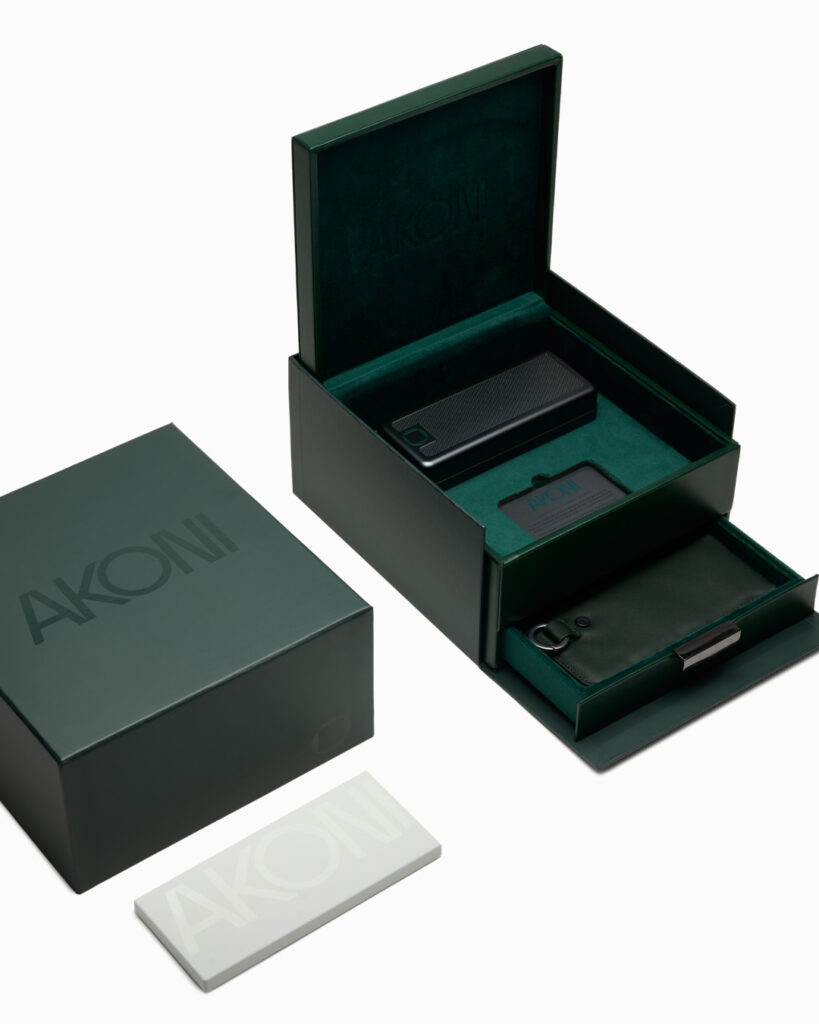
Presented in a dedicated collector’s box inspired by fine watchmaking, the release further positions eyewear not only as a functional object, but as a collectible one that sits at the intersection of design, engineering and cultural relevance.
Available from March through selected opticians, fashion retailers and Akoni’s direct channels, the anniversary edition encapsulates a broader shift within the industry: from product to experience, from object to story.
Conclusion: An Industry in Acceleration
The eyewear industry is entering a phase of accelerated transformation. What was once a relatively stable and insular market is now being pushed to evolve, visually, aesthetically and technologically by the convergence of fashion, optics and innovation.
Design standards are rising, storytelling is becoming more sophisticated, and product development is increasingly driven by both engineering precision and cultural relevance. At the same time, new business models are emerging, challenging traditional distribution structures and redefining how brands connect with both opticians and end consumers.
As capital, creativity and technology continue to intersect, the next generation of eyewear brands will not simply compete on product, but on vision how they build identity, create experience and adapt to a rapidly changing landscape.
In this context, eyewear is no longer a secondary category.
It is becoming one of the most dynamic and strategically important spaces within the broader luxury and consumer ecosystem.


 English
  French
  Italian
  Spanish
  Portuguese
  German
  Korean
  Japanese