


In luxury, credibility is rarely transferable. It is built slowly, often painfully, and almost never borrowed. That is especially true in eyewear a category that, much like Swiss watchmaking, operates on an unspoken hierarchy of legitimacy, technical mastery, and cultural acceptance.
RIMOWA, now firmly embedded within LVMH, stands as a case study in this dynamic. Its trajectory in eyewear underscores a broader truth: even the most powerful luxury groups cannot shortcut trust in specialized industries.

The First Attempt: When Power Isn’t Enough
After joining LVMH and under the leadership of Alexander Arnault, RIMOWA explored entering eyewear independently. On paper, the move made sense strong brand equity, industrial design heritage, and access to one of the most sophisticated luxury ecosystems in the world.
Yet the attempt failed to resonate.
Eyewear, like watchmaking, is not simply about aesthetics or branding. It is about engineering, material expertise, and decades of accumulated know-how. Consumers and more importantly, industry insiders can immediately detect when a brand lacks that depth.
This raises an uncomfortable but necessary question: does Thélios, LVMH’s own eyewear arm, still lack the cultural credibility required to anchor such projects?

The MYKITA Solution: Engineering Meets Engineering
The renewed collaboration with MYKITA offers a far more compelling answer.
At its core, this partnership works because it is rooted in a shared industrial language. Both companies are masters of metal RIMOWA through its iconic aluminum suitcases, MYKITA through precision-engineered stainless steel and titanium frames.
This is not a superficial collaboration. It is a technical alignment.
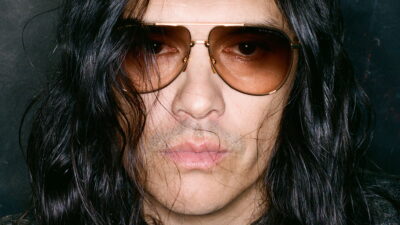
The Spring 2026 collection reinforces this narrative. Handcrafted at MYKITA HAUS in Berlin, the HERITAGE line integrates anodised aluminium rings with stainless steel structures, creating frames that feel engineered rather than styled.
The introduction of the Clay Green colorway paired with Raw Brown Gradient lenses adds a subtle, almost patinated aesthetic, suggesting longevity without nostalgia. Meanwhile, the new MR006 aviator refines a classic silhouette rather than reinventing it, reinforcing the collection’s commitment to timelessness over trend.
Fronted by German talents like Nina Hoss and Leon Dame, the campaign leans into discipline, craft, and artistic rigor values that mirror the product itself.

A Bigger Question: Independence vs. Infrastructure
But beyond product, this collaboration exposes a deeper industry tension.
Why did RIMOWA need MYKITA?
If LVMH already owns Thélios, why not build the project internally?
The answer lies in perception. In high-end eyewear, independent brands still carry a level of authenticity that large luxury groups struggle to replicate. MYKITA’s reputation built on engineering innovation and Berlin-based production offers a form of cultural capital that cannot be manufactured overnight.
This mirrors the watch industry, where independent maisons often define the cutting edge, even as conglomerates dominate distribution and scale.

The AMIRI Parallel: When Fashion Lacks Technical DNA
The contrast becomes even sharper when looking at recent attempts from fashion-first brands. Amiri’s latest eyewear collection, for instance, was met with skepticism from industry insiders seen as aesthetically aligned but technically unconvincing.
This is not an isolated case. High fashion continues to struggle with eyewear because it often approaches the category as an extension of ready-to-wear, rather than as a discipline in its own right.
The result? Products that look the part but fail to earn long-term respect.

A Healthy Direction for the Industry
The MYKITA | RIMOWA collaboration suggests a more sustainable path forward.
Instead of forcing vertical integration, it embraces specialization. Instead of relying solely on group infrastructure, it acknowledges the value of independent expertise.
And perhaps most importantly, it respects the intelligence of the consumer.
The real takeaway is not whether MYKITA will eventually join LVMH, or whether Thélios will evolve into a more credible force. The more pressing insight is this: luxury eyewear, like watchmaking, still rewards those who prioritize craft over control.
In that sense, this partnership is not just successful it is necessary.
A reminder that in certain industries, credibility cannot be acquired. It must be earned, often with the help of those who have already done the work.
 English
  French
  Italian
  Spanish
  Portuguese
  German
  Korean
  Japanese