


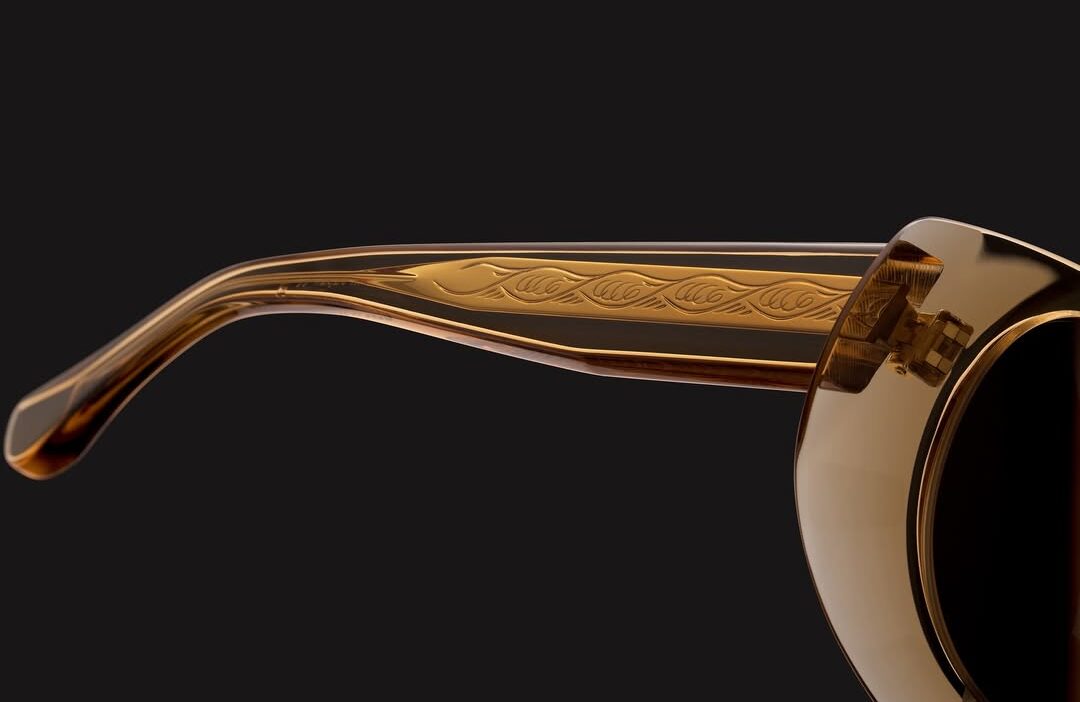
For more than three decades, DITA has stood as one of the most influential forces in the eyewear industry arguably the brand that has shaped its modern identity more than any other. Beyond its own collections, DITA functioned as a creative nucleus, cultivating a generation of talent that would go on to launch and define new brands across the category.
What emerged from within DITA was not just product, but a new language for eyewear. The brand redefined how frames could be designed, positioned and perceived elevating them from functional accessories to objects of design, engineering and cultural relevance. It introduced new standards in craftsmanship, pioneered technical innovation and reshaped the expectations of what luxury eyewear could represent.
In many ways, the industry as we know it today is a direct reflection of that influence. Without DITA, the trajectory of eyewear design, branding and innovation would likely have followed a very different path.
Everyone remembers Dita Eyewear at its creative peak between 2015 and 2019 a period defined by a formidable team led by Jeff Solorio and John Juniper, alongside key figures such as Han Roh and Dustin Edward Arnold. Under this leadership, the brand delivered some of its most memorable work, including the now-iconic elevator campaign that still resonates across the industry.
Editor’s Note / Update
Following the publication of this interview, DITA Eyewear has provided additional context regarding the brand’s creative structure during the 2015–2019 period.
According to the company, the creative leadership at the time included three Creative Directors — Dustin Edward Arnold, Robert August and Pete Hellyer all of whom reported directly to Micky Dhillon, who oversaw the overall creative vision and strategic direction of the brand.
Design oversight was led by Michael Castillo, who managed the broader design function. The company also clarified that during this period, the involvement of John Juniper and Jeff Solorio in the design process was limited, while team members such as Han Roh and Louis Lee held junior design roles within the team.
This clarification is shared to ensure a more complete and accurate representation of the team structure and the contributions of all individuals involved during that period.
Following their departure, however, Dita entered a more uncertain creative phase. Several former team members went on to establish new ventures, most notably Akoni, which has since emerged as a strong and disruptive force within the high-end eyewear segment.
In order to better understand Dita’s current positioning and future direction, we spoke with Vice President Cody Cho. The full interview is presented below, unedited.

Is DITA still independently owned by Jeff Solorio and John Juniper? If not, who holds ownership today?
Simply put, DITA was never solely owned by John Juniper and Jeff Solorio; they were founding shareholders who helped shape the brand’s vision and identity in the beginning. Today, DITA is 100% owned by Micky Dhillon, who has been involved since the company’s inception over 30 years ago as one of the initial angel investors and has played a consistent role in its growth and direction.
This continuity of leadership is important to us. Mr. Dhillon’s long-standing involvement ensures that DITA remains grounded in its original principles of craftsmanship, innovation, and a commitment to timeless design, while continuing to evolve thoughtfully in today’s landscape.
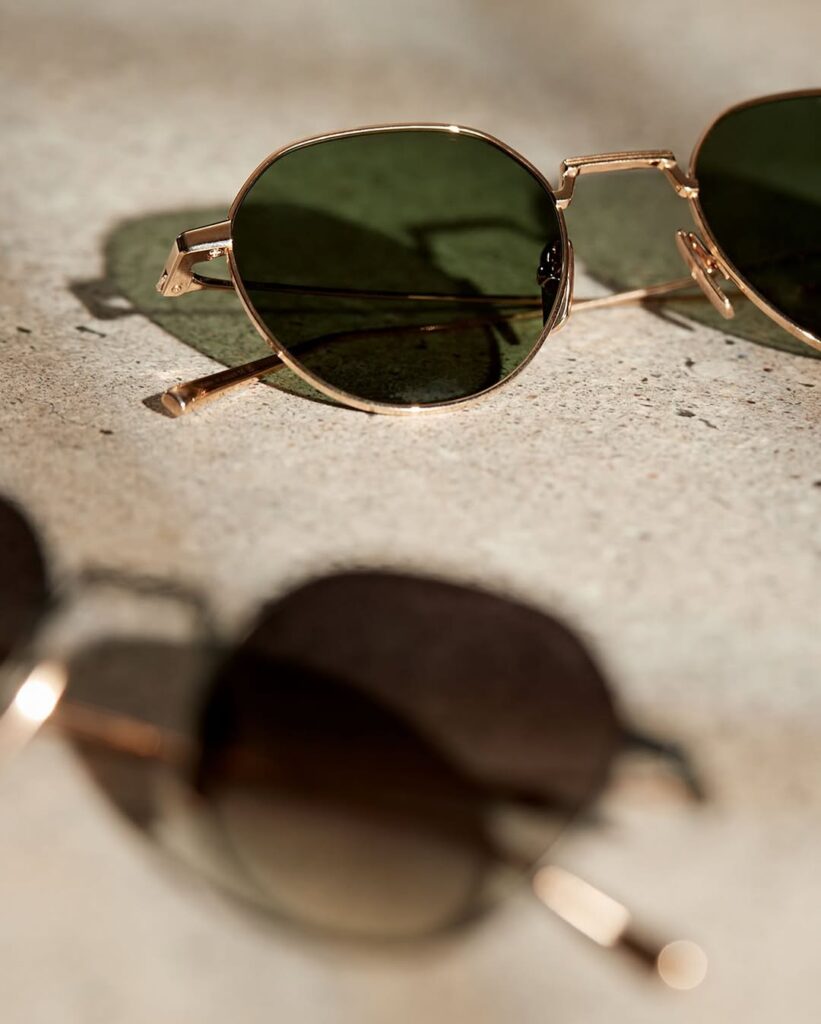
Who currently serves as the Creative Director / Designer at DITA, and how has this role evolved in recent years?
Mr. Dhillon serves as Creative Director, a role he has held with a steady and guiding presence since taking the helm in 2011. While DITA has welcomed three creative directors over the years, each bringing their own perspective and interpretation of the brand, Mr. Dhillon has remained closely involved in shaping and refining the overall creative vision.
At the helm as Design Director, Michael Castillo leads a team of designers and engineers, shaping DITA’s distinct design language since the brand’s inception. He began his career in 1997, just around the same time the company was started. Michael and the team’s passion for pushing the boundaries of what can be done in eyewear set him on his own journey which led to the creation of some of DITA most iconic series frames such as the Grandmaster, Mach, Flight, and Statesman, some of which have spanned over the past 20 years.

How would you describe DITA’s creative vision at this stage of the brand’s evolution?
At this stage, DITA’s creative vision is defined by a deliberate evolution that honors the brand’s heritage while continuing to refine its point of view. Since 2011, under new leadership, the brand has evolved from a more narrowly positioned offering at a lower price point to a more elevated, design-driven perspective rooted in precision and intention.
This evolution reflects a broader commitment to craftsmanship, innovation, and enduring design. Our focus is on creating pieces that stand the test of time, both in quality and aesthetic, rather than responding to short-term trends. Every collection is approached with a sense of permanence, where technical mastery and thoughtful design come together to create eyewear that remains relevant for decades to come.
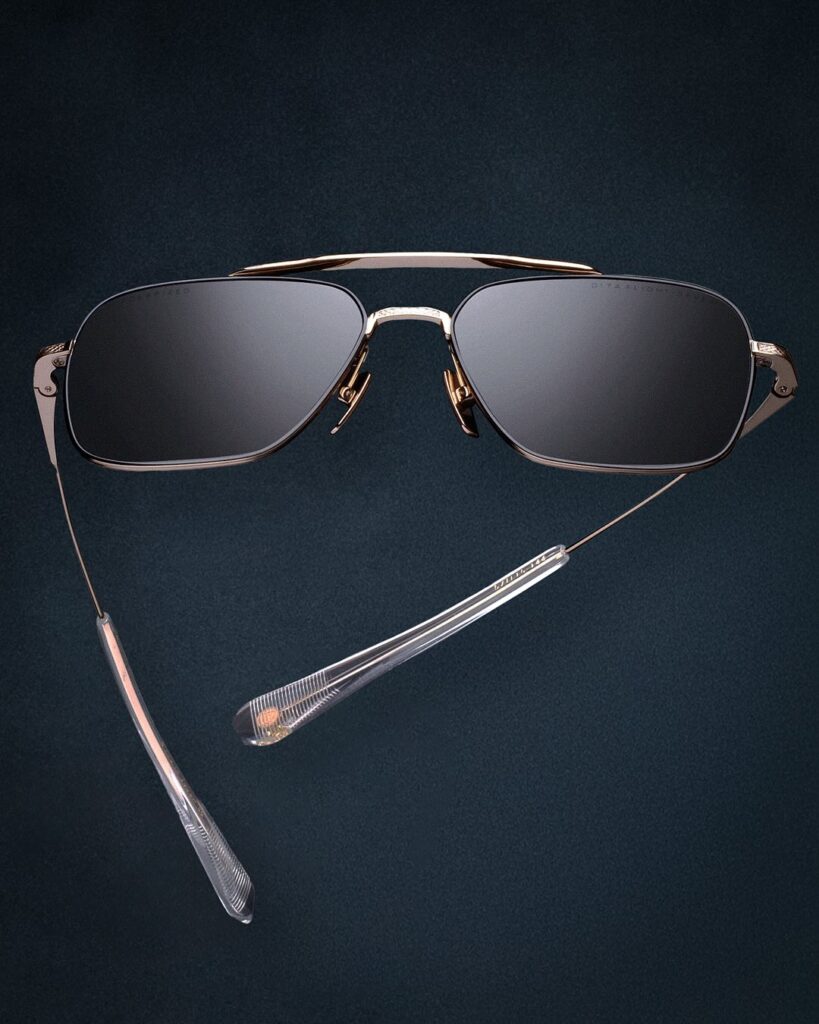
In a market increasingly saturated with new and emerging eyewear labels, what sets DITA’s design philosophy apart?
When I walk the floors of these tradeshows, everything is starting to look the same and it makes me sad for the industry. Everyone is copying everyone else. It has come to a point where you can look at a collection and say there is that brand being copied and there is some other brand DNA being used. It’s a complete lack of respect for the craft of eyewear design. These so-called “collections” as I can’t refer to them as brands because a majority of them may not be there in 5 years, if they survive, are just trying to chase that goal to hit $x outcome in sales and try to sell and cash out. But my outlook isn’t entirely bleak – recently, a new wave of designers with history in the luxury eyewear industry are branching out and begun to assert a distinct point of view, creating bold, refreshing work that sets them apart. While still early, this shift signals a meaningful return to individuality in design.
And at the core, that has always been DITA’s design philosophy: challenge the expected and deliver what others won’t. It is DITA’s team of designers and engineers that have over 100 years of combined experience, pushing our manufacturers to the boundaries of eyewear. In theory, anyone could take an existing pair of glasses to a manufacturer and attempt to achieve similar results, which many brands do, essentially creating replicas in the industry. Many of these brands use a cookie cutter approach to mass production of basic eyewear designs. Respectfully, no other eyewear company in the world has accomplished what DITA has in the world of independent luxury eyewear. Even with 100 designers and 50 engineers, the end product would remain out of reach, but we humbly challenge the world to keep chasing the DITA passion.
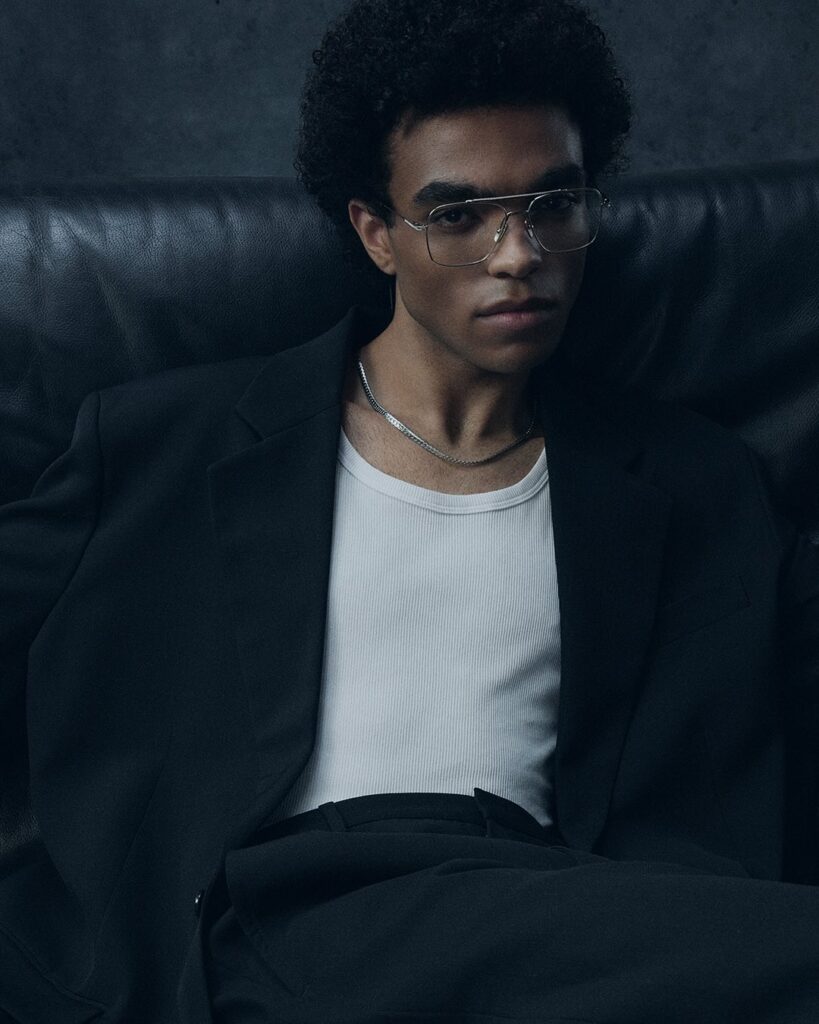
How do you see the premium and luxury eyewear segment evolving globally, and what position does DITA aim to hold within it?
Our mission with DITA is simple. To build a hundred year company and to be the last independently owned luxury eyewear brand left standing. With so many brands being acquired or actively trying to sell their brand on the market, everyone seems to be working in a backward mentality of exit strategy first, brand building second. Honestly, it is somewhat relieving for us to just focus on the brand and making the best product we can without investors getting involved with brand direction as that mindset puts profits before innovation.
Which markets are currently driving the strongest growth for DITA?
DITA’s growth is driven by a balanced global presence, with strength across multiple key regions. EMEA currently leads with approximately 35% of sales, followed by the United States at 32%, 15% with the rest of the world (Canada, Australia, Middle East, etc) and the remaining from Asian markets. This distribution reflects both the brand’s global reach and the consistency of demand at our core price point, which averages around $850.
We are present in 78 countries through a curated network of retail partners, allowing us to maintain a focused and elevated positioning across markets. More recently, our direct entry into China has been a meaningful development, creating new momentum and allowing us to engage more closely with a rapidly growing and increasingly sophisticated consumer base.
Overall, our growth is not defined by a single market, but by a disciplined expansion strategy that prioritizes long-term brand equity and consistency worldwide.

How important is community-building for the brand, and how do you engage with retailers and independent boutiques around the world?
Community-building is essential to DITA. We view our retail partners not simply as points of distribution, but as extensions of the brand, and the relationship between brand and retailer is more important than ever in today’s landscape. Alone, we’re a single stick—easily broken. Together as a tightly bound unified bundle, we’re unbreakable.
I see a lot of companies at a crossroads where the choice between focusing their distribution between wholesale and direct-to-consumer is made by shareholders based on sales and profit margins. While many companies are forced to choose between wholesale and direct-to-consumer, we have always believed the two can coexist without cannibalization when approached with intention.
We support this through in-depth training programs, clear and differentiated brand positioning, and strategic co-op initiatives that ensure our partners are equipped to represent DITA at the highest level. Our focus is on creating alignment, so that the experience of the brand feels consistent and elevated across every touchpoint.
At the same time, we are investing in bespoke retail platforms such as Inovati™, which are designed specifically for the in-store environment. Offering customization, including the integration of diamonds and precious stones into frames through a dedicated app, creates a level of personalization that cannot be replicated online. These initiatives are intended to give our retail partners something truly unique, reinforcing the value of the physical retail experience while strengthening the overall DITA community worldwide.
DITA is continuing with our vision of expanding on the customization aspect of the brand. We have invested heavily in the United States to build our RX program which is a first of its kind in the luxury eyewear segment by offering a luxury lens with our luxury product but offering a price point for our wholesale partners to dictate their own level of profit margin which is a first in the industry.

What should the market expect from DITA in the coming year—new directions, innovations, or shifts in creative language?
At DITA, we see ourselves as a benchmark in the eyewear industry, with a legacy of setting standards in craftsmanship, engineering, and design. Over the past 30 years, that commitment has not only defined who we are, but has also influenced the broader landscape of luxury eyewear.
Ultimately, our direction is about raising the bar. We are focused on delivering products that reflect an uncompromising attention to detail and a level of engineering that is difficult to replicate, ensuring that DITA continues to lead through substance, not noise.
This year, DITA will continue to lay the groundwork for some new design techniques specifically around acetate that challenge what can be done with eyewear and also focus heavily on reshaping some concepts around what can be done with titanium.
It’s nice to see the industry recognizing some of the advancements we have done from a technology standpoint as our Design Team is also focused on making advancements outside of just aesthetics but also taking into consideration that our product also needs to function at a higher level than most.
How do you envision the role of a luxury eyewear brand in an era defined by digital acceleration, consumer transparency, and global competition?
The digital age has moved at light speed. Attention spans are shorter and brand affinity changes seasonally. The role of a luxury eyewear brand is not to move faster — it’s to stand still with conviction. When everything is optimized for speed, immediacy, and algorithms, true luxury becomes about permanence.
Global competition has made it easy to produce eyewear. In theory, anyone could take an existing pair of glasses, take them to a manufacturer and attempt to achieve similar results, which many brands do, essentially creating replicas in the industry. It has not made it easy to build a brand that people care about. The role of a luxury eyewear brand today is to resist commoditization — to design products that carry a point of view, a culture, and a standard that can’t be replicated at scale.
The future of luxury eyewear sits at the intersection of engineering and aesthetics. Consumers today expect frames that look exceptional but also perform at the highest level — whether that’s optical clarity, advanced materials like titanium, or durability built for real life. Luxury can no longer rely purely on image; it must deliver tangible performance. To be able to design at that level requires experience. And DITA has done that for over 30 years and will continue to do so.

Conclusion
Over the past five years, the market has undergone a significant transformation, shaped by a new wave of competitors backed by substantial capital and led by top-tier creative directors. The competitive landscape is no longer what it once was.
Major investment funds have moved decisively into brands such as Jacques Marie Mage, Ahlem, Akoni, Sato and The Other Glasses, accelerating their growth and sharpening their positioning within the luxury segment.
Against this backdrop, a pressing question emerges: is Dita Eyewear still equipped to navigate this new level of competition and withstand the mounting pressure of an increasingly sophisticated and well-funded market?
There is no denying Dita’s role in pushing the boundaries of the eyewear industry and setting new standards in design and craftsmanship. Yet, a question increasingly raised within the industry remains: does the brand lack a defining creative leadership today?
Could the increasingly fragmented visual language of DITA’s campaigns over the past five years suggest a lack of clear creative direction? Are industry observers right to question whether the brand’s current traction is still largely driven by the powerful legacy it built over the past three decades?
As competition intensifies, another question naturally follows: can a brand continue to rely on the strength of its past, or does the current market demand a renewed and more defined vision? And perhaps most importantly, might the shifting dynamics of today’s landscape serve as a moment for DITA to reassess its positioning and creative trajectory?

 English
  French
  Italian
  Spanish
  Portuguese
  German
  Korean
  Japanese
[…] same applies to long-established names like Kuboraum, Cutler and Gross or DITA . These brands have been part of the system from the beginning. Their agents are fully aligned, […]