


In today’s eyewear market, the optician is no longer merely a healthcare professional. First and foremost, they have become a fashion buyer. Yet a growing contradiction sits at the heart of the industry: most opticians are asked to curate fashion products without possessing the aesthetic, cultural, or visual education required to do so. This gap is no longer marginal it has become systemic, and it is actively distorting the eyewear market.
One of the most surreal habits I’ve witnessed in the luxury eyewear industry in recent years is the way some opticians judge frames by their weight lifting them, feeling them in the hand, and equating heaviness with value. It is a complete aberration.
The First Misconception: Weight as a Proxy for Value
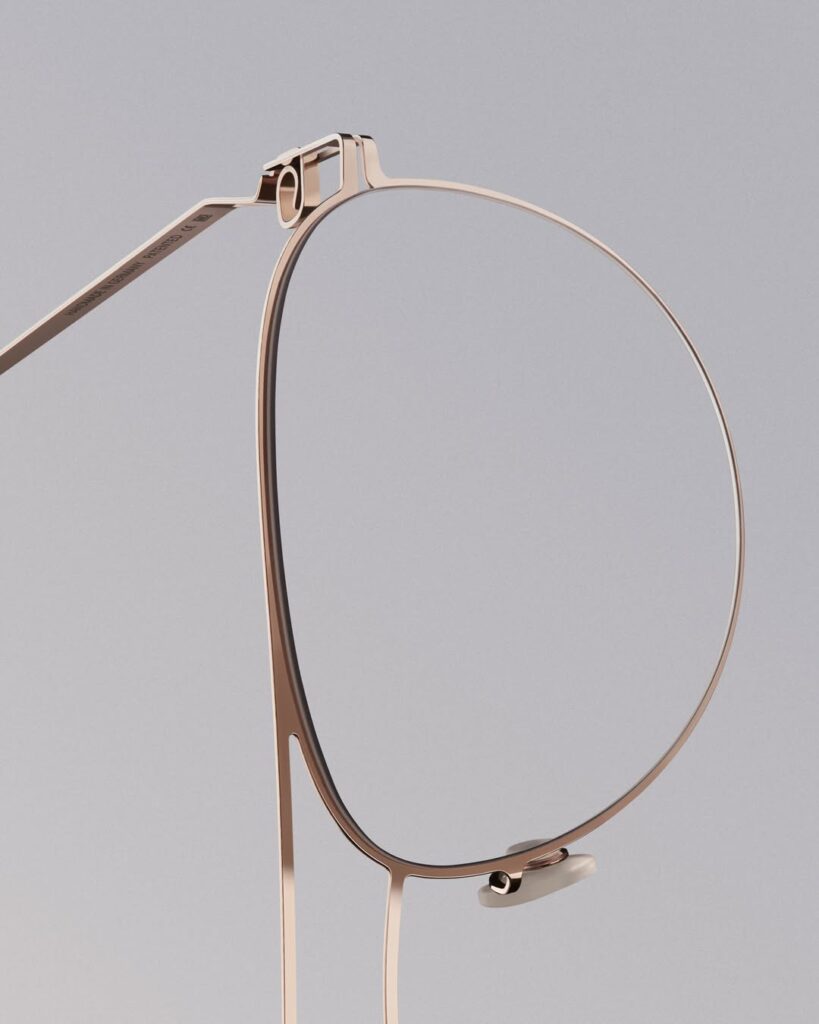
A dominant category of opticians evaluates frames based on how they feel in the hand rather than how they perform on the face. Heavier frames are perceived as more valuable, more “luxurious,” and therefore more justifiable at higher price points. Lightness, balance, and calibration qualities that require engineering precision are misunderstood as a lack of substance.
This thinking explains why highly engineered brands such as MYKITA or Lindberg are often dismissed by certain retailers: the frames feel “too light” to justify their price. What is overlooked is that true value in eyewear lies in wearability: how a frame distributes weight, adapts to the face, and remains comfortable after 12–15 hours of continuous use.
Judging eyewear by hand-feel alone is an educational failure. A frame is not a paperweight it is a wearable object designed for the human face.
The Second Misconception: Buying for Oneself, Not for Humans
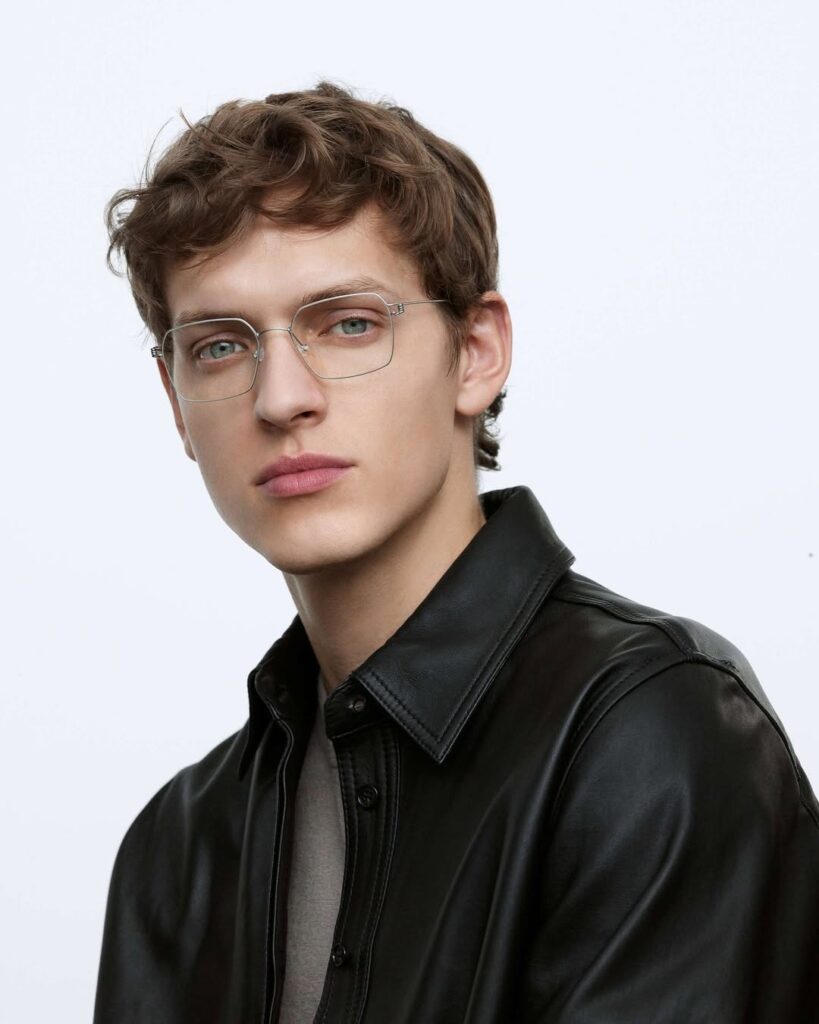
A second category of opticians selects frames based on personal fit and personal taste. If a frame feels too small, too large, or unsuitable for their own head shape, it is quickly labeled as a “bad product.” This ignores a basic truth of design: frames are created for different anatomies, styles, and personalities.
This self-referential buying behavior has led to aberrant assortments collections that lack coherence, inclusivity, and aesthetic intent. Instead of committing to well-curated brands with 20–30 precisely designed models and understanding their full visual language, many opticians buy randomly. The result is shelves filled with disconnected products that communicate nothing and represent no point of view.
Brands should take responsibility for curating assortments for optical retailers and clearly explain why those frames matter and which categories each store truly needs.
If this were the norm, opticians would no longer depend on intermediaries. They could confidently order online, selecting well-considered assortments designed by the brand’s creative directors, built as coherent sets rather than fragmented choices.
The current chaos in the eyewear market largely benefits distributors and middlemen. Complexity sustains their relevance.
But the market today is fundamentally different from 10 or 15 years ago. The internet, digital platforms, and direct communication have removed the structural need for intermediaries. What remains is habit, not necessity.
Brands must now learn to eliminate the middleman, build direct relationships with opticians, and provide thoughtfully curated selections tailored to each retailer not endless catalogs, but precise, intentional choices.
In doing so, brands regain control of their narrative, retailers regain clarity and margin, and the industry moves from noise to direction.
Quiet Luxury, Loud Misunderstandings
The industry’s lack of aesthetic literacy becomes even more visible when discussing trends. Many opticians still rely on rigid “client typologies” or personal preference, failing to recognize broader cultural movements shaping consumer desire.
The rise of Quiet Luxury understated, precise, logo-free design has fundamentally redefined status signaling. If one were to rely solely on traditional optician logic, then Kerings’s €200 million acquisition of Lindberg would appear irrational. And yet, in the real world, doctors, politicians, multinational executives, and decision-makers overwhelmingly wear fine, discreet frames by some estimates, nearly 70% of them choosing Lindberg or its aesthetic equivalents.
This is not hype. This is lived reality.
Meanwhile, many opticians chase loud, over-designed frames built on short-term attention rather than long-term relevance. They pursue hype aesthetics popularized by brands like Jacques Marie Mage, without understanding that scarcity-driven models deliberately limit distribution. When access disappears as it inevitably does retailers are left without alternatives and without customers.


 English
  French
  Italian
  Spanish
  Portuguese
  German
  Korean
  Japanese