

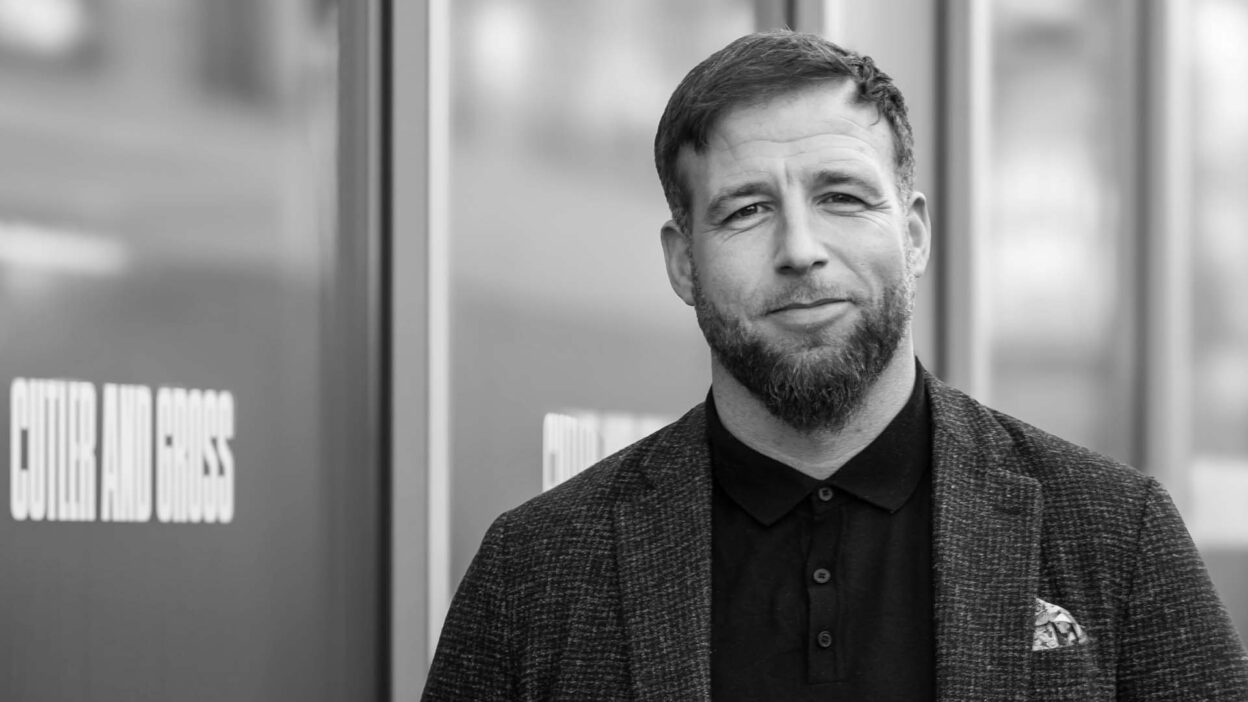
The eyewear industry rarely announces its turning points loudly. There are no dramatic collapses, no overnight implosions. Instead, shifts happen quietly, almost politely brands fade from shelves, collections stop arriving, names once spoken with excitement dissolve into the background.
According to Jack Dooley, CEO of Cutler and Gross, this is exactly where the industry finds itself today: not in crisis, but in reset.
“It’s a healthy one,” he says. “The gloss is wearing off, and substance is becoming visible again.”
What follows is not just a reflection on eyewear, but a broader meditation on luxury, independence, capital, craft and the human networks that quietly sustain brands long after hype moves on.
1. Having been active in the eyewear industry for decades, how do you see the current state of the global eyewear market?
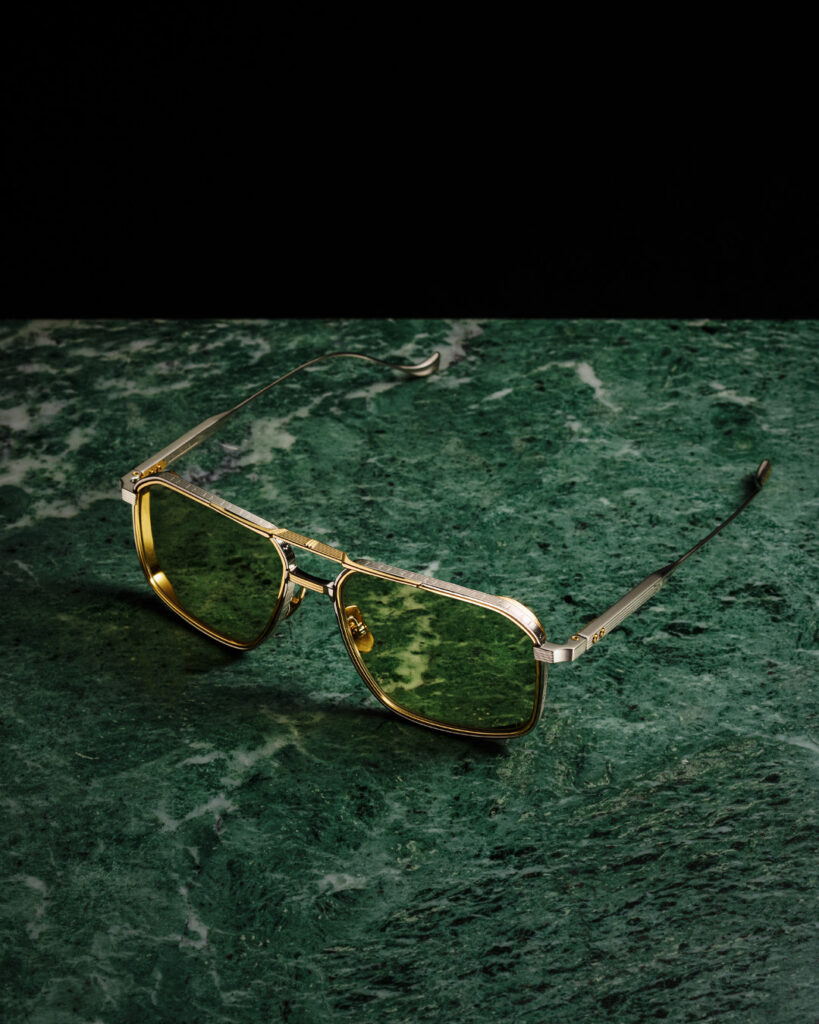
I think we’re in the middle of a reset, a healthy one, if we’re being honest. The independent niche is maturing, and the brands that will survive the next few years are the ones with real craft and real story stitched into the bones of their work. You can feel the difference immediately: some collections are made to be remembered, to be admired, to be talked about years later; others are made simply to fill a shelf for a season and disappear as quietly as they arrived.
What’s changed most, from where I’m sitting, is the kind of customer we’re speaking to now. Ten or fifteen years ago, a shop might carry one or two independent brands alongside a wall of big conglomerate brands. Today, you walk into our strongest partners, and the shelves tell a different story eight, ten, sometimes twelve independent luxury houses, each with a distinct point of view. It’s more curated, more intentional, more discerning.
The shakeout we’re seeing isn’t dramatic, but it’s real. Some of the weaker new entrants, the ones built on hype rather than foundations, are quietly falling away. And that’s natural. Every industry reaches the moment where the gloss wears off and the substance becomes visible. As Warren Buffett said, “Only when the tide goes out do you discover who’s been swimming naked.”
The independents who will stand tall in the next decade are the ones who know who they are. The ones who invest in their own identity, not in noise. The ones who make product that carries a soul, not just a margin. We’re heading into a future where excellence isn’t just rewarded, it’s required. The market is squeezing from the bottom and expanding at the top, and that pressure is crystallising the difference between brands with a vision and brands with a marketing plan.
For us, this moment feels energising. The independents who stay the course, who keep craft alive, who take risks, who make something honest will form the spine of the next era of independent eyewear. The rest will fade into the middle, where everything eventually becomes indistinguishable.
This reset isn’t the end of anything. It’s the beginning of a more interesting chapter.

2. There are rumours that Cutler and Gross is no longer independent and is owned by Marchon. Can you clarify the relationship?
The rumour is completely false. I’ve heard it a few times over the years, and I can only assume it comes from a misunderstanding or, in some cases, a convenient narrative for someone else’s agenda. But the truth is very straightforward: Cutler and Gross is independent and family-owned. Always has been.
Our relationship with Marchon is exactly what it appears to be, a strategic distribution partnership in North America. Nothing more. No ownership. No hidden clauses. No puppet strings. I almost wish there were a more dramatic story behind it, but there isn’t. It’s simply two businesses finding value in each other’s strengths.

For us, it allowed quicker scale in a huge market that would have taken much longer to build alone. For them, it offered access to top-tier doors the kind of selective, design-minded accounts that align with their ambitions following the Marcolin acquisition. And to be fair, it has worked because there’s genuine mutual respect. When a partnership is rooted in respect rather than dependency, it tends to function well.
But partnerships evolve, just like markets do. As Cutler and Gross continues to grow, we’re naturally reassessing where we sit and how tightly we want to draw the circle around our distribution network and sales forces. I would say the second half of 2026 will be a defining moment for how we shape our presence globally and in North America. The industry is consolidating, and we want to ensure we remain positioned in the right places, with the right partners, and the right level of scarcity.
That said, the fundamentals won’t change for us as our selective distribution strategy evolves. We are independent. We make our own decisions. We chart our own path.
3. The Breitling collaboration has been widely discussed. How do you view it internally?
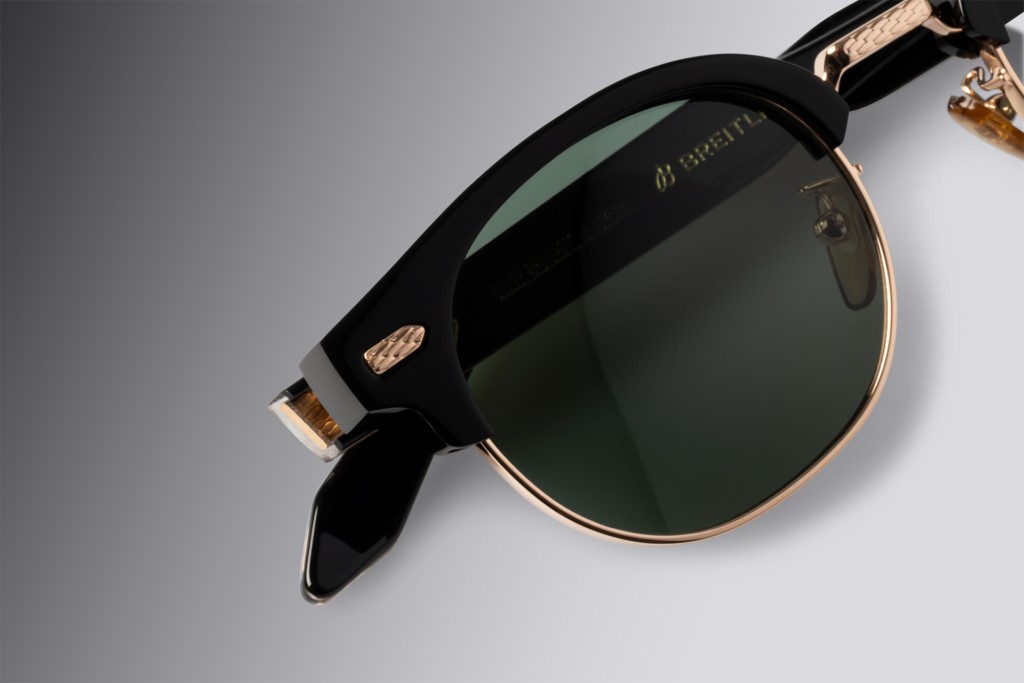
Collaborations aren’t new to us; they’ve been part of the brand for decades. Long before “collab culture” became something a marketing team could schedule, we were working with Comme des Garçons and Margiela. So when a partnership comes our way, we don’t arrive with a script. We look for a genuine conversation and a shared intention to make great eyewear. That’s how The Great Frog began, what started as a mini collaboration discussed over a pint in Ronnie Scott’s naturally evolved into a licence. And with Palace, a skate brand with a very different rhythm to ours, we learned a lot about scale, timing, and the impact of hype on stock planning.
The Breitling project came from the same place: an honest exchange. Their CEO tried our frames at a top Swiss account and reached out. When we visited their factory in Grenchen, we immediately recognised parallels in how both companies operate, steady, detaildriven work, and a customer who values that approach.
What isn’t visible from the outside is that we paused halfway through to reevaluate the project. This wasn’t about creative direction; it was about capacity. Demand for Cutler and Gross had grown faster than expected, and we needed to be practical about what the factory could deliver. The licence with Breitling still has time left, so nothing was lost, but it pushed us to strengthen our production planning. We’ve now resolved the capacity challenge for the second half of 2026.
These moments aren’t failures; they’re part of scaling responsibly. Working with brands like Palace also taught us that when something catches fire culturally, the ripple effect is immediate, demand spikes, stock moves faster, and the whole system needs to be ready. That lesson has been useful, and it’s shaped how we build for the next stage of growth.
There were delays linked to experimenting with new biomaterials, and we’re open about that. What matters is that we improved the structure behind the work and can now move forward with clarity. We’ll sit down with Breitling in due course and decide what comes next.
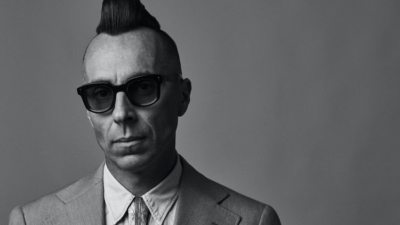
As for new projects, we’re developing a limited edition collection with a well-known music and cultural icon. It’s more of a muse collaboration than a brand partnership, someone whose creative influence aligns naturally with what eyewear can say about a person.
If a collaboration feels authentic and pushes us to grow, we’ll explore it. The rest doesn’t interest us.
4. How do you view today’s competitive landscape, especially with investor-backed brands like Akoni entering the scene?
It’s like football: you can buy a better team if you’ve a bigger wallet, and you’ll climb the table faster. But it doesn’t automatically mean the product is better. Sometimes it is, sometimes it isn’t.
The landscape today is more complex than it used to be. A decade ago, “independent eyewear” meant a small group of stubborn idealists trying to make beautiful frames without compromise. Now the term has stretched so far it barely describes anything. You’ve got PE-backed “independents,” familyfunded independents, and the truly independent houses (often the smallest, often the bravest) all thrown into the same conversation.
Investor-backed brands are part of this shift and look, money helps. It always has. It can accelerate growth, build teams faster, secure top manufacturing, and put a brand on the global stage before it’s had time to find its own voice. That’s not good or bad, it’s just the truth. But it doesn’t guarantee the work will resonate. Some brands use investment to elevate their craft. Others use it to inflate their presence. They’re two very different outcomes. I personally think Akoni have done a great job, again it’s part of my competitive nature, it should drive everyone to improve when you get good new entrant into our market.
In our case, without a billionaire owner or an investment house in the wings. It forces you to focus. It forces discipline in the product and honesty in the storytelling. You learn to solve problems creatively instead of financially. And maybe it gives the whole thing a bit more soul, because every inch of progress must be earned, not funded.
The last ten years have completely reshaped the market, more brands, more crossover into lifestyle, more marketing noise, and far more competition for the same space. But I don’t see that as a threat. Competition, the real kind, is healthy and keeps you awake. It makes you refine your message and sharpen your product. It stops complacency before it starts.
If anything, the brands that will thrive in this new landscape are the ones who understand what they stand for, not necessarily the ones with the deepest pockets. Money can speed you up, but it can’t tell you where to go. That’s still the job of the brand’s identity, the craft, the point of view. And the brands who lose sight of that, no matter how well-funded, will eventually feel the ground shift beneath them.
The market has changed, yes but the principles haven’t. Make something meaningful, know who you are, and keep getting better. Let the work speak louder than the noise around it.

5. Cutler and Gross is seen as hugely influential. How do you maintain that influence?
Influence, if it’s real, comes from consistency. It comes from showing up, season after season, with a point of view that doesn’t wobble every time the wind changes. For us, the silhouette has always been the signature. We never relied on oversized logos or gimmicks, that was never our personality. If you took the badge off one of our frames, the idea is you’d still know it’s Cutler and Gross. The same way you’d recognise a Porsche 911 or a classic Land Rover without a single emblem, just by the stance, the proportions, the design language. That kind of recognition isn’t built overnight, it’s earned through decades of effort.
The plan now is to lean into that even further. To double down on the icons that shaped us. To reimagine some of those shapes in new Japanese acetate, to explore materials that give them a new life while staying true to their original intent. And to keep developing our own bespoke hardware, little engineering details that underline our obsession with improvement.
We’ve got 55 years of history, almost too much at times. If you look back to the 70s and 80s, we were the young upstarts: a bit rebellious, a bit glamorous, doing guerrilla marketing on street corners and in the nightclubs of London. That irreverence mixed with optical rigour made us who we are. Now, we’re speaking to a more mature, more knowing clientele, people who appreciate design that isn’t screaming for attention, but still carries a certain weight.
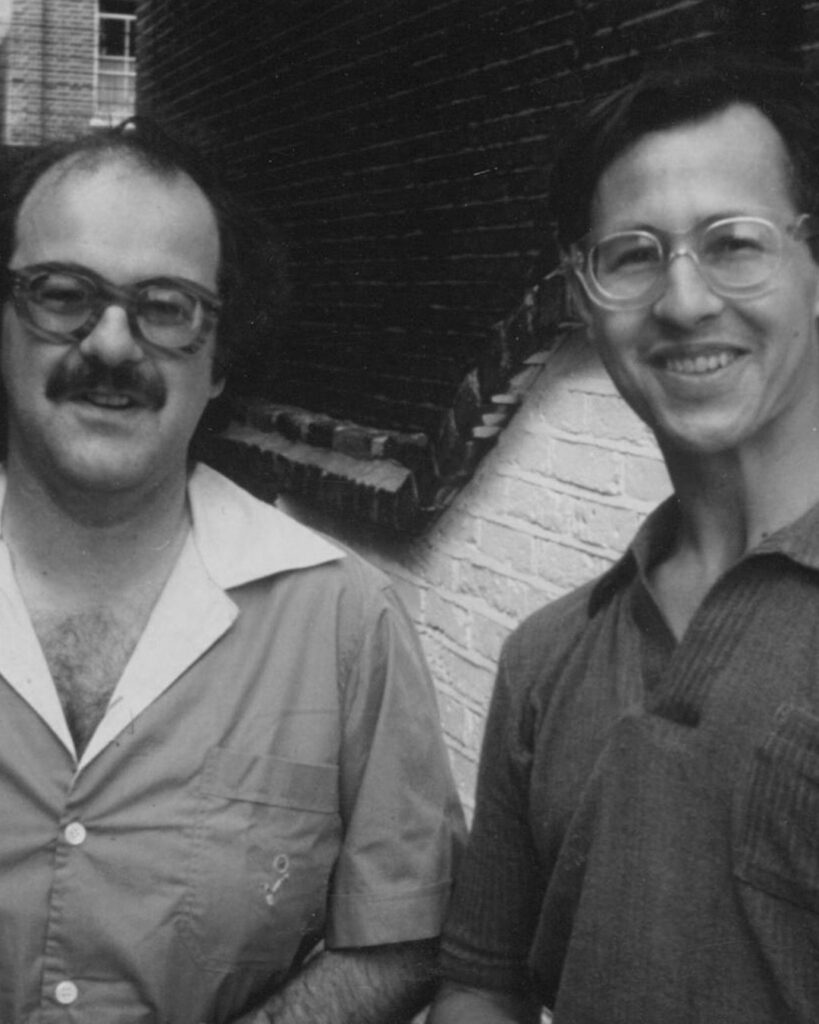
The challenge, and the joy, is to sift through all that history without getting lost in it. To distill it down to its essence. The attitude of Tony Gross, and the precision of Graham Cutler. Those two energies still shape everything we do. They’re like the two strands of DNA twisting through every frame.
Looking ahead, I think the brands that endure will be the ones that understand that duality: the balance between discipline and daring, between knowing who you are and having the courage to push forward. For us, the goal is to make shapes that feel inevitable, the kind you hold in your hand and think, “Of course it looks like this, how else could it look?” That’s when design reaches a kind of clarity.
In my view, the future belongs to brands who can strip away the noise and hold onto the truth of their identity. If we can keep doing that, respecting our heritage while evolving with purpose, then Cutler and Gross won’t just stay influential. We’ll help shape where the independent eyewear world goes next.

6. How do you balance heritage with innovation in a fast-changing luxury market?
I think heritage isn’t an anchor, it’s a compass. And with a compass, the important thing isn’t speed, it’s direction. Anyone can sprint for a season, but staying true over decades is a different kind of discipline. We try not to chase trends or bend ourselves out of shape just because the market shifts its mood. Instead, we hold our course, trusting that people who appreciate craft, vision, and classic style will always be out there looking for something built with intention.
And our heritage isn’t some abstract concept, it’s literally embodied in our two founders who gave the brand its unique duality. Graham Cutler brought the technical eye and optician’s precision, the understanding of fit and balance, the quiet belief that function should feel effortless. Tony Gross brought the flamboyance of sun-drenched glamour, the irreverence, the instinct for style and identity. One was the engineering, the other the emotion. One measured the millimetres, the other shaped the mythology.
That duality still guides us. We keep the silhouettes, the proportions, the touch, and the weight that make our frames unmistakably ours. That’s the Tony and Graham of it: the geometry and the attitude, the craft and the character. But everything beneath the surface, the components, the techniques, the hinge engineering, the materials, must keep evolving. The world moves, and good design should move with it.
I always say there’s a “thin red line” of Cutler and Gross DNA running through everything we make. You should feel it when you pick up a frame, even if you can’t articulate why. That line keeps us honest. But it doesn’t mean standing still. In fact, if you’re not improving your product constantly, then you’re dead in the water. Heritage isn’t a museum exhibit, it’s a living thing. It asks to be tended to, stretched a little, challenged, carried forward.
Innovation for us isn’t disruption for the sake of disruption. It’s respect in motion. It’s taking what Graham and Tony built and asking, “How do we honour this, and also move beyond it?” That’s the balance. That’s the compass.
7. Where is the brand now in terms of reach and volume?
We are currently stocked in over 1,000 specialist optical retail locations globally. Annually, we sell approximately 120,000 frames wholesale, alongside around 14,000 units through our own retail channels , including online.
We have built the business deliberately around specialist optical partners, prioritising expertise, service, and long-term brand value rather than chasing mass distribution.

8. What role do independent optical retailers play in your future?
Independent opticians aren’t just part of our story, they are the story. We were founded by two opticians, so we instinctively see the world from the retail side of the counter. We understand the long days, the loyalty built over cups of tea, the intuition of fitting someone who doesn’t yet know what suits them, and the pride in getting it right. You can’t fake that, it’s a human craft as much as eyewear itself.
About 90% of our customers are independents, and that is very deliberate. We’ve no intention of competing with them by selling prescriptions online or running after quick wins. Our success has always been tied to theirs. The brand grew because owneroperators believed in the frames, stood behind them, and passed that conviction on to their clients. We don’t forget where our roots are.
And I genuinely believe that in the decade ahead, the independents who excel, the ones who curate properly, who invest in service, who build relationships instead of transactions and aim upwards will be completely safe. In fact, I think they’ll thrive. Because everything around them is speeding up. You can do an eye test on an app now. You can order glasses with a swipe. The world is full of choice, but it is starving for guidance.
As convenience takes over the bottom and middle of the market, the pressure will crystallise the very top. The best doors, with the best clients and the best brands, will stand out even more. They’ll become cultural anchors, places people trust not just to see better, but to be seen properly, with care and taste and understanding. In a way, technology will make the human part more valuable, not less.
The middle, as it always does, will be absorbed, squeezed by speed below and standards above. But excellence has a way of protecting itself. When you walk into a great independent store, you feel the difference immediately: the knowledge, the eye, the hospitality, the confidence in the product selection. That level of service doesn’t get disrupted; it gets rewarded.
Our role is to make sure we support those top doors, with better product, sharper storytelling, stronger training, cleaner logistics, and frames that justify their place in a curated environment. If they succeed, we succeed. It’s as simple and as intertwined as that.
So, yes independent opticians are central to our future. And the ones who aim high, who build a real community around what they do, will only become more essential as the rest of the market becomes more automated, more consolidated, more crowded. The future belongs to the bold, the curated, the human, and the brave – we intend to grow alongside them.

9. How do you approach pricing strategy in a market where production costs, distribution models, and consumer expectations are constantly shifting?
Pricing, if you approach it honestly, should be it’s a reflection of your values, and how much the time taken to make something beautiful costs. We review our pricing annually, of course, because we have to. The world isn’t standing still. Materials rise, energy rises, labour rises, logistics rises, almost every ingredient that goes into a frame costs more than it did the year before. But being a producer gives us something precious: a bit of control and breathing room. Not total control (no one has that) but enough to absorb the shocks rather than passing every bump straight onto the customer.
At the heart of it, we try to protect our customers from the volatility. They shouldn’t feel the turbulence of our supply chain. They should feel comfortable that we only pass on when we have to.
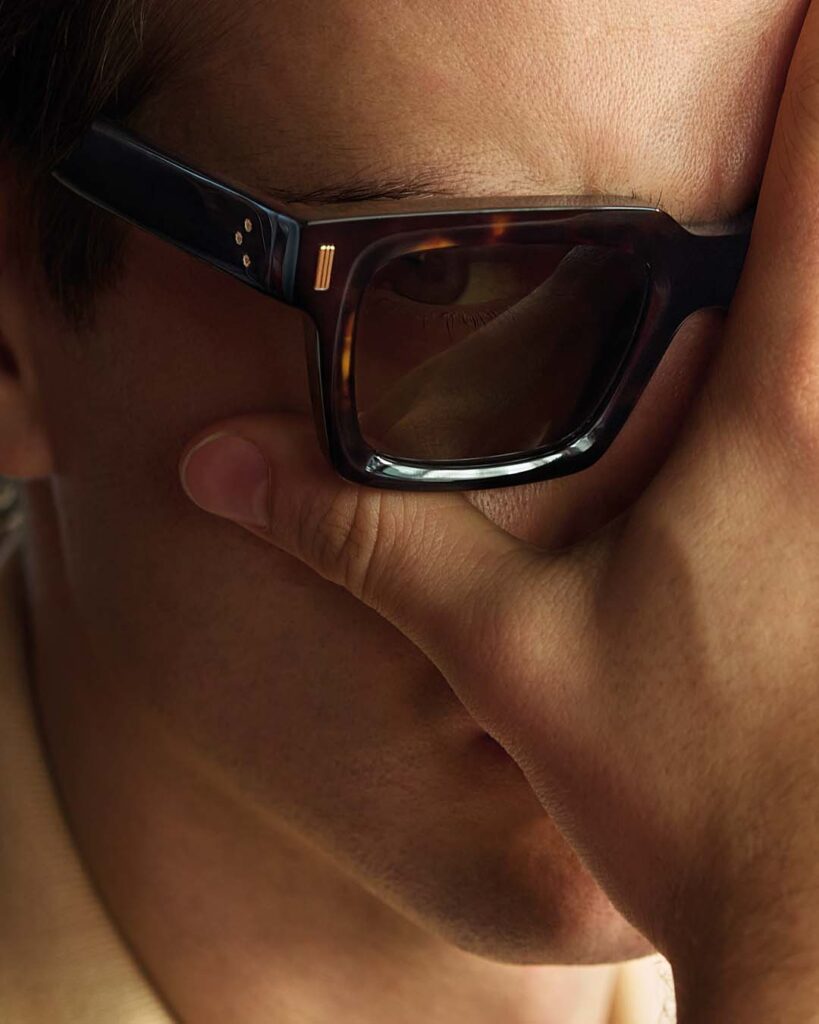
For us, the real responsibility isn’t the price tag, it’s the value behind it. Are we making the frame better? Are we improving the hinge, the polish, the milling, the fit, the service around it? Are we evolving the craft in a way the wearer can actually feel, even if they can’t describe it?
Our first instinct, always, is to make the best frame we can. We try not to design to a price; we design to a standard.
There’s a philosophy in that. Pricing, in a way, becomes a promise. It signifies that we stand behind the product, the people who made it, and the experience it delivers. We don’t chase margins for the sake of it, because long-term loyalty is worth more than short-term wins. In a market that shifts under your feet, new distribution models, new expectations, new competitors, the one thing you can hold onto is brand integrity.
Looking ahead, I think the brands that navigate pricing well will be the ones who stay transparent with themselves. The ones who understand that luxury isn’t built on exclusivity alone, but on consistency, honesty, and a sense of fairness. If we can keep delivering frames that justify their place in the world (through craft, through durability, through design and soul) then the pricing takes care of itself.
If I sketch it out mentally, that’s how we think about it. Create the best frame you can. Let the quality carry the price, not the other way around.

10. Sustainability is increasingly discussed across luxury industries. How does Cutler and Gross approach sustainability in a way that is both realistic and authentic?
For us, sustainability isn’t a slogan, it starts with the simple idea that if you make something properly, it should last. Luxury eyewear shouldn’t be disposable. If a frame is designed with care, made with respect for the material, and finished by skilled hands, the most sustainable thing you can do is keep it in use for years. It’s the same philosophy you find in a good mechanical watch or a handmade shoe: longevity is the quiet form of sustainability that doesn’t shout, but it endures.
We introduced bioacetate in the Breitling collaboration, and we’ll expand the use of these materials in 2027. But we’re not rushing to tick boxes or chase headlines, the materials need to behave like the premium acetates we’ve built our reputation on. They need to polish cleanly, hold their form, age well, and feel right in the hand. Sustainability must be compatible with quality, otherwise it becomes theatre. Thankfully, the suppliers of bio-materials are improving every year, and we’re moving with them at a steady, honest pace.
In the background, we’ve been doing the unglamorous work too. We recycle most of our production waste and overstock. We’re closing loops where we can. We’re reducing waste not because it sounds good, but because it’s the responsible thing to do in a craftdriven business. It’s the same mentality as a workshop from decades ago, you value your materials, you don’t squander them.
I think the future of sustainability in eyewear lies in that combination of craftsmanship, longevity and incremental innovation. Not grand gestures. Not performative “green” collections that don’t survive a year or two in real ‘use’. I believe in a genuine commitment to making things that last, and improving the materials and processes year by year without compromising what makes them beautiful.
And maybe that’s the quiet truth of it: the most sustainable brands will be the ones who refuse to rush, who refuse to follow the noise, and who choose durability over novelty. The ones who build objects that people hold onto, repair, treasure, and pass down not throw away. That’s where we want to be. That’s where we’ve always been, even before the word “sustainability” became fashionable.
11. From your perspective, what are the biggest misconceptions about the independent eyewear sector today?
From the outside, people sometimes imagine the independent eyewear world as this gladiator pit of big egos and rivalries, a dozen brands circling each other, all pretending to be the “true” artisan. The reality is much quieter, much warmer, and far more human. Most of the people behind independent brands are sound – genuinely sound. Hardworking, passionate, slightly obsessive craftspeople trying to keep a bit of soul alive in an industry that’s increasingly shaped by megacompanies and financial machinery.
The biggest misconception is that independents are fractured, that we’re too small, too scattered, too busy guarding our own patch to do anything meaningful together. But every time you sit down with another founder, CEO or creative director in this space, you realise we’re all fighting the same fight to keep design honest, to keep quality high, and to keep a bit of humanity in the work. There’s more camaraderie than people think. Underneath it all, there’s a shared sense of purpose.
What I’d love to see (and what I think the next decade demands) is more of that spirit made visible. More collaboration on calendars, independentonly fairs, shared platforms, collective advocacy.
Imagine a world where the independents don’t whisper in the gaps between shows but actually stand side by side and say, “This is what craft looks like. This is what creativity sounds like. This is what the category can be.” Because the truth is, we’d be stronger together, than any of us are on our own.
Independents have always been the pioneers in this industry. We take the risks first. We push design into strange and beautiful corners before the rest of the world catches up. We’re the ones who make frames because we love them, not because a quarterly report demands it. That pioneering spirit, curious, stubborn, a little rebellious – is what has kept this segment alive for decades.
And if there’s a future worth aiming for, it’s one where that pioneering instinct becomes a shared movement rather than a series of isolated efforts. A future where independents build not just brands, but a community (a real one) with shared values, shared struggles, and shared wins. If we can do that, if we can lift each other as we climb, then the independent sector won’t just survive the next wave. It’ll lead it.
We’re all trying to do something meaningful in a world that increasingly rewards the opposite. And maybe that’s the quiet bond between us: we’re not just making eyewear. We’re trying to protect a way of working, a way of seeing, a way of caring about what we make. That’s the part people on the outside often miss, but it’s the part that matters most. We should get better at expressing that together.
12. Looking ahead five to ten years, what do you believe will truly differentiate enduring eyewear brands from those that will disappear?
If you strip it all back, half of what keeps a brand alive is still the product – the creativity, the design, the storytelling, the craft. But the older I get in this industry, the more I realise that the other half is people. The people inside the walls, the people selling on the shop floor, the people wearing the frames and carrying your story without even knowing they’re doing it. If you get the right mix of talent, belief and culture, you can weather any cycle, economic, creative or otherwise.
The brands that will endure will be the ones that build communities rather than customer lists. People don’t just buy frames anymore; they buy the feeling of being connected to something. They want to recognise themselves in what you create. They want to feel that a brand reflects something true about their own taste, their own identity, their own place in the world. If you can create that sense of “this is my brand; these are my tribe”, you’re no longer fighting for attention, you’re building belonging. And belonging is far more durable than hype.
We also can’t pretend the next decade won’t test everyone’s grip. There will be more consolidation, more technology, more noise. But the brands that survive will be the ones that keep their centre.
Not the loudest, not the trendiest, the ones that know who they are and don’t panic when the market changes its mood. The ones that keep improving, keep listening, keep shaping their own lane rather than chasing someone else’s.
Conclusion
If there is one idea that runs consistently through this conversation, it is that the eyewear industry is no longer rewarding speed, volume or noise. It is rewarding clarity. Across questions of independence, collaboration, pricing, sustainability and distribution, Jack Dooley returns again and again to the same principle: brands that endure are those that know who they are and refuse to compromise that knowledge when the market shifts its mood.
The coming years will undoubtedly bring more consolidation, more technology and more pressure to scale quickly. But this interview suggests that the true divide will not be between large and small, or funded and unfunded it will be between brands built on identity and those built on opportunity. Craft, discipline and human relationships, once considered slow advantages, are re-emerging as the most durable forms of power in luxury eyewear.
Cutler and Gross’s position within this reset is not defined by nostalgia, nor by resistance to change, but by a deliberate commitment to direction. In an industry learning to distinguish between growth and progress, this approach feels less like a reaction and more like a blueprint.
The reset is already underway. What remains to be seen is which brands are prepared to meet it and which will quietly fall behind as clarity replaces noise.

 English
  French
  Italian
  Spanish
  Portuguese
  German
  Korean
  Japanese