In the independent luxury space contrary to popular belief far from overcrowded DAIZO is one of those brands that doesn’t attract attention through noise, but through silence. Not through aggressive campaigns, not through viral storytelling, not through immediately striking design. And yet, DAIZO appeared almost “out of nowhere,” landing directly in top-tier retailers before establishing a solid digital presence or a visible market history. A fact that inevitably raises questions.
How does a brand at its first collection, without public hype or prior consumer validation, enter high-level retail so quickly? And what does this say about the current state of the luxury eyewear market?
The frames are relatively simple, without five-axis CNC machining. The details could be further refined, and the facial geometry improved. While the range of models may diversify over time, it remains to be seen whether this brand will be able to endure and evolve.

Inside job or sign of the times?
DAIZO’s early presence in top stores instantly grants it a form of legitimacy. In an industry where access is usually gradual, this type of accelerated entry naturally invites speculation: is this an “inside job,” the result of already-established industry relationships, or a market desperately searching for the next “serious” brand?
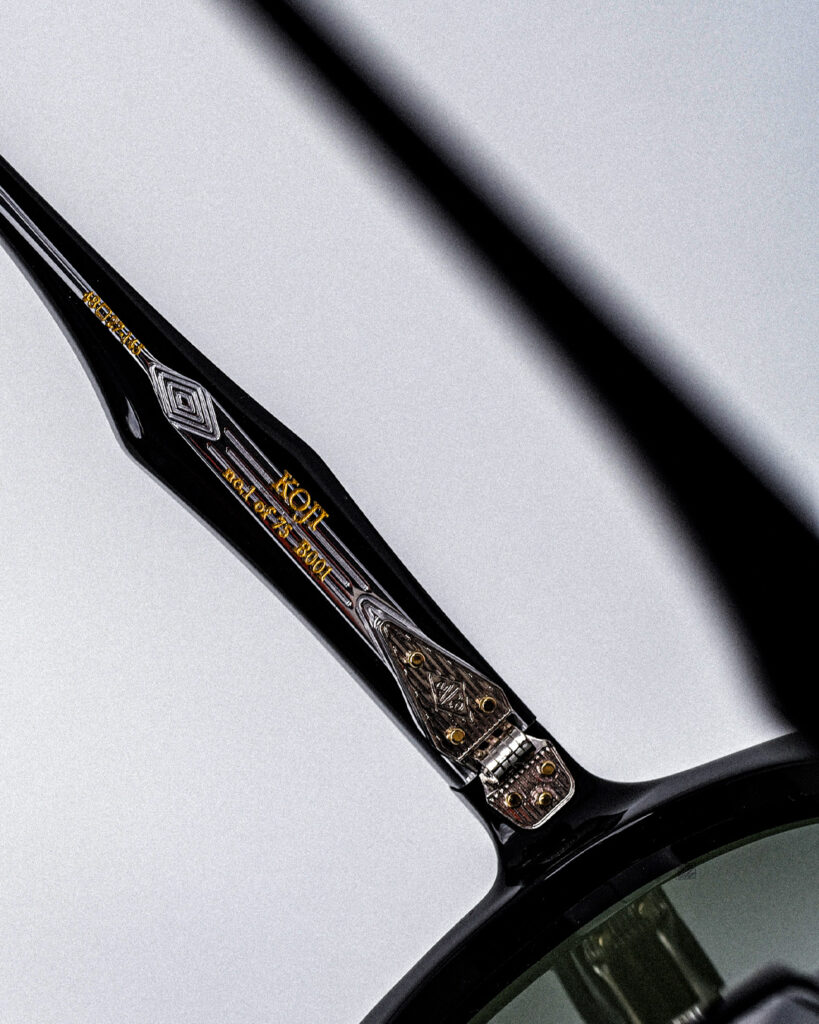
The brand’s documents describe an exceptionally well-executed product: production in Fukui, Japan; over 250 manufacturing steps; limited runs (75 pieces per colorway); custom hardware; proprietary hinge systems; and an obsessive focus on detail and tactile experience. These are strong arguments for high-end buyers. But are they enough to bypass the usual stages?
DAIZO does not particularly excel in any specific area neither in core detailing, nor in frame geometry, nor in overall design language. The pricing is indeed positioned at the high-end of the market. Nevertheless, the question remains open: how does a brand that does not clearly stand out in any discipline become available in top-tier retail stores?

Design: between familiarity and safety
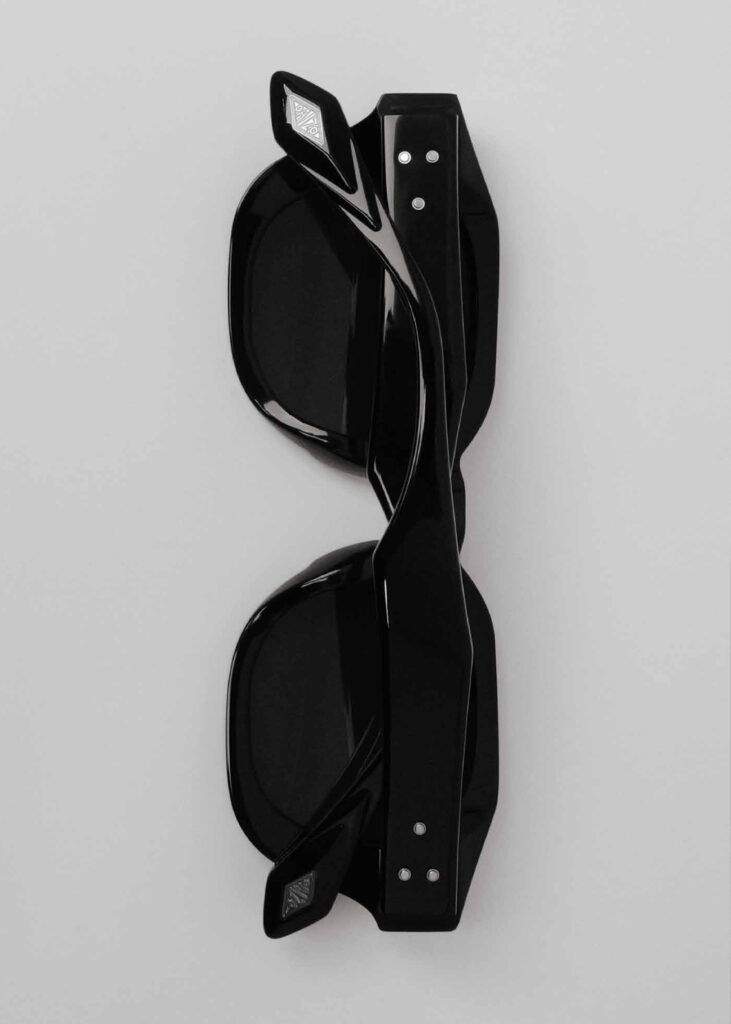
Looking at DAIZO’s frames, it is difficult not to think of an already established aesthetic language. Comparisons to Jacques Marie Mage are almost unavoidable volumetric forms, visual weight, a certain seriousness, almost architectural in presence. In the current market context, this is not necessarily a weakness. The market is chaotic, the consumer is fatigued, and familiarity can be a form of reassurance.
Yet another question emerges: how much room is left for a new maximalist eyewear brand at a moment when the next aesthetic wave appears to be moving toward minimalism, extreme refinement, and quieter forms?
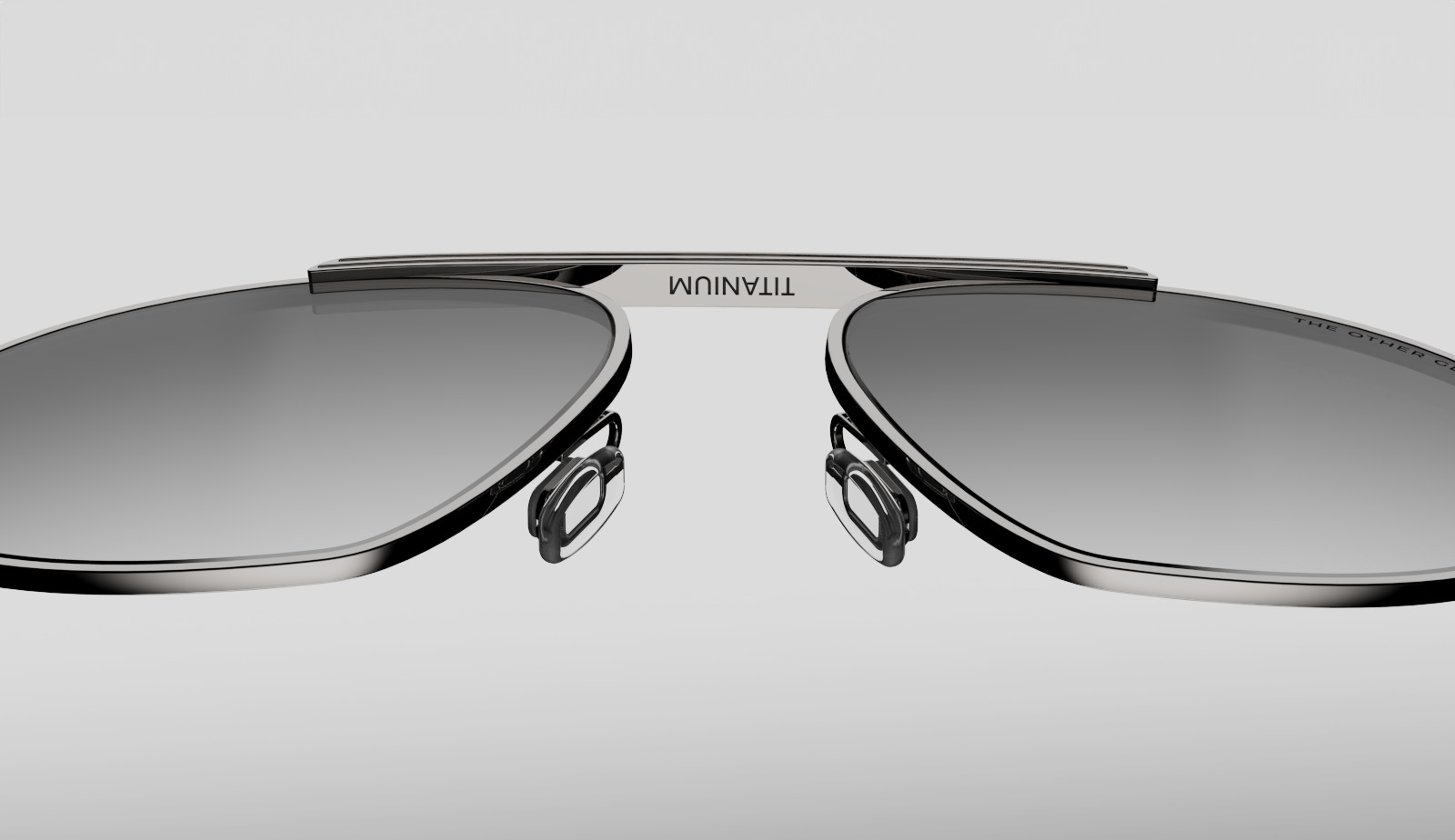
When compared with the creative directions of brands currently shaping the market Sato, Akoni, Paloceras, The Other Glasses, Ahlem, DAIZO feels more conservative. Safer. Less radical.
Is this a drawback? Or is it a calculated strategy in a market oversaturated with forced concepts?
The founder: fashion first, eyewear second
One of DAIZO’s most intriguing aspects is its founder’s profile. Leonhard Daizo Bachmann does not come from the eyewear industry, but from fashion, where he held creative director roles and worked with brands known for strong design DNA. His background is deeply rooted in materials, construction, objects, and craftsmanship.
This raises a legitimate question: how much does category-specific experience matter when entering an extremely technical field like eyewear? Is mastery of detail hinges, wire cores, construction processes enough to compensate for the lack of a direct eyewear pedigree?
DAIZO seems to answer in the affirmative, positioning itself around the idea of the “well-made object” rather than a seasonal product. Whether this approach will hold over time, however, remains to be seen.
What initially drew our attention was not the product itself, nor its quality, but rather the market presence of an eyewear brand operating without a website.

Retail credibility: sufficient or temporary?
Presence in top-tier stores undoubtedly provides credibility. But it does not guarantee longevity. Recent eyewear history is filled with brands that entered strongly and quietly disappeared. The differentiator is rarely the product alone; it is the ability to build a coherent identity over time.
DAIZO speaks extensively about “slow luxury,” ritual, calm, and meaning a relevant discourse, but one already adopted by many brands. The question is not whether the message is right, but whether it is distinct enough to remain memorable five years from now.
An open conclusion
DAIZO is, without question, a serious, well-executed brand with resources, know-how, and access. It is not a superficial experiment. But neither does it yet feel like a brand that rewrites the rules of the category.
Perhaps it doesn’t need to. Perhaps its role is to offer stability in an unstable market. Or perhaps its true value will only be tested with its second or third collection, once the novelty factor fades.
For now, DAIZO remains an interesting case study about timing, access, legitimacy, and how much “coming from the inside” still matters in an industry that seems to be reinventing itself through discretion. At this stage, we cannot define Daizo as a fully legitimate brand. However, it will be interesting to observe its trajectory and assess whether it can genuinely evolve over time or if it is merely an artificially constructed brand driven by internal mechanisms rather than organic market demand.